
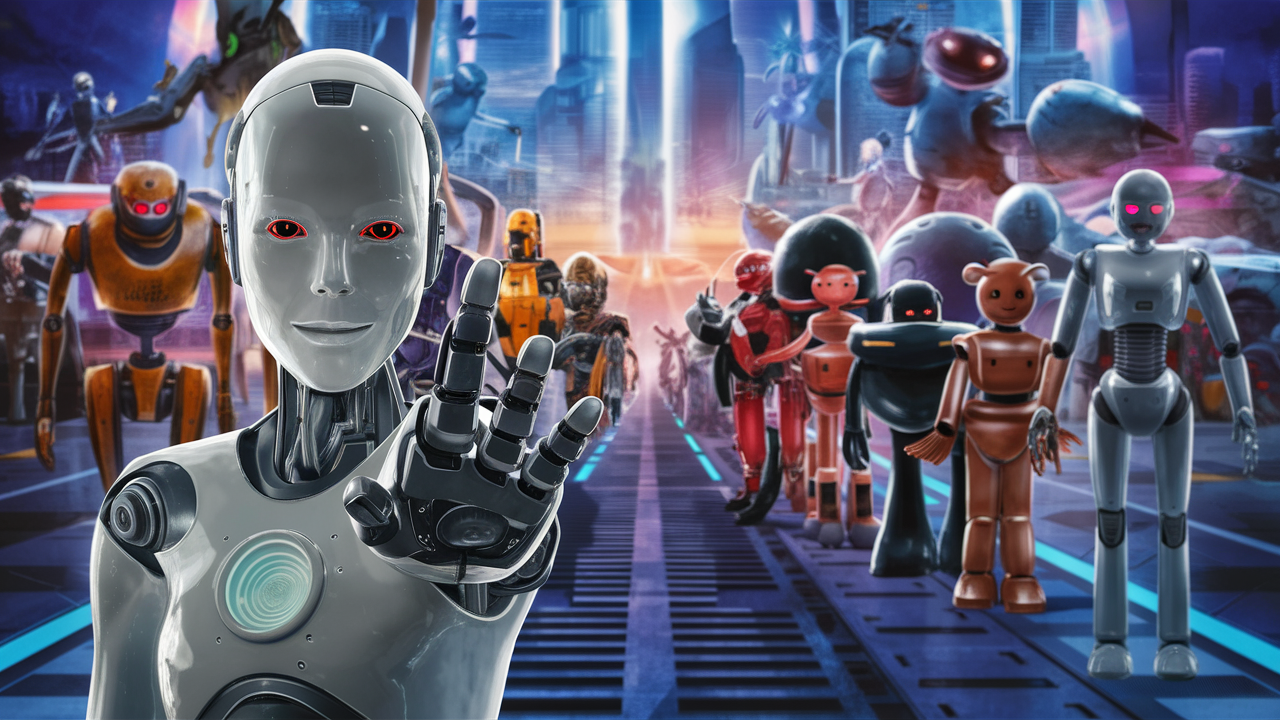
In the ever-evolving world of contemporary art, technology has gradually become an essential medium for creative expression. With the rapid advancement of robotics, artists have increasingly integrated machines into their work, creating pieces that bridge the gap between art, engineering, and artificial intelligence. One such artist, Nattapong, has been at the forefront of this fusion of art and robotics, crafting intricate works that are not only technologically innovative but deeply philosophical as well.
The concept of “Dot to Dot” in Nattapong’s work is central to his approach, where robots and technology are used to connect disparate elements into a unified, interactive, and ever-changing artwork. This exploration of robotics as both a medium and a collaborator is reshaping how we think about art and its relationship with the technological world.
In this article, we will delve into the innovative work of Nattapong, exploring his use of robotics, the concept of “Dot to Dot,” and how this blend of art and technology challenges conventional perceptions of both fields. By examining Nattapong’s creative process, we’ll see how the artist redefines the role of machines in the creation of art and the potential for future collaborations between human and robot.
The Rise of Robotics in Art
Robotics has come a long way since its industrial beginnings. What started as a field focused on automating repetitive tasks in factories has blossomed into a diverse discipline with far-reaching implications, including art. The use of robotics in art can be traced back to the late 20th century, when pioneers such as Nam June Paik and Jean Tinguely began incorporating mechanical and electronic components into their works. These early experiments set the stage for a new era in which technology could not only serve as a tool for artistic creation but could become an integral part of the artwork itself.
As robotics technology advanced, it provided artists with new ways to explore movement, interactivity, and artificial intelligence within the context of visual art. Artists began using robots to perform tasks that were once exclusive to human hands, such as painting, sculpting, and even performing live art. This new medium gave rise to a genre of art that combined the precision and logic of machines with the emotional and expressive qualities of traditional art forms.
In this landscape, Nattapong emerged as a key figure, blending the technical and the creative to explore the interplay between human consciousness and robotic intelligence.
Who is Nattapong?
Nattapong is a contemporary artist whose work occupies the space where technology meets humanity. He has a background in both engineering and fine arts, which gives him a unique perspective on the potential of robotics in art. Growing up with an interest in both science and art, Nattapong found a way to marry the two, creating works that showcase his dual expertise.
Throughout his career, Nattapong has explored a wide range of themes, from human-robot interactions to the philosophical implications of artificial intelligence. His work often challenges the boundaries of what we consider “alive” and “creative,” as he uses robots not merely as tools but as collaborators in the artistic process. For Nattapong, the fusion of robotics and art is not just about showcasing technological prowess—it’s about exploring the deeper questions of creativity, autonomy, and consciousness.
His approach is highly experimental, using a combination of robotics, machine learning, and interactive design to create dynamic pieces that evolve in real time. These works are often characterized by their fluid movement, intricate patterns, and engagement with the audience. For Nattapong, the creation of art is no longer a solitary endeavor but a collaboration between man and machine, blurring the lines between artist, viewer, and the artwork itself.
Understanding the “Dot to Dot” Concept
The phrase “Dot to Dot” has long been associated with puzzles, where connecting a series of numbered dots reveals an image. For Nattapong, this concept takes on a much deeper meaning. In his robotic art, “Dot to Dot” represents the interconnectedness of all elements—whether mechanical, digital, or human—that make up a piece of art.
At its core, the “Dot to Dot” approach in Nattapong’s work is about finding unity in diversity. Each dot, or individual component, plays a critical role in the overall composition, contributing to the emergence of a larger, more complex structure. The robots in his works can be seen as the connecting elements that bridge these dots, turning simple mechanical movements into a cohesive, living artwork.
This philosophy reflects a broader idea in art and technology: that seemingly disparate parts can come together to form something greater than the sum of their individual components. Just as in a traditional “Dot to Dot” puzzle, the act of connecting these elements creates a sense of purpose and meaning, inviting the viewer to witness the process of creation and the complexity of the work as it unfolds.
The Fusion of Art and Robotics: Technical Aspects
One of the defining features of Nattapong’s work is his seamless integration of robotics into the artistic process. For him, technology is not an afterthought or a mere tool to enhance the aesthetic quality of his work—it is an active participant in the creative process itself.
Nattapong’s installations often incorporate a wide range of robotics technologies, including servo motors, sensors, and artificial intelligence algorithms. These technologies enable the robots to move, interact, and adapt to their environment, creating art that is not static but constantly evolving. For example, some of his works feature robots that generate abstract drawings based on real-time input from the audience, while others use movement and sound to create interactive sculptures.
The use of machine learning algorithms is another key aspect of Nattapong’s work. These algorithms allow the robots to “learn” from their surroundings and adapt their behavior accordingly. This creates a dynamic, responsive artwork that can change over time, reflecting the influence of both the artist and the viewer.
In creating his robotic art, Nattapong must also balance the artistic and technical aspects of his work. While he is a skilled engineer, he is also deeply concerned with the emotional and philosophical implications of using robots in art. For him, the challenge lies in ensuring that the technological elements serve the larger artistic vision rather than overshadowing it.
The Influence of Robotics on Modern Art
As robotics continues to influence contemporary art, artists like Nattapong are leading the charge in redefining what art can be. In traditional art forms, the artist is often seen as the sole creator, with the viewer’s role limited to interpretation and reflection. However, with the introduction of robots as collaborators, the line between creator and creation becomes increasingly blurred.
Nattapong’s work challenges this traditional model by involving robots in the creative process. Rather than simply using robots to perform predefined tasks, he allows them to participate in the creation of the artwork itself. This shift in perspective opens up new possibilities for interaction and collaboration, creating a more fluid and dynamic relationship between artist, machine, and viewer.
Moreover, the use of robots in art raises important philosophical questions about the nature of creativity. If a machine can create art, what does that say about the role of human imagination and intuition? Can a robot truly be considered an artist, or is it simply a tool for human expression? Nattapong’s work explores these questions by presenting robots as both creators and participants in the artistic process, inviting viewers to reconsider the nature of creativity in a world increasingly shaped by technology.
Key Works of Nattapong: Robots in Action
Some of Nattapong’s most famous works include interactive robotic sculptures that combine movement, sound, and light. One notable piece, “Symphony of Dots,” features a series of interconnected robots that respond to the presence of viewers. As visitors approach the installation, the robots begin to move, generating abstract patterns of light and sound that change based on the viewer’s position.
Another key work, “Echoes of the Future,” is a large-scale installation that uses a combination of artificial intelligence and machine learning to create evolving visual patterns. The robots in this installation “learn” from their environment and adapt their behavior over time, creating a constantly shifting piece of art that invites viewers to witness the creative process firsthand.
These works exemplify Nattapong’s commitment to creating interactive, dynamic pieces that engage both the intellectual and emotional faculties of the viewer. By incorporating robots into the creation of the artwork, he allows the audience to participate in the artistic process, blurring the line between creator and observer.
Ethical and Philosophical Implications of Robotics in Art
As with any new technology, the integration of robots into the art world raises important ethical and philosophical questions. One of the most pressing concerns is the issue of autonomy. When robots are given the ability to make decisions and create art on their own, to what extent can they be considered “autonomous” beings? And what does this mean for the role of the human artist?
For Nattapong, these questions are central to his work. He sees robotics as an opportunity to explore the boundaries of consciousness and creativity, asking whether machines can truly possess artistic vision. However, he also emphasizes that robots are ultimately tools created by humans, and their role in art is not to replace human creativity but to expand upon it.
The use of robotics in art also raises questions about authorship and ownership. If a robot creates a piece of art, who owns the rights to that work? Is it the artist who programmed the robot, or the robot itself? Nattapong’s work invites viewers to grapple with these questions, encouraging a deeper reflection on the nature of creativity, authorship, and the relationship between humans and machines.
The Future of Art and Robotics
Looking ahead, Nattapong is optimistic about the potential for robots to play an even greater role in the world of art. As technology continues to evolve, he believes that robots will become more integrated into the creative process, offering new ways for artists to collaborate with machines. These future collaborations, he argues, will redefine the role of the artist and the nature of art itself.
In addition, Nattapong envisions a future where robots are not just tools or collaborators but participants in the creative process in their own right. As artificial intelligence continues to advance, robots may develop the ability to generate their own ideas and create original works of art, pushing the boundaries of what we consider to be “creative.”
Conclusion
Nattapong’s work represents a groundbreaking fusion of art and robotics, challenging our conventional understanding of creativity, authorship, and the role of machines in the artistic process. Through his innovative use of robots as both tools and collaborators, he is pushing the boundaries of what is possible in the world of art. As we look to the future, it is clear that robots will continue to play an increasingly important role in the creative world, offering new ways for artists to explore the intersection of technology and human expression.’
FAQ
1. What is “Robots Dot to Dot” by Nattapong about?
“Robots Dot to Dot” is a series of interactive artworks created by Nattapong, where the artist blends robotics, technology, and art to explore themes of creativity, movement, and machine intelligence. The phrase “Dot to Dot” refers to the interconnectedness of all the components in his robotic art, where each individual part contributes to the creation of a larger, evolving masterpiece.
2. How does Nattapong incorporate robotics into his artwork?
Nattapong uses advanced robotics technologies, including sensors, machine learning, and servo motors, to create dynamic and interactive sculptures. These robots don’t just perform tasks—they respond to their environment, adapt to viewer interactions, and even generate abstract designs and patterns, allowing the artwork to evolve in real-time.
3. Why is the “Dot to Dot” concept important in Nattapong’s art?
The “Dot to Dot” concept reflects the way in which each part of his robotic art is interconnected. Just like a traditional dot-to-dot puzzle where each dot must be connected to reveal a bigger picture, Nattapong’s art comes to life when all the elements—both human and machine—come together. It symbolizes how individual components, no matter how small, contribute to the larger, more complex whole of the artwork.
4. What role does technology play in Nattapong’s artistic process?
Technology, especially robotics and artificial intelligence, plays a central role in Nattapong’s artistic process. Rather than using technology as a mere tool, Nattapong considers it a collaborator in the creation of his art. The integration of machine learning allows the robots to learn from their surroundings and evolve, adding layers of unpredictability and complexity to the final artwork.
5. What is the philosophical message behind Nattapong’s use of robotics in art?
Nattapong’s work challenges the traditional notion of authorship and creativity. By involving robots as creators and collaborators, he invites viewers to question what it means to be “creative” and whether machines can possess artistic vision. His work also explores the relationship between humans and technology, blurring the boundaries between the organic and the mechanical.
6. How do Nattapong’s robotic creations interact with viewers?
Many of Nattapong’s works are interactive, meaning they respond to the presence and movements of viewers. Robots in his installations may alter their behavior, produce new patterns, or even create artwork in response to how people engage with them. This interactive element adds a personal touch to the art, making the viewer part of the creative process.
7. What are some notable works by Nattapong?
One of Nattapong’s signature works is “Symphony of Dots”, a robotic installation that uses movement, light, and sound to create an evolving artwork that responds to viewers. Another key work, “Echoes of the Future”, features AI-powered robots that adapt their behavior based on real-time data, creating a constantly shifting visual experience. Both works showcase the interactive and dynamic nature of his robotic art.
8. How has Nattapong influenced the art world in 2025?
In 2025, Nattapong continues to be a leading figure in the fusion of robotics and art. His innovative use of technology challenges traditional art forms and inspires other artists to incorporate robotics into their own work. Nattapong’s exploration of machine autonomy, creativity, and interaction has opened up new avenues for artistic expression and has sparked a broader conversation about the role of robots in the creative process.
9. What ethical considerations are there in using robots in art?
The use of robots in art raises several ethical questions, including issues of authorship, machine autonomy, and the role of human creativity. In Nattapong’s work, the question arises: Can a robot be considered an artist, or does it merely reflect the intentions of its human creator? These questions prompt deeper reflection on the role of technology in creative fields and the evolving relationship between humans and machines.
10. What does the future hold for robotics in art?
The future of robotics in art looks promising, with increasing collaboration between artists, technologists, and engineers. As artificial intelligence continues to advance, robots will likely play an even more significant role in the creative process. Nattapong envisions a future where robots not only assist in art creation but also independently generate original pieces, further challenging our understanding of creativity and machine capabilities.
