
First impressions matter, and for a new hire, the onboarding process is often the first real impression they get of how a company actually operates behind the scenes. When onboarding is a mess of paper forms, missing equipment, and unclear expectations, it doesn’t just create a rocky first week research consistently shows it directly affects whether that employee sticks around past the first year. For HR teams juggling hiring, benefits, compliance, and everything else, manually coordinating onboarding for every new hire simply doesn’t scale once a company starts growing.
That’s where employee onboarding software comes in. The right platform automates the paperwork, sets up structured training paths, assigns equipment and access on day one, and gives new hires a clear roadmap instead of a confusing scramble. For growing HR teams, it also means less time spent chasing signatures and more time focused on actually helping new employees succeed.
In this guide, we’ve rounded up the best employee onboarding software for HR teams in 2026, covering what each platform does well and who it’s best suited for.
What to Look for in Onboarding Software in 2026
Before jumping into the list, here’s what actually separates a strong onboarding platform from a basic checklist tool:
- Pre-boarding capabilities — sending paperwork, offer letters, and welcome materials before day one
- Automated workflows — triggering IT, facilities, and manager tasks automatically based on start date
- Compliance and e-signature support — handling I-9s, tax forms, and policy acknowledgments digitally
- Role-based training paths — customized onboarding journeys depending on department or seniority
- Integration with HRIS and payroll — syncing new hire data without duplicate manual entry
- Manager and buddy check-ins — built-in prompts to keep new hires engaged past the first week
With those priorities in mind, here are the platforms worth considering this year.
1. BambooHR
BambooHR remains one of the most popular all-in-one HR platforms for small and mid-sized companies, and its onboarding module is often the entry point that gets teams hooked on the broader system.
Key features:
- Pre-boarding portal for new hires to complete paperwork before day one
- Customizable onboarding task lists by role or department
- E-signature support for offer letters and policy documents
- Integrated employee database that carries onboarding data forward
Best for: Growing companies that want onboarding bundled with a broader, easy-to-use HR information system rather than a standalone tool.
2. Rippling
Rippling extends its workforce platform into onboarding by automatically triggering IT provisioning, payroll setup, and benefits enrollment the moment a new hire’s start date is confirmed.
Key features:
- Automatic device and software provisioning tied to onboarding workflows
- Payroll and benefits setup happens in the same system
- Custom onboarding workflows by department or location
- Global onboarding support for international hires
Best for: Growing tech companies that want onboarding tightly integrated with IT setup and device management, not just paperwork.
3. ClickBoarding
ClickBoarding focuses specifically on the onboarding and offboarding lifecycle, making it a strong choice for HR teams that want a dedicated tool rather than a broader HRIS with onboarding bolted on.
Key features:
- Fully digital onboarding forms with e-signature
- Employee journey mapping across the entire lifecycle
- Configurable workflows for different employee types (full-time, contractor, seasonal)
- Analytics on time-to-productivity for new hires
Best for: HR teams that want a purpose-built onboarding specialist tool with deep customization for different hire types.
4. WorkBright
WorkBright has built a strong reputation for making remote and distributed onboarding simple, particularly for handling I-9 verification without requiring an in-person HR representative.
Key features:
- Remote I-9 verification through a trained agent network
- Mobile-friendly onboarding forms
- Automated reminders to keep new hires on track with paperwork
- Strong compliance tracking for distributed teams
Best for: Companies with remote or distributed workforces that need reliable, compliant I-9 verification without in-person meetings.
5. Gusto
Gusto’s onboarding tools come bundled with its payroll and benefits platform, making it a natural fit for smaller companies that want everything under one roof without juggling multiple vendors.
Key features:
- Self-service onboarding portal for new hires
- Automatic syncing of onboarding data into payroll
- Digital offer letters and document collection
- Simple, guided setup process for HR admins
Best for: Small to mid-sized companies already using Gusto for payroll that want onboarding folded into the same system.
6. Paycor
Paycor combines onboarding with its broader HR and payroll suite, and its analytics layer helps HR teams track how onboarding is actually performing over time, not just whether tasks got completed.
Key features:
- Configurable onboarding checklists by role
- Real-time completion tracking and reporting
- E-signature and document management built in
- Manager dashboard for tracking new hire progress
Best for: HR teams that want onboarding data feeding into broader workforce analytics and reporting.
7. Zenefits (TriNet HR Platform)
Zenefits, now part of TriNet’s HR platform, offers straightforward onboarding tools aimed at small and mid-sized businesses that want simplicity over heavy customization.
Key features:
- Guided new hire self-onboarding
- Automatic benefits enrollment during onboarding
- Compliance document collection and storage
- Mobile app access for new hires
Best for: Small businesses that want a simple, no-frills onboarding experience bundled with HR and benefits administration.
8. Trakstar (formerly Trakstar Hire’s onboarding suite)
Trakstar’s onboarding tools are designed to hand off smoothly from its recruiting platform, making the transition from candidate to employee feel seamless rather than starting from scratch.
Key features:
- Direct handoff from applicant tracking to onboarding
- Customizable onboarding portals by department
- Automated task assignment for IT, facilities, and managers
- Reporting on onboarding completion rates
Best for: Companies already using Trakstar for recruiting that want a connected experience from offer acceptance through the first weeks of employment.
9. Sapling (Kallidus)
Sapling focuses heavily on workflow automation across the entire employee lifecycle, with onboarding as one piece of a broader people operations platform.
Key features:
- Cross-departmental workflow automation (IT, facilities, payroll)
- Preboarding portal with customizable branding
- Org chart and team introduction tools for new hires
- Integration with a wide range of HRIS and payroll systems
Best for: Mid-sized companies with more complex cross-departmental onboarding processes that need heavy automation across multiple teams.
10. Enboarder
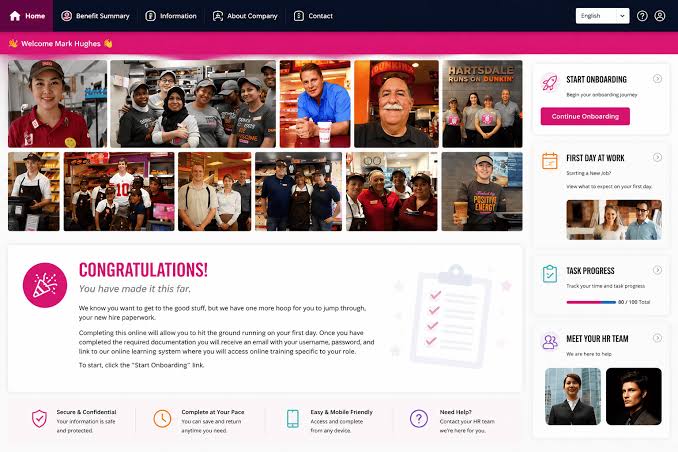
Enboarder takes a more experience-focused approach to onboarding, emphasizing engagement and connection over pure paperwork automation, with a strong focus on manager and buddy involvement.
Key features:
- Journey-based onboarding with SMS and email nudges
- Manager and buddy task assignments built into the workflow
- Employee engagement surveys during onboarding
- Highly visual, mobile-first new hire experience
Best for: Companies that want onboarding to focus as much on employee experience and connection as on administrative task completion.
How to Choose the Right Onboarding Software for Your Team
With this many solid options, the decision usually comes down to a few practical questions:
- Do you need onboarding bundled with payroll and HR, or as a standalone tool? BambooHR, Gusto, and Paycor bundle everything together, while ClickBoarding and Enboarder specialize purely in onboarding and the broader employee journey.
- How distributed is your workforce? WorkBright’s remote I-9 verification is a major advantage for companies hiring across multiple states or countries without in-person HR staff.
- Do you care more about compliance or engagement? ClickBoarding and WorkBright lean toward compliance and paperwork efficiency, while Enboarder leans toward engagement and connection during the first weeks.
- How complex are your cross-departmental workflows? Sapling and Rippling excel at triggering IT, facilities, and payroll tasks automatically across departments.
- Are you already using a recruiting platform? If so, checking whether it has a native onboarding handoff, like Trakstar’s, can save you from managing a disconnected system.
Most HR teams find it worthwhile to map out their actual onboarding workflow every form, every department involved, every touchpoint in the first 90 days — before choosing a platform, since the best fit often comes down to how closely a tool matches your existing process rather than which one has the longest feature list.
Frequently Asked Questions
1. What is employee onboarding software? Employee onboarding software automates the process of bringing a new hire into a company, covering paperwork collection, e-signatures, IT and equipment setup, training assignments, and check-ins during the first weeks or months of employment.
2. How is onboarding software different from a broader HRIS? Onboarding software focuses specifically on the transition from offer acceptance to a fully ramped-up employee, while a broader HRIS (Human Resources Information System) manages ongoing employee data throughout their entire tenure. Many platforms, like BambooHR and Gusto, combine both functions.
3. How much does onboarding software cost? Pricing varies widely depending on whether it’s a standalone tool or bundled with a broader HR platform, typically ranging from $5–$15 per employee per month for dedicated onboarding tools, with bundled HRIS platforms pricing onboarding into their overall per-employee rate.
4. Can onboarding software handle remote or international new hires? Yes, platforms like WorkBright and Rippling are specifically built to handle remote I-9 verification and international onboarding compliance, making them strong choices for distributed or globally hiring companies.
5. Does onboarding software help with compliance? Yes, most platforms include digital I-9 collection, tax form gathering, and policy acknowledgment tracking with built-in audit trails, which helps HR teams stay compliant and reduces the risk of missing paperwork.
6. How long does it typically take to set up onboarding software? Simpler platforms like Gusto or Zenefits can often be configured within a few days, while more complex, highly customized platforms like Sapling or Rippling may take a few weeks to fully set up cross-departmental workflows.
7. Can onboarding software improve new hire retention? While the software itself doesn’t guarantee retention, a smoother, more structured onboarding experience is strongly associated with higher new hire engagement and retention, since employees who feel supported and clear on expectations early on are more likely to stay past the critical first year.
Final Thoughts
Employee onboarding software has moved well beyond digitizing paperwork — today’s platforms coordinate IT provisioning, payroll setup, training paths, and manager check-ins into a single structured experience for new hires. For smaller companies, bundled options like BambooHR and Gusto offer simplicity without extra vendors, while growing companies with more complex, distributed teams benefit from purpose-built platforms like Rippling, WorkBright, or Sapling.
Before committing to a platform, walk through your actual onboarding process step by step and make sure the tool you choose can automate the specific handoffs — IT, facilities, payroll, training — that currently eat up the most HR time.
