

The internet gives us more articles than any person could read in a lifetime. Lifestyle tips, gadget reviews, entertainment news and trend pieces appear every hour, and most of them look polished at first glance. That is exactly why a smart reader asks one question before acting on any article: can I trust this source?
If you have landed on Queekmag.com and wondered whether its articles are dependable, this guide is for you. We will not tell you what to think. Instead, we will show you what can be verified about the site, what cannot yet be verified, and a clear checklist you can use on Queekmag.com or any other website. By the end, you will be able to decide for yourself, with evidence instead of guesswork.
What Is Queekmag.com?
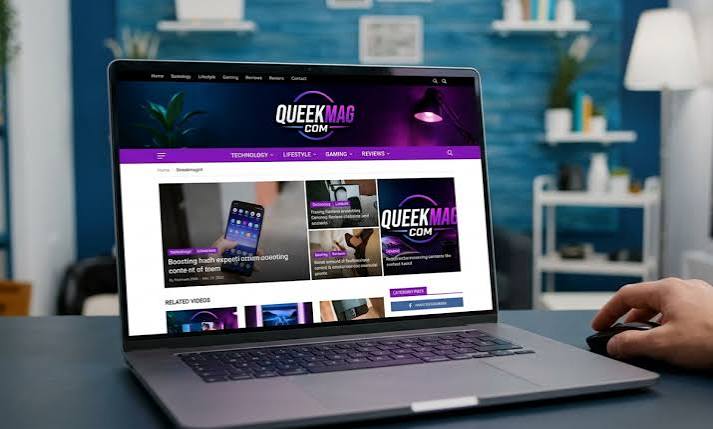
According to publicly available website information, Queekmag.com presents itself as an online magazine that publishes content on lifestyle, technology and entertainment. Its stated aim is to offer readers articles, trends and tips for a broad audience, with a design focused on easy navigation.
That is a self-description, and a self-description is only a starting point. Every website says it offers quality content. What matters is whether the pages themselves back up that promise. To see how another blog can be examined the same way, TechArticle’s guide to Foxydroom.com: blog topics, features, and what readers can expect is a useful comparison.
What Can Be Verified About the Site
Public domain and server records can tell us a few technical facts. These facts say something about how the site is set up, but they do not prove anything about the quality of its writing.
- HTTPS is enabled. Public records show the domain uses an SSL/TLS certificate, which means the connection between your browser and the site is encrypted. This protects your data in transit. It is a basic requirement today and does not mean the content is accurate.
- The domain redirects to the www version. The bare domain forwards visitors to the www address, which is a normal and common setup.
- DNS is managed through Cloudflare. Cloudflare is a widely used service that speeds up and protects websites. Millions of sites, both excellent and poor, use it, so it is neither a good nor a bad sign.
- The domain registrar is Wild West Domains. This is a mainstream registrar, again a neutral fact.
Notice what is missing from this list: editorial standards, author credentials, ownership details and a corrections policy. Those are the things that actually determine whether an article deserves your trust, and they are the things you should look for yourself on the site. We were not able to confirm them from outside sources, so we are not going to claim them either way.
Why Trust Is a Question for Every Content Site
It is tempting to treat this as a question about one website, but it is really about the whole modern web. Search engines and social feeds surface articles based on relevance and popularity, not on whether the author checked their facts. A well-designed page with a confident headline can still contain errors, outdated advice or recycled text.
Google itself describes the qualities it wants to reward as experience, expertise, authoritativeness and trustworthiness, often shortened to E-E-A-T. Of these, trust is the most important. Google’s guidance also stresses that content should be created to help people, not to attract clicks or manipulate rankings. Those same principles make an excellent reader’s checklist, because they describe what a reliable article looks like from the inside.
A Seven-Point Checklist for Judging Any Article
Use the following checks on Queekmag.com. Spend ten minutes on three or four articles in the categories you care about, and you will have a much clearer picture than any review can give you.
1. Look for a real author
A trustworthy article usually has a named author with a short bio. Ask yourself: does the author have a profile page? Do they explain their background in the topic? Can you find the same person elsewhere online, such as a professional profile or other published work?
An article published under a vague label like “Admin” or “Staff” is not automatically bad, but it gives you nothing to verify. For topics that affect your health, money or safety, a named and qualified author matters a great deal.
2. Check the About and Contact pages
Reliable publishers tell you who they are. Look for an About page that explains the purpose of the site, who runs it and how the content is produced. Look for a Contact page with a working email address or form. If a site asks for your attention and gives you no way to reach a human being, treat that as a caution sign.
3. Read the editorial and privacy policies
A site that takes quality seriously usually publishes some form of editorial policy, a privacy policy and terms of use. These documents show that someone has thought about accountability. Also look for a corrections policy: how does the site handle mistakes once they are pointed out?
4. Examine the sources inside the article
Good articles show their work. When a piece makes a factual claim, such as a statistic, a product specification or a news report, it should point to where that information came from. Click a few of the links. Do they lead to original sources like official pages, research, company announcements or reputable news outlets? Or do they loop back to other pages on the same site, or lead nowhere?
5. Check the date and whether it is updated
Technology and entertainment change quickly. A “best phones” list from three years ago is not helpful today. Look for a clear publication date and, ideally, an updated date. An article with no date at all makes it impossible to judge whether the information still applies.
6. Test for original value
Ask whether the article tells you something you could not get from a quick search. Does it include first-hand experience, original photos, real testing, a clear opinion backed by reasons, or a useful comparison? Or does it simply rephrase widely available information in slightly different words? Google’s own guidance warns against content made mainly to fill pages, and readers can spot it by how thin and repetitive it feels.
7. Watch how the page treats you
Pay attention to the reading experience. Heavy pop-ups, misleading buttons, ads disguised as content or headlines that promise more than the article delivers all signal a site that values clicks over readers. A calm layout with clear labels for sponsored content is a healthy sign.
Applying the Checklist to Queekmag.com
Since Queekmag.com covers lifestyle, technology and entertainment, here is how to apply the checklist to each area.
Lifestyle articles. These often include advice about home, food, relationships, fashion or personal habits. Low-risk topics, such as decorating ideas, are fine to read casually. If an article drifts into health, diet or financial advice, look for a qualified author and cited sources before acting. When in doubt, treat the article as inspiration and confirm the details with a professional.
Technology articles. Check whether product claims match the manufacturer’s official specifications, and whether the article states how the writer tested the product. Reviews that never mention hands-on use, or that read like a press release, deserve extra caution. Always check the date, since prices and features change quickly. For more tech explainers to compare against, browse the technology section on TechArticle.
Entertainment articles. Release dates, cast lists and rumors spread fast and are often repeated without checking. Compare any big claim with an official announcement or a major news outlet before sharing it. A story that appears on only one site and cites no source is best treated as unconfirmed.
Across all three areas, the same rule applies: the more serious the consequences of being wrong, the more proof you should ask for.
Common Red Flags on Any Magazine-Style Website
These warning signs appear on many sites. One alone is not proof of a problem, but several together are a reason to step back.
- No named authors, no About page and no way to contact the publisher.
- Headlines written to provoke shock or curiosity that the article never satisfies.
- Articles that are very similar to each other, with only a few words changed.
- Claims with exact numbers but no source.
- Stock images used with no credit and no connection to the topic.
- Content that reads as if it was written without any real experience of the subject.
- Large numbers of affiliate links or promotional mentions without clear disclosure.
- No dates, or dates that do not match the events described.
- Grammar, facts and formatting that change sharply from one article to the next.
If you notice several of these on Queekmag.com, the safest approach is to verify its claims elsewhere. If you notice few or none, and the site shows clear authorship and sourcing, you can reasonably give it more trust.
How to Verify a Claim in Under Five Minutes
You do not need special tools to fact-check an article. A simple routine works well:
- Pick the key claim. What is the one statement the article depends on?
- Search for it independently. Use a search engine and add words such as “official” or “announcement” to reach primary sources.
- Compare at least two reliable sources. If respected outlets or official pages agree, the claim is likely sound.
- Check the publication date of each source so you are not comparing old and new information.
- Note what you cannot confirm. If you cannot find support, treat the claim as uncertain rather than assuming it is false or true.
This habit takes minutes and protects you from most misinformation, no matter which website you are reading.
Final Thoughts
So, should you trust the articles on Queekmag.com? The honest answer is that no outside review can settle that for you. What we can confirm is limited: the site describes itself as a lifestyle, technology and entertainment magazine, it uses HTTPS, and its technical setup looks ordinary. What we cannot confirm from the outside are the things that matter most: who writes the articles, how they are checked and how errors are corrected.
The good news is that you do not have to take anyone’s word for it. Check the authors, read the About and policy pages, follow the sources, look at the dates and test a few claims yourself. If the site passes these checks, you can read it with reasonable confidence. If it does not, treat its articles as a starting point for your own research rather than the final word.
Trust online is earned page by page. The best readers are not the most suspicious or the most trusting ones. They are the ones who check.
Frequently Asked Questions
Is Queekmag.com safe to visit? Public records show it uses HTTPS, so your connection to it is encrypted. As with any website, avoid downloading unknown files or entering personal details unless you are confident about the page you are on.
Does a secure padlock mean the content is accurate? No. HTTPS only protects the connection. It says nothing about whether the information is correct.
How can I tell if an article is written by a real expert? Look for a named author with a bio, relevant experience and other verifiable work. For health, legal or financial topics, rely on qualified professionals and official sources.
What should I do if I find an error? Use the site’s contact page to report it, and check whether the site has a corrections policy. A responsible publisher fixes mistakes and says so.
