


Sometimes you land on a website you have never heard of. Maybe a search result sent you there, or someone shared a link. Before you read, click, or share, a good question to ask is simple: what is this site, and can I trust it?
This article looks at Afextop.com. It explains what the site appears to be, what it publishes, what looks fine, what looks unclear, and how to decide whether it is “legit.” In this case, “legit” can mean two different things. First, is it a real, working website and not a scam? Second, is it a reliable source of information? These are different questions, and the answers can be different too.
A note on method. This review is based on the public home page as it appeared on October 17, 2026, plus a quick web search. Websites change, so some details may be different when you read this. We did not read every page, and we cannot see who runs the site or how its articles are made. We describe what is visible and suggest checks. We are not making claims about the intentions of the site’s owners.
What Is Afextop.com?
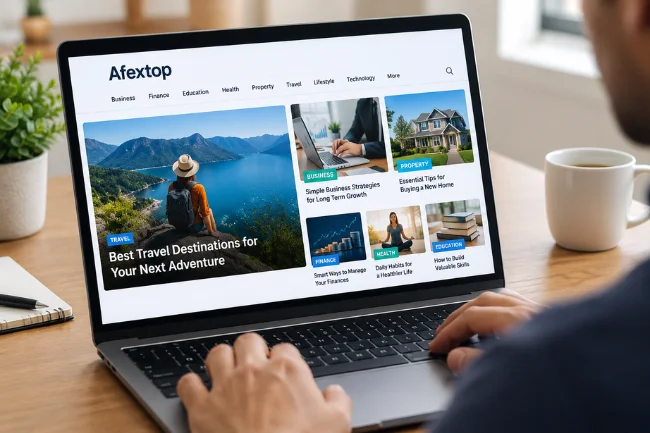
Afextop.com is a general-interest blog or content website. It runs on WordPress, a common publishing platform used by many kinds of sites, from small blogs to large publishers. The site title shown is “Afex Top.”
A Name That Can Confuse
The name “Afex” is also used by other, unrelated businesses, including companies in the currency and payments world. When we searched, many results were about those organizations and not about this website. We did not see any sign that Afextop.com is connected to them. If you are looking for a financial company with a similar name, make sure you are on its official website and not on this blog. Never enter account details or make payments based only on a name match.
What the Site Publishes
The articles we saw on the home page covered a broad range of subjects. Examples of titles included:
- A piece about real-time sports updates and technology.
- An article about why traditional card games still appeal to digital audiences.
- A guide to finding a vehicle at the right price.
- An article on lease agreements that backfire for property owners.
- A piece comparing the legal reality of real estate tokenization with blockchain hype.
- An article on hidden property liabilities, such as easements, liens, and encroachments.
These are informational, explainer-style posts. Some touch on areas where mistakes can be costly, such as property law, leases, and finance. That matters, because content on money and legal topics should be written or reviewed by qualified people, and it should be clear who they are.
What Looks Fine
Several things on the site are normal or positive.
It has standard policy pages. The site links to an About page, Contact Us, Privacy Policy, Terms and Conditions, Disclaimer, and a DMCA policy. These pages are a common sign of a site that has at least covered the basics.
It does not appear to collect money from visitors. We did not see a store, a payment form, or a sign-up that asks for card details. This lowers one common risk, which is paying for something that never arrives.
It shows a copyright notice. The footer shows a 2026 copyright line, so the site appears to be maintained.
There are author pages. The posts are credited to named authors, and each author name links to an archive of posts.
The writing is informational, not a hard sell. The articles we saw read like general explainers and not like direct sales pitches.
What Looks Unclear
Here are the points that leave questions open. None of them proves anything bad, but together they mean readers should be careful.
1. The Owner Is Not Named
We could not find who runs the site. The copyright line names only the domain. The contact page shows no street address or visible direct contact details, and the email address is hidden from view. Many small publishers keep their identity private, so this is not unusual. Still, for topics like money, health, or law, knowing who stands behind the content helps readers trust it.
2. The Author Pages Have No Visible Bios
Most posts are credited to one author name, with a few to another. The author pages did not show biographies. A reader cannot tell whether these are real people, what their background is, or why they are qualified to write about property law or finance. Shared or pen names are also common on blogs, so this is not proof of a problem. But it means the “expertise” part of Google’s quality guidance is hard to confirm.
3. The About Page and FAQ Seem Generic
The About page title and the FAQ were vague. The FAQ answers were short and repetitive, mostly encouraging visitors to explore the website, and repeated the site’s name often. Good About pages explain who the team is, what the site is for, and how content is created and checked. A vague page leaves readers guessing.
4. No Editorial Policy Was Seen
We did not see a page that explains how articles are written, fact-checked, or corrected. Many trusted publishers have such a page. Its absence does not mean there is no process, but readers cannot see one.
5. Advertising and Guest Posting
A sidebar banner promoted a “Guest Post Marketplace,” which suggests paid guest posting is something the site’s network deals with. Paid guest posts are not illegal, and many sites run them. The concern is disclosure. We did not see any article clearly marked as sponsored. If a post is paid for, readers should be told. Google also warns against links that are bought to manipulate search rankings, so both readers and site owners should be careful here.
6. Broad Topics and Sensitive Subjects
A site that writes about everything, from fashion to property law, can have difficulty showing real expertise in each field. When broad coverage meets sensitive subjects, such as legal and financial topics, it is wise to double-check the facts.
7. Little Visible Reader Activity
The comments area showed no recent comments. That is not a problem by itself, since many sites turn off comments, but it means there is little public feedback to help judge the site.
8. Little Independent Information
A quick web search turned up mostly unrelated companies with similar names. We did not find independent news coverage or reviews of the site itself. This is normal for small sites, but it means readers have few outside opinions to rely on.
So, Is Afextop.com Legit?
Let us answer both meanings of the question.
Is it a real, working website and not an obvious scam? Based on what we saw, it looks like an ordinary informational blog. It does not sell anything, ask for payments, or request personal details on the pages we reviewed. We did not see the usual warning signs of a scam, such as fake prizes, urgent threats, or requests for card numbers. That said, we only reviewed the public home page, and we cannot guarantee what other pages or pop-ups may do. Always use normal online safety habits.
Is it a reliable source of information? This is harder to say. The site is open about some basics, such as its legal pages, but unclear about others, including who runs it, who writes the articles, how content is checked, and whether any posts are paid. For casual reading, that may be fine. For decisions about money, property, health, or law, you should confirm important facts with official or professional sources.
A fair summary would be this: the site appears to be a low-transparency content blog, not an obvious scam, and its articles should be treated as general information, not expert advice.
How to Check Any Website Yourself
You can use these steps for Afextop.com or for any site you do not know.
- Look for the owner. Check the About and Contact pages for a company name, an address, or named editors.
- Check the authors. Click author names. Look for real backgrounds and relevant experience.
- Look for sources. Good articles link to official websites, studies, laws, or original reports.
- Check the date. Make sure the information is recent enough, especially for rules, prices, and laws.
- Look for labels. See whether ads, affiliate links, and sponsored posts are clearly marked.
- Read the policies. Open the privacy and editorial pages and see whether they give real details.
- Compare with other sources. If a claim matters, find it on an official or well-known website.
- Search for independent opinions. Look for reviews or news about the site, and read them with care.
- Check the web address. Make sure the spelling matches the site you expected, because look-alike names are a common trick.
- Protect your data. Do not enter passwords, card numbers, or ID numbers on a site you do not trust.

Safety Tips for Readers
- Do not download files or install software because an unknown website tells you to.
- Be careful with pop-ups and “your device has a problem” messages.
- Do not rely on one blog for legal, medical, or financial decisions. Talk to a qualified professional.
- Use updated browsers and security software.
- If something feels wrong, close the page.
Tips for Website Owners and Writers
If you run a content site and want readers and search engines to trust it, a few steps help a lot:
- Say who you are. Name your team and explain your purpose on a clear About page.
- Add real author bios. Show why each writer is qualified.
- Focus on fewer topics. Depth is more helpful than covering everything.
- Cite sources. Link to official and original material.
- Have experts review sensitive topics. Law, health, and finance need extra care.
- Label paid content. Mark sponsored posts and affiliate links clearly.
- Explain your editorial process. Tell readers how you check and correct articles.
- Be open about AI tools. If you use them, review and fact-check the results.
- Write FAQs that really answer questions. Avoid filler.
- Update old content. Show when pages were last changed.
These steps match Google’s guidance on helpful, people-first content.
Frequently Asked Questions
Is Afextop.com a scam? On the pages we reviewed, we did not see typical scam features, such as selling products, asking for payments, or requesting personal details. However, we reviewed only the home page, so use normal caution.
Is Afextop.com the same as AFEX, the financial company? We did not see any link between them. The name is similar to other businesses, so make sure you are on the correct website if you are looking for a financial service.
Can I trust the legal and property articles? Treat them as general information. They do not show clear author credentials, so check important points with official sources or a qualified professional.
Does having a Privacy Policy and DMCA page prove a site is reliable? No. It is a good sign, but what matters is whether the pages are specific and followed in practice.
Why does it matter if a site shows its owner? Knowing who is responsible makes it easier to hold the site to account, report mistakes, and judge whether the information is trustworthy.
What should I do if I think a page is misleading? You can contact the site, use the reporting tools of search engines, or simply choose not to rely on it.
Conclusion
Afextop.com appears to be a general-interest blog covering many subjects, from technology and finance to real estate and entertainment. It has the usual legal pages and does not appear to sell anything or collect payments. At the same time, it leaves several questions open, including who runs it, who writes the articles, how content is checked, and whether any posts are paid.
That makes it a site to read with care rather than one to avoid or to trust blindly. Use it for general ideas, check anything important against official or professional sources, and keep your personal and financial details safe. The same simple checks will help you judge any website you meet online.