
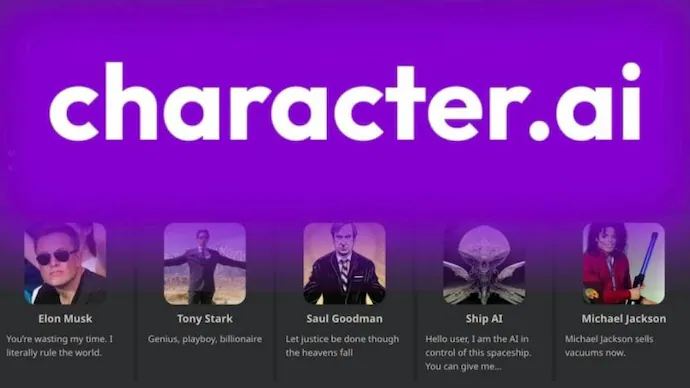
Artificial Intelligence (AI) has undeniably transformed the landscape of technology, enabling machines to replicate human-like behavior. Among its many branches, character AI—AI designed to emulate personality, behavior, and decision-making akin to humans or fictional personas—has been particularly fascinating. To understand the strides we’ve made today, it’s crucial to trace the evolution and roots of early innovations in character AI, exploring the pivotal moments that defined its trajectory.
The Genesis of Character AI
The concept of creating machines that mimic human behavior is not new. Its origins can be traced back to antiquity, with myths and legends depicting automata that acted independently. However, the scientific pursuit began in earnest during the mid-20th century.
Early Theoretical Foundations
The groundwork for character AI was laid in the 1940s and 1950s with the emergence of cybernetics. Pioneers like Norbert Wiener and Alan Turing explored the possibility of creating machines capable of “thinking” or “learning.” Turing’s seminal 1950 paper, “Computing Machinery and Intelligence,” introduced the Turing Test, which evaluated a machine’s ability to exhibit intelligent behavior indistinguishable from a human.
During this era, the primary focus was on rule-based systems. These systems, designed to follow pre-set instructions, were the earliest attempts at simulating decision-making processes. While limited in complexity, they marked the first steps toward creating machine “personalities.”
The ELIZA Breakthrough
One of the first notable examples of character AI was ELIZA, developed by Joseph Weizenbaum in the 1960s. ELIZA, a natural language processing program, simulated a psychotherapist by engaging users in text-based conversations. Its ability to reflect and rephrase user input gave the illusion of understanding.
While ELIZA lacked true comprehension, its impact was profound. It demonstrated the potential of machines to mimic conversational behaviors, sparking interest in building more sophisticated character AI systems.
The Rise of Expert Systems and Rule-Based Models
The 1970s and 1980s saw the proliferation of expert systems, AI programs designed to emulate the decision-making abilities of human experts. These systems, like MYCIN and DENDRAL, relied on vast repositories of knowledge and intricate rule-based logic to simulate human reasoning.
Although primarily developed for specialized tasks like medical diagnosis, expert systems influenced the evolution of character AI. They highlighted the importance of context and domain knowledge, paving the way for creating AI characters capable of nuanced interactions.
Video Games as a Testing Ground
During this period, the burgeoning video game industry became a fertile testing ground for character AI. Early arcade games like “Pac-Man” featured rudimentary AI behaviors, with ghosts programmed to follow specific movement patterns. As technology advanced, games such as “Ultima” and “The Elder Scrolls” introduced more complex NPCs (non-player characters), demonstrating how AI could enrich storytelling and player engagement.
The Advent of Machine Learning
The 1990s marked a paradigm shift with the advent of machine learning (ML). Unlike rule-based systems, which required explicit programming, ML models learned patterns from data. This capability allowed for the creation of more dynamic and adaptive AI characters.
Neural Networks and Chatbots
With the resurgence of neural networks, AI gained the ability to process and generate language more effectively. Chatbots like A.L.I.C.E (Artificial Linguistic Internet Computer Entity), developed in the late 1990s, leveraged pattern matching and a knowledge base to engage users in more sophisticated conversations. A.L.I.C.E won several Loebner Prizes, a competition based on the Turing Test, demonstrating its advancements in conversational AI.
AI in Interactive Media
The 1990s also witnessed breakthroughs in interactive media. Games like “The Sims” showcased AI-driven characters with simulated emotions, desires, and social behaviors. These characters, while simplistic by today’s standards, represented a significant leap in creating believable and relatable AI personalities.
The Emergence of Deep Learning
The 21st century ushered in the era of deep learning, revolutionizing character AI. Deep learning models, powered by large-scale neural networks, excelled in tasks like image and speech recognition. Their application to natural language processing (NLP) transformed the capabilities of AI systems.
Chatbots and Virtual Assistants
Advances in NLP led to the rise of virtual assistants like Siri, Alexa, and Google Assistant. These systems, though not explicitly designed as “characters,” exhibited personality traits through tone, humor, and contextual understanding. Their widespread adoption highlighted the growing acceptance of AI in daily life.
AI in Entertainment
Deep learning also enabled more immersive AI characters in entertainment. Virtual influencers like Lil Miquela and AI-generated personas became popular on social media, blurring the line between human and machine-generated content.
Challenges and Ethical Considerations
As character AI advanced, so did concerns about its implications. Key challenges included:
- Authenticity vs. Manipulation: AI characters could deceive users into believing they were interacting with real humans, raising ethical questions about transparency.
- Bias in AI Models: Training data biases often resulted in AI characters perpetuating stereotypes or exhibiting unintended behaviors.
- Privacy Concerns: AI systems that analyzed user interactions to improve performance faced scrutiny over data collection practices.
- Dependency and Social Impact: The increasing reliance on AI companions raised concerns about their impact on human relationships and mental health.
The Road Ahead: Character AI in 2024 and Beyond
Today, character AI stands at the forefront of technological innovation, with applications ranging from virtual assistants to gaming, education, and therapy. Cutting-edge models like OpenAI’s GPT series and Google’s Bard demonstrate remarkable progress in generating human-like text and engaging in context-aware interactions.
Advances in Personalization
Modern AI systems emphasize personalization, enabling characters to adapt to individual user preferences. This capability has profound implications for education, where AI tutors can tailor lessons to each student’s learning style, and in mental health, where AI therapists offer customized support.
Integrating Multimodal Capabilities
The future of character AI lies in multimodal systems that combine text, voice, and visual data. Such systems can create richer and more immersive interactions. For instance, virtual reality (VR) platforms integrate character AI to simulate lifelike environments for training or entertainment.
Collaborative and Creative AI
AI is increasingly being used as a collaborator in creative fields. From co-writing scripts to generating artwork, character AI assists artists and writers, expanding the boundaries of human creativity.
Ethical AI Development
As character AI becomes more sophisticated, ethical considerations remain paramount. Developers prioritize transparency, accountability, and inclusivity to ensure AI systems benefit society without causing harm.
Conclusion
Tracing the evolution of character AI reveals a fascinating journey from rule-based systems to deep learning-powered marvels. Each milestone reflects humanity’s relentless pursuit of creating machines that mirror our intelligence and personality. As we stand on the cusp of new breakthroughs in 2024, the potential of character AI to transform industries, enhance creativity, and enrich human experiences is boundless. By embracing innovation while addressing ethical challenges, we can ensure that the next chapter in character AI’s history is both inspiring and responsible.
FAQ
1. What is Character AI Old?
Character AI Old refers to the early stages of character-driven artificial intelligence development, focusing on the foundational innovations that shaped modern AI models. This includes early text generation systems, primitive chatbots, and the algorithms that enabled virtual characters to simulate human-like interaction.
2. Why is it important to study early AI innovations?
Understanding the roots of character AI allows us to appreciate the technical challenges pioneers faced, the evolution of algorithms, and how they influenced today’s sophisticated systems. It also highlights key breakthroughs and their impact on industries like gaming, education, and entertainment.
3. What were some notable early AI systems?
Some groundbreaking systems in early character AI include:
- ELIZA (1960s): A natural language processing program mimicking a therapist.
- PARRY (1970s): Simulated a patient with paranoid schizophrenia.
- Alice (1990s): A chatbot based on AIML (Artificial Intelligence Markup Language).
- Sims (2000s): Interactive characters in video games, combining AI and behavior modeling.
4. How did hardware limitations shape early AI?
Limited processing power and memory forced developers to design lightweight algorithms. These systems relied on heuristics, predefined rules, and basic machine learning rather than today’s deep learning techniques.
5. What breakthroughs enabled modern character AI?
Key advancements include:
- Improved computational power: Enabled more complex models and faster processing.
- Neural networks: Inspired by the brain, these allowed for pattern recognition and decision-making.
- Natural Language Processing (NLP): Enhanced interaction quality, making responses more human-like.
- Big Data: Provided vast training datasets for machine learning algorithms.
6. What industries benefited most from early character AI?
Early AI innovations revolutionized:
- Gaming: Creating realistic NPCs (Non-Player Characters).
- Customer service: Automating responses via chatbots.
- Education: Developing virtual tutors and learning companions.
- Healthcare: Designing therapeutic interaction bots.
7. How does early character AI compare to modern systems?
While early systems were rule-based and predictable, modern AI leverages deep learning, contextual understanding, and emotional intelligence. Today’s systems are capable of learning and adapting, while early AI was limited to its programming.
8. What are the ethical lessons from early AI development?
Ethical challenges like data privacy, misuse of AI, and bias were often overlooked in early systems due to their simplicity. Modern developers can learn from these oversights by prioritizing ethical considerations in AI design.
9. Can I experiment with early AI systems today?
Yes, many early systems like ELIZA have been preserved as open-source projects. They offer a fascinating glimpse into the beginnings of AI.
10. What is the future of character AI?
The future lies in creating highly adaptive, empathetic, and context-aware virtual characters. Innovations in quantum computing, generative AI, and multimodal systems are expected to further advance this field.
