


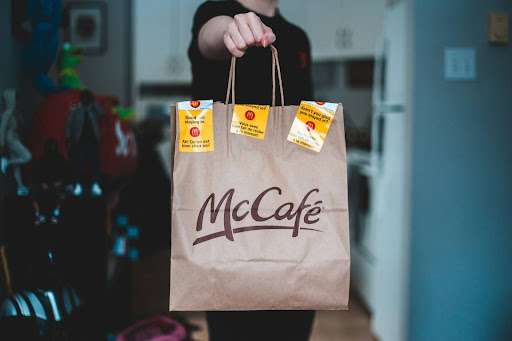
The market of food delivery has changed greatly during the last few years. The expectations of users have grown — modern customers want to know not only the arrival time of the order, but also its Real-Time Tracking Integration. Tracking in real time is no longer a bonus, but an obligatory part of the user experience.
Customer Expectations Dictate the Rules
Today, it is not enough to provide food quickly — it is important to give predictability, transparency, and the sense of control. The visualization of courier location, estimated time of arrival and live notifications work to establish trust in the customer that his order is under control.
From Transparency to Loyalty
Tracking integration contributes to brand trust. If the user can see the courier leaving, arriving, waiting in traffic he will be less likely to cancel orders, less likely to appear for support and more likely to order again. This is not just UX improvement, but a direct contribution to customer retention and conversion increase.
Standards Set by Market Leaders
Uber Eats, DoorDash has long demonstrated how vital it is to provide users with real-time access to information. Their experience has been a benchmark for new players in the market and engineering teams who wish to build an efficient, scalable delivery infrastructure.
The Benefit of Real-Time Tracking: From Kitchen to Door
Real-Time Tracking Integration in food delivery applications is not just one more feature, but a must-have element of modern logistics infrastructure. When competition is tough and users’ expectations are growing all the time, business thrives when it is able to ensure maximum transparency and flexibility. Below, we’ll discuss practical advantages of such implementation.
Reduction of the Number of Appeals in Support
One of the most frequent requests to customer support is: «Where is my order?». Real-Time Tracking Integration allows users to monitor delivery status themselves at every stage — from order confirmation to courier arrival. This reduces the load on the support service, and therefore optimizes resources and cuts expenses.
Improving User Engagement and Trust
When the customer can visually see in real time as the courier moves along the route, it creates a sense of control and confidence in the process. Data such as ETA (expected time of arrival), live location and status of the order («going», «on the way», «delivered») constitute a more transparent user experience, which, in particular, is vital for customer retention and LTV (Lifetime Value) increase.
Optimization of Internal Processes
Tracking is not just about the customer. From an operational control standpoint, it is a rich source of information that allows:
- Analyse route efficiency;
- Estimate average delivery time by time of day and zone;
- Monitor performance of individual couriers;
- It’s faster to identify bottlenecks in logistics.
According to this data, you can automatically redistribute orders, scale the delivery fleet and improve SLAs.
Enhancing Competitiveness
Real-time tracking is obligatory in the navigation delivery age. The absence of this option is perceived by clients as an indicator of the low service level. The introduction of modern tracking modules allows business to remain competitive and match market expectations.
Technology Base: The Mechanism of Real-Time Tracking
The use of the real-time tracking system in food delivery applications is grounded in a well-established technology architecture. One should remember that behind the seeming simplicity of the «point on the map» there lies the complex interaction of several components:
Geolocation and GPS Modules
The basis of real-time tracking is to get the coordinates of the courier device. Most solutions use embedded GPS modules of smartphones, which offer accuracy from 5 to 20 meters. In order to work well, it is required to consider:
- low signal level operation (e.g., in multi-storey buildings);
- Power consumption (optimization of updates frequency and autonomy);
- Ability to be adaptable to different platforms: iOS, Android.
Web Sockets and Push Technologies
To provide «live» updates of the client UI, WebSocket connections were used most often. This allows you to transmit your order’s coordinates and status without the need to refresh the page or request data explicitly.
Push notifications are used to deliver significant events (e.g., «courier picked up order» or «5 minutes delivery»), providing quick and easy interaction with the user.
Machine Learning and Routing
In more complex systems, there is a second level of intellectual examination. With ML-models, you are able to calculate the ETA (Estimated Time of Arrival), determine the most efficient routes, take into consideration traffic jams and weather, as well as even courier behaviour based on historical experience.
Integration with Other Systems
In order to offer integration between all the players of the chain (restaurant, courier, customer), it is required to synchronize information with:
- POS systems for restaurants;
- CRM/ERP platforms;
- The courier bonus payment and invoicing module.
Implementation: Steps to Implement Tracking
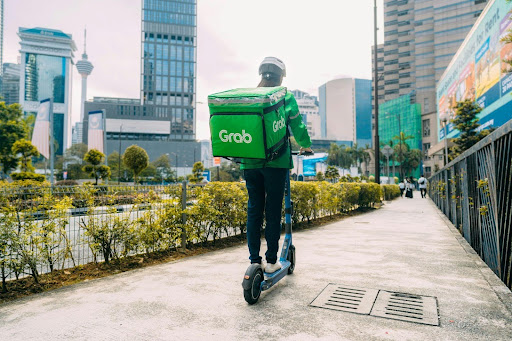

We recommend that you approach the Real-Time Tracking Integration in stages, regardless of whether you are developing your own platform or integrating finished solutions.
Analysis of Current Business Processes
At this stage, it is important to understand how the delivery goes now:
- Where do the delays occur?
- Are there any problems with communication between the customer and the courier?
- What control points do businesses need?
The answers to these questions determine what data should be collected and displayed.
Choice of Architecture and Technology
If you already have a mobile application, it is important to determine whether the tracking will be implemented through a third-party SDK (such as Google Maps, Mapbox) or through your own solution. You should also choose the data exchange method: REST API, WebSocket, Firebase etc.
At this stage, the following are decided:
- Update accuracy and frequency requirements;
- Load characteristics and scalability;
- Platform support (iOS, Android, Web).
Ensuring Legal Clarity
Work with geodata is regulated at the level of legislation. It is necessary to:
- Obtain the explicit consent of the user;
- Provide for the possibility of disabling tracking;
- Ensure safe storage and transfer of coordinates.
It is especially important to consider the GDPR requirements if you work with European users.
MVP and Pilot Testing
Before full launch, we always recommend conducting the pilot:
- Limit the number of couriers and orders;
- Track errors, lag times, GPS failures;
- Collect feed from couriers and customers.
Scaling up and Staff Training
After a successful pilot, you can deploy the system to all regions. In this case:
- Train couriers to use the app correctly;
- Configure internal support for technical failures;
- Ensure the quality of geo-data and correct display of routes.
UX and Tracking Interface: Not Just Technology, but Perception
Technical implementation of tracking is just half the issue. The other half — how it is shown to the user. A well-built interface not only increases customer satisfaction, but also reduces the load on the support, decreasing the number «where is my order?» requests.
Key Features of Good UI Tracking:
Dynamic map with updated courier status
Interactivity — critical. The user needs to not just see the «status», but actual courier movement in real-time.
- Visual ETA and progress track: Displaying expected time of arrival + display of stages (confirmed, preparing, in transit, delivered) gives sense of control.
- Courier contact: Chat button or messenger call within the interface averts most confusion and establishes confidence.
- Informative pouches and status updates: The user does not need to re-verify the card every 5 minutes. Push notifications for key events (departure, arrival, etc.) need to be timely but not intrusive. The RSVP-RSVP-RSVP-RSVP-RSVP.
Implementation Strategy:
- Use React Native/Flutter for cross-platform capability
- Integrate with Mapbox, Google Maps API or OpenStreetMap depending on budget and geography
- Use state management libraries (Redux, Bloc, MobX) to have status and routes synced between screens
Result:
The appropriately crafted UX tracking module saves the user from tension, speeds up decision-making (go to courier, get address resolved etc.) and increases the degree of involvement in the application environment. The UX tracking module is also of immense advantage to the users.

Problems and Fixes: Anything That May Occur
Integration is not just attaching a GPS module to something. It’s a build of interdependencies, where one little error can have the ability to affect the worldwide UX. Below are the major problems individuals encounter and our recommendation on how to fix them.
Problem: Unreliable Coordinate Delivery
Poor quality of GPS signals, especially in populated areas or buildings, can lead to miss location of the courier. This reduces the system’s reliability.
Solution:
- Use of hybrid geolocation (GPS + Wi-Fi + cellular networks)
- Caching last good location with timestamp
- Data processing using filter algorithms for «noisy» points (Kalman filter, particle filter)
Problem: System Overload at Heavy Loads
Mass real-time location updates put a heavy load on the backend and communication channels, especially during rush hours.
Solution:
- Implementation of adaptive frequency update over WebSocket
- Distributed data transfer through message brokers (e.g., Kafka)
- Caching status on CDN for custom apps
Problem: Security and Privacy
Real-time tracking involves gathering sensitive information. This always raises questions among users and requires following standards.
Solution:
- Data encryption in transit and storage (TLS, AES)
- Maintaining coordinates strictly within data TTL needed
- Compliance with GDPR and local regulators
Conclusion: The Future of Delivery — Transparency and Efficiency
The implementation of real-time tracking extended beyond being a second function a few years back. Today, it has become a necessary component of any successful food delivery business. It not only brings about a sense of control to the user but also becomes a cost-effective tool of internal procedures: ranging from routing to increasing service level.
We can already notice that the future is for predictive systems that not only show where the courier is, but also inform about possible delays, offer alternatives and adapt to the current situation. To understand the latest trends in food delivery development, look at our page: https://celadonsoft.com/solutions/food-delivery-app-development-services.
Such solutions are deployed with technical proficiency, adaptive architecture and vigilant attention — but the result is worth it. Transparency, automation, and trust — these are the three whales on which modern delivery floats.