


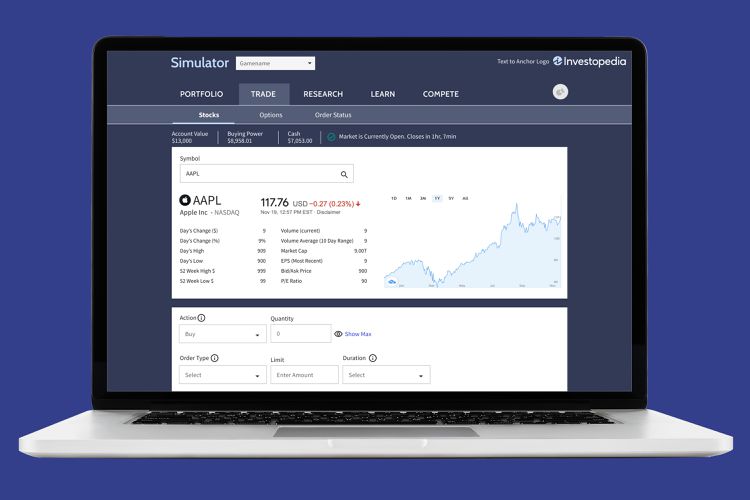
In today’s fast-paced digital economy, learning how to invest wisely has become more important than ever. With stock markets, ETFs, cryptocurrencies, and commodities constantly making headlines, many people want to start investing but fear losing real money due to lack of experience. This is exactly where the Investopedia Simulator comes in.
The Investopedia Simulator is one of the most popular and trusted virtual trading platforms in the world. It allows users to practice stock trading, test investment strategies, and understand market behavior without risking real money. Whether you’re a beginner, a student, or an experienced trader testing new strategies, the simulator offers a realistic, educational, and engaging experience.
This in-depth guide explores everything you need to know about the Investopedia Simulator how it works, its features, benefits, limitations, and why it remains one of the best stock market simulators in 2025.
What Is Investopedia Simulator?
The Investopedia Simulator is a free online stock trading simulation platform developed by Investopedia, one of the world’s most trusted financial education websites. The simulator mimics real-world financial markets using live or delayed market data, allowing users to trade stocks, ETFs, mutual funds, options, and other securities in a risk-free environment.
Users are given a virtual cash balance (usually $100,000 by default) to build and manage a portfolio. All trades are executed at real market prices, making the experience very close to actual trading.
The simulator is widely used by:
-
Beginners learning stock market basics
-
College and finance students
-
Teachers and professors for classroom learning
-
Experienced investors testing strategies
-
Traders practicing before investing real money
Why Investopedia Simulator Is So Popular
The popularity of Investopedia Simulator comes from its educational focus, realism, and accessibility. Unlike many paid trading simulators, Investopedia offers a robust free version that delivers immense value.
Key reasons for its popularity include:
-
Trusted brand reputation
-
Realistic trading environment
-
Easy-to-use interface
-
Free access to most features
-
Integration with Investopedia’s educational content

How the Investopedia Simulator Works
Using the Investopedia Simulator is straightforward, even for absolute beginners.
Step 1: Create an Account
Users sign up using an email address or social login. Once registered, they can immediately access the simulator dashboard.
Step 2: Get Virtual Capital
New accounts receive a default virtual cash balance (usually $100,000), which can be customized in some competitions or classrooms.
Step 3: Start Trading
Users can search for:
-
Stocks
-
ETFs
-
Mutual funds
-
Options
-
Commodities
Trades can be placed as:
-
Market orders
-
Limit orders
-
Stop orders
Step 4: Track Performance
The simulator tracks:
-
Portfolio value
-
Gains and losses
-
Dividends
-
Transaction history
This helps users understand how decisions affect performance over time.
Key Features of Investopedia Simulator
1. Real-Time Market Data
The simulator uses real or near-real-time market prices, ensuring realistic trade execution and portfolio movement.
2. Wide Range of Assets
Users can trade:
-
U.S. stocks
-
ETFs
-
Mutual funds
-
Options
-
Forex (limited)
This allows diversification and exposure to multiple asset classes.
3. Options Trading Practice
One standout feature is options trading, which many simulators do not support well. Users can practice calls, puts, and advanced options strategies without financial risk.
4. Trading Competitions
Investopedia frequently hosts public competitions where users compete for the highest returns. These contests add a gamified element and improve engagement.
5. Classroom Mode
Teachers can create private classrooms, assign virtual capital, track student progress, and grade performance—making it ideal for finance education.
6. Portfolio Analytics
Detailed analytics show:
-
Asset allocation
-
Risk exposure
-
Individual trade performance
These insights help users learn portfolio management principles.
Benefits of Using Investopedia Simulator
Risk-Free Learning
The biggest advantage is zero financial risk. Users can make mistakes, learn from them, and refine strategies safely.
Ideal for Beginners
The simulator simplifies complex financial concepts, making it perfect for beginners who don’t yet understand market mechanics.
Strategy Testing
Experienced traders use the simulator to test:
-
Day trading strategies
-
Swing trading setups
-
Long-term investment approaches
Builds Confidence
Practicing in a simulated environment helps users gain confidence before entering real markets.
Educational Integration
Since Investopedia is known for financial education, users can easily learn definitions, concepts, and strategies alongside trading.
Investopedia Simulator vs Real Trading
While Investopedia Simulator is highly realistic, it’s important to understand the differences between simulation and real trading.
What the Simulator Does Well
-
Price realism
-
Market timing
-
Order types
-
Portfolio tracking
What It Cannot Replicate
-
Emotional pressure of real money
-
Slippage during high volatility
-
Liquidity issues in small-cap stocks
-
Psychological fear and greed
Despite these limitations, the simulator remains one of the closest experiences to real trading available for free.
Who Should Use Investopedia Simulator?
Beginners
People new to investing can learn:
-
How markets work
-
How to place trades
-
How gains and losses occur
Students
Finance, economics, and business students benefit from hands-on learning instead of just theory.
Teachers
Educators use the simulator for assignments, competitions, and performance evaluation.
Experienced Investors
Even seasoned traders can test new ideas without risking capital.
Investopedia Simulator for Classroom Learning
One of the most powerful features is its classroom functionality.
Teachers can:
-
Create private trading groups
-
Set start/end dates
-
Customize starting capital
-
Monitor individual student portfolios
This makes it a favorite tool in universities, colleges, and high schools worldwide.
Pros and Cons of Investopedia Simulator
Pros
-
Free to use
-
Trusted financial platform
-
Realistic market data
-
Supports options trading
-
Excellent educational value
Cons
-
Slight delay in real-time data
-
No real emotional trading pressure
-
Limited international market access
-
Interface can feel slow at times
Tips to Get the Most Out of Investopedia Simulator
-
Trade seriously – Treat virtual money like real money
-
Create a strategy – Don’t trade randomly
-
Track your mistakes – Learn from losses
-
Read Investopedia articles – Improve financial knowledge
-
Avoid gambling behavior – Focus on long-term learning
Is Investopedia Simulator Free?
Yes, the Investopedia Simulator is completely free to use. While Investopedia offers premium educational subscriptions, the simulator itself does not require payment.
How Realistic Is Investopedia Simulator?
Compared to other free simulators, Investopedia offers:
-
Highly accurate pricing
-
Realistic execution
-
Detailed portfolio metrics
Although it can’t fully simulate emotions and liquidity challenges, it remains one of the most realistic tools available for practice.
Investopedia Simulator in 2025: Still Worth It?
Absolutely. Even in 2025, with many advanced platforms available, Investopedia Simulator remains relevant because of:
-
Continuous updates
-
Strong educational backing
-
Free accessibility
-
Trusted brand credibility
It continues to be one of the best starting points for anyone entering the world of investing.
Alternatives to Investopedia Simulator
While Investopedia Simulator is excellent, some users may also explore:
-
TradingView Paper Trading
-
Thinkorswim PaperMoney
-
Webull Paper Trading
However, most alternatives either require brokerage accounts or are less beginner-friendly.
Final Verdict: Should You Use Investopedia Simulator?
If you want to learn investing safely, understand market behavior, and build confidence, Investopedia Simulator is an outstanding choice. It combines education, realism, and usability better than most free tools available today.
Whether you are a beginner taking your first steps into investing or an experienced trader refining strategies, the Investopedia Simulator provides a powerful, no-risk environment to grow your financial knowledge.
FAQs
Q1: Is Investopedia Simulator good for beginners?
Yes, it’s one of the best tools for beginners due to its educational focus.
Q2: Can I trade options on Investopedia Simulator?
Yes, options trading is supported.
Q3: Does it use real market data?
Yes, it uses real or slightly delayed market data.
Q4: Can teachers use it for classrooms?
Yes, it offers full classroom and competition features.
Q5: Is Investopedia Simulator completely free?
Yes, the simulator is free to use.