



If you’ve ever managed a data center through a lightning storm, or walked a manufacturing floor lined with sensitive robotics, you already understand something most people never think about: the ground beneath your feet isn’t just dirt. It’s the last line of defense standing between your equipment and a fault current that could fry a server rack, corrupt a production line’s control system, or worse, put a person’s life at risk. That’s the world Safetrode.com operates in a platform dedicated to explaining electrical grounding, surge protection, and the broader science of keeping electrical infrastructure safe and stable.
Most people treat grounding as a box to check off during an inspection. In reality, it’s a genuinely complex discipline involving soil resistivity, impedance, materials science, and long-term maintenance planning. Get it wrong, and you’re not just risking a failed audit you’re risking equipment damage, unplanned downtime, and in the worst cases, injury or death. Safetrode.com exists to make that complexity understandable for the people who deal with it every day: electrical engineers, contractors, facility managers, and anyone responsible for keeping a building or industrial site running safely.
This article walks through what modern electrical grounding actually involves, why it matters more than ever as infrastructure gets more sensitive and more connected, and how platforms like Safetrode.com are helping close the knowledge gap between code compliance and genuinely resilient design.
Why Grounding Is More Than a Compliance Checkbox
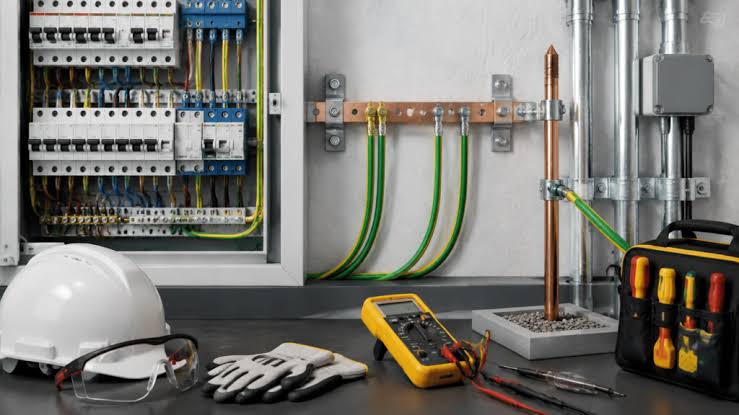
Every electrical installation, from a residential home to a hyperscale data center, relies on a grounding (or earthing) system to give excess electrical current a safe path back into the earth during a fault. Without that low-impedance path, energy doesn’t just disappear it lingers in the system as a transient voltage, and transient voltages are what fry motherboards, trip breakers unpredictably, and in extreme cases, electrocute people standing near exposed metal.
For decades, the standard approach was simple: drive a copper rod into the ground, bond it to the electrical system, and call it done. That approach still works for plenty of residential and light commercial applications. But as buildings have gotten more electronics-dense think server racks, PLCs, medical imaging equipment, and building automation systems the tolerance for even brief voltage transients has dropped dramatically. A voltage spike that would have been a non-event for a 1980s appliance can now corrupt data or damage a piece of equipment worth six figures.
This is the gap Safetrode.com’s content is aimed at closing: helping readers understand that grounding isn’t a one-size-fits-all afterthought, but a system that needs to be designed around the sensitivity of what it’s protecting.
The Shift Toward Electrolytic and Chemically Enhanced Grounding
One of the more notable shifts in the industry over the past several years has been the move away from basic copper ground rods toward electrolytic grounding systems and chemically enhanced backfill materials. This isn’t just an incremental improvement it addresses a real, persistent problem: soil conditions vary enormously, and a grounding system that performs well in moist clay might perform poorly in dry, sandy, or rocky terrain.
Electrolytic grounding systems work by using a hollow copper tube filled with a mineral salt compound, which slowly leaches into the surrounding soil and lowers its resistivity over time. Combined with conductive backfill materials, this approach can achieve significantly lower ground resistance than a traditional rod-and-wire setup, and it tends to remain more stable across seasonal changes in soil moisture something a bare copper rod struggles with, especially during dry summer months when soil resistivity spikes.
For facilities where ground resistance directly affects equipment reliability telecom towers, substations, data centers this kind of upgrade isn’t cosmetic. It’s often the difference between a lightning strike being a non-event and it being a multi-day outage.
Surge Protection: The Second Half of the Equation
Grounding gives fault current somewhere to go, but surge protection devices (SPDs) are what actively intercept and redirect dangerous voltage spikes before they reach sensitive equipment. The two systems work together a grounding system without surge protection is like a fire exit without a fire alarm; the path exists, but nothing is actively triggering the response when it matters.
Modern SPDs are typically installed at multiple points in an electrical system: at the service entrance to catch the largest external surges (like those from lightning or utility switching), and again closer to sensitive equipment to catch smaller internal surges caused by things like large motors cycling on and off. This layered, or “cascaded,” approach to surge protection has become standard practice in facilities where downtime is expensive and equipment is sensitive.
Content on platforms like Safetrode.com tends to emphasize this layered thinking, because a common mistake in less rigorous installations is treating a single surge protector at the panel as sufficient protection for an entire building. In practice, voltage let-through at the far end of a long circuit run can still be enough to damage equipment, even with upstream protection in place.
Lightning Protection Systems and Structural Risk
For taller structures, standalone buildings in open areas, or facilities housing critical infrastructure, lightning protection systems add another layer to the picture. A properly designed lightning protection system includes air terminals (lightning rods), down conductors, and a bonded connection to the grounding system, all working together to intercept a direct strike and safely conduct that massive current into the earth rather than through the structure itself.
The engineering challenge here is that a lightning strike can carry tens of thousands of amps for a fraction of a second nothing like the fault currents a standard grounding system is typically sized to handle. That’s why lightning protection design is its own specialized discipline, governed by standards like NFPA 780 in the U.S. and IEC 62305 internationally, and why it needs to be integrated with, rather than treated separately from, the building’s overall grounding and bonding system.
Why This Matters More Now Than It Did a Decade Ago
Electrical infrastructure has changed faster in the last ten years than in the several decades before it. A few forces are driving that shift:
- Data centers and edge computing have multiplied the number of facilities where even a millisecond of voltage instability translates into real financial loss.
- Renewable energy integration solar arrays, battery storage, EV charging infrastructure has introduced new grounding challenges that didn’t exist in traditional single-source electrical systems.
- Building automation and IoT devices have made commercial buildings far more electronics-dense than they were even fifteen years ago, lowering the threshold for what counts as a damaging transient.
- Climate patterns in many regions have shifted storm frequency and intensity, putting more real-world stress on lightning protection and surge systems than historical design assumptions accounted for.
Taken together, these trends mean that grounding and surge protection design decisions that used to be relatively low-stakes are now directly tied to uptime, equipment lifespan, and in some industries, regulatory compliance around data integrity and safety.
How Safetrode.com Fits Into This Landscape
Safetrode.com positions itself as an educational resource rather than a vendor pushing a specific product line, which is part of what makes it useful for readers trying to understand the underlying engineering rather than just comparison-shop equipment. The platform’s content spans the practical mechanics of grounding electrode design, the reasoning behind different surge protection strategies, and the standards that govern lightning protection aimed at engineers, electricians, contractors, and facility managers who need more than a surface-level explanation.
For readers new to the topic, this kind of resource matters because grounding and surge protection are areas where following code minimums doesn’t always mean you’ve built something genuinely resilient. Codes set a floor, not a ceiling, and a lot of real-world equipment failures happen in installations that were technically compliant but not designed with the specific sensitivity of the equipment in mind.
Practical Takeaways for Facility Managers and Engineers
If there’s one theme that runs through modern grounding and surge protection best practice, it’s that these systems need to be designed around what they’re protecting, not just around what a code minimum requires. A few practical points worth keeping in mind:
- Test ground resistance periodically, not just at installation. Soil conditions change, connections corrode, and a system that measured well five years ago may not measure well today.
- Don’t rely on a single surge protection point. Layered protection at the service entrance and near sensitive equipment catches a much wider range of transient events.
- Match the grounding system to the soil, not the other way around. In poor soil conditions, electrolytic or chemically enhanced grounding often outperforms traditional rods by a wide margin.
- Treat lightning protection as an integrated system, not an add-on. A lightning protection system that isn’t properly bonded to the building’s main grounding system can create dangerous side-flash risks rather than eliminating them.
Frequently Asked Questions
1. What is Safetrode.com? Safetrode.com is an educational platform focused on electrical safety, grounding systems, surge protection, and lightning protection technology, aimed at helping engineers, electricians, contractors, and facility managers understand the practical and technical sides of electrical infrastructure safety.
2. What is the difference between grounding and surge protection? Grounding provides a safe path for fault current to travel into the earth, preventing dangerous voltage buildup in equipment or structures. Surge protection devices actively intercept and redirect voltage spikes before they reach sensitive equipment. The two systems work together rather than substituting for one another.
3. Why are electrolytic grounding systems becoming more popular? Electrolytic grounding systems use a mineral salt compound that lowers soil resistivity around the grounding electrode, which helps achieve lower and more stable ground resistance in difficult soil conditions compared to traditional copper rods, especially in dry, sandy, or rocky terrain.
4. How often should a grounding system be tested? Most industry guidance recommends testing ground resistance annually for critical facilities like data centers and substations, and at minimum every few years for standard commercial buildings, since soil conditions and connection integrity can change over time.
5. Do all buildings need lightning protection systems? Not all buildings require dedicated lightning protection systems, but taller structures, standalone buildings in open areas, and facilities housing critical infrastructure or highly sensitive equipment are typically strong candidates, and in some jurisdictions or industries, lightning protection is a code or insurance requirement.
6. Can a single surge protector at the main panel protect an entire building? A single point of surge protection at the service entrance helps, but it often isn’t sufficient on its own. Voltage let-through can still reach damaging levels by the time it travels through long circuit runs to sensitive equipment, which is why layered, cascaded surge protection is generally recommended.
7. Who typically uses resources like Safetrode.com? The platform’s content is generally aimed at electrical engineers, licensed electricians, contractors, facility and data center managers, and anyone involved in designing, installing, or maintaining electrical grounding and surge protection systems.
Final Thoughts
Electrical grounding and surge protection rarely get the attention they deserve until something goes wrong — a lightning strike takes down a server room, or a voltage transient quietly damages equipment that only fails weeks later. As buildings become more electronics-dense and infrastructure more interconnected, the margin for error in grounding design keeps shrinking. Resources like Safetrode.com play a useful role in this space by breaking down the engineering behind these systems in a way that’s accessible without oversimplifying the underlying science, giving the people responsible for these systems a better foundation for making design and maintenance decisions that hold up under real-world conditions, not just on an inspection checklist.