

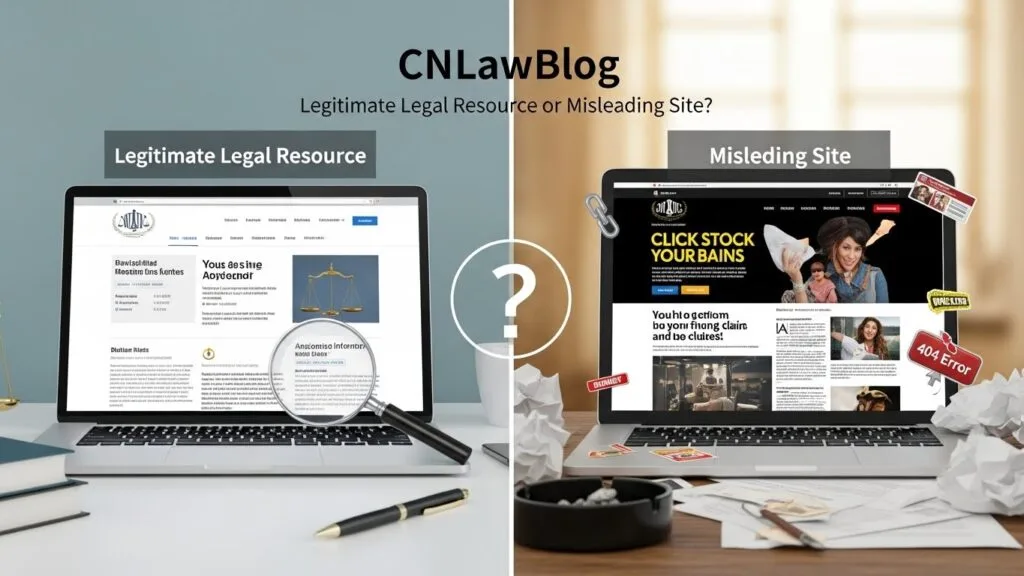
The internet has changed how people find legal information. Years ago, if you needed legal guidance, you had to talk to attorneys directly, buy pricey legal books, or spend time in libraries digging through laws and regulations.Nowadays, countless websites offer free legal info, news, and practical advice to users everywhere. One such site is CNLawBlog, which has caught the eye of many looking for legal insights online.But with so many legal blogs popping up, a key question arises: Is CNLawBlog a reliable legal resource or just another misleading site?This matters because legal info can impact big life choices immigration, business disputes, personal injury claims, family law, criminal defense, contracts, and finances. Wrong or confusing legal advice can lead to serious trouble, including financial loss or worse.In this article, we’ll take a close look at CNLawBlog—examining its content quality, transparency, credibility, legal accuracy, user trust, SEO tactics, and overall reliability. We’ll also touch on how readers can spot trustworthy legal websites and steer clear of misleading ones
Understanding Legal Blogs in the Modern Digital Era
Before diving into CNLawBlog, it helps to get a sense of the bigger picture around legal blogging.Legal blogs do a lot of different things. They educate the public about legal topics and share updates from the legal world.They also offer general guidance, help market law firms, build professional authority, and boost search engine visibility.Some of these blogs are run by licensed attorneys or well-known law firms. Others? They’re managed by content marketers, affiliate publishers, or even anonymous site owners looking to make ad revenue.Because of this mix, not every legal blog sticks to the same level of accuracy, professionalism, or transparency.
What Is CNLawBlog?
CNLawBlog presents itself as an informational platform covering a range of legal topics. The site publishes articles on areas like business law, immigration law, personal injury, civil litigation, legal technology, consumer rights, criminal law, and legal news.At first glance, the website looks similar to many other modern content-driven blogs. But legitimacy depends on much more than just how it looks.To decide if a legal resource is trustworthy, users need to consider several key factors.
Key Factors That Determine Legal Website Credibility
1. Author Transparency
One of the clearest signs of a trustworthy legal resource is author transparency.Reliable legal websites usually share details like author names, legal qualifications, professional experience, bar association memberships, and law firm affiliations.When articles appear anonymously or with vague author info, it’s fair to question their credibility.Readers should wonder: Who wrote this? Is the writer a licensed attorney? Can their qualifications be checked?If these questions go unanswered, it’s wise to be cautious with the advice given.
Does CNLawBlog Clearly Identify Its Authors?
A common problem with some online legal blogs is the absence of clearly identified legal professionals behind the content.If CNLawBlog doesn’t regularly provide attorney bios, verified credentials, or professional profiles, users might find it hard to tell if the info comes from real legal experts or just general writers.That doesn’t automatically mean the site is untrustworthy, but it does raise some red flags about authority and reliability.
The Importance of Legal Accuracy
Legal topics can be tricky since laws differ depending on your country, state, province, or jurisdiction. Even the specifics of a case can change how the law applies.A trustworthy legal resource will usually have disclaimers. These clarify that the content is just for informational purposes and that laws often change.They also remind readers that real legal advice should come from licensed professionals. Good websites steer clear of passing off general info as personalized legal counsel.
Common Problems Found on Low-Quality Legal Blogs
Many questionable legal websites share similar warning signs.
Outdated Information
Laws change all the time. Tax rules, immigration policies, and court decisions can shift quickly.When a site doesn’t update its content, people might end up trusting bad advice.
Overly Generic Articles
Some sites churn out broad legal pieces mainly to grab SEO traffic, not to educate.These articles often repeat obvious points, skip legal citations, and avoid specifics for different areas. They usually offer shallow explanations, too
Clickbait Headlines
Misleading titles designed just to grab clicks often point to lower editorial standards. Examples include:
“You Can Sue Anyone Instantly!”
“This Legal Trick Saves Thousands!”
“Never Pay Taxes Again!”
Professional legal resources rarely use flashy or sensational language.
Excessive Advertising
Sites overloaded with ads, popups, or affiliate promos can make users trust them less.When monetization feels too aggressive, it often means the site cares more about traffic than real educational value.
Evaluating CNLawBlog’s Content Quality
To judge if CNLawBlog is legit, readers should look closely at the articles.Ask yourself: Are the articles detailed and informative? Do they cite laws or official sources?Are explanations fair and realistic? Do they avoid making exaggerated promises?
Is the grammar professional and consistent?
Good writing doesn’t always mean legal accuracy, but sloppy writing usually hints at poor editorial control.
SEO-Driven Legal Content Versus Genuine Expertise
Many websites today focus heavily on search engine optimization (SEO).
SEO itself is not unethical. In fact, reputable law firms use SEO to help users discover valuable content online.Problems pop up when websites focus too much on traffic generation, keyword stuffing, or churning out mass-produced articles.They often rely on AI to pump out low-quality content instead of sharing real expertise.You’ll find sites publishing hundreds of articles on unrelated topics just to grab search traffic.
For example, a single site might suddenly publish articles about divorce law. Then, out of nowhere, it shifts to cryptocurrency.Next, it could jump to gaming or celebrity news. Sometimes, it even throws in health tips or business loans.This kind of inconsistency can really hurt credibility. Especially if the site claims to be an authority on legal matters.
Signs That a Legal Website May Be Trustworthy
Legitimate legal blogs tend to show a few key qualities.
Professional About Page
A clear About page usually shares things like company background and editorial mission. It also highlights legal qualifications and offers contact details.
Real Contact Information
Trustworthy sites list business addresses, phone numbers, and email contacts. If a website hides these or seems anonymous, that’s often a red flag.
Editorial Standards
Reliable legal publishers maintain fact-checking processes and legal review systems. They also have clear update policies to keep information current.
Jurisdiction Clarity
Since laws vary around the world, good legal articles clearly explain which jurisdiction applies. They also specify whether the information is general or location-specific.
Can Online Legal Blogs Replace Attorneys?
This is a key question many readers ask. The short answer? Usually not.No matter how trustworthy a legal blog seems, it can’t replace personalized advice from a licensed attorney.
Why?
Because legal situations are highly individualized.
Take business contract disputes—they hinge on local laws and the exact wording of the contract.
Immigration outcomes shift depending on your documents and the latest policy changes.
Personal injury claims? Those vary a lot, based on the evidence and insurance rules involved.
Legal blogs work best for educational purposes and getting a general understanding.
They’re useful for some preliminary research but shouldn’t be the only thing you rely on for major legal decisions.
Why Some Users Distrust Online Legal Blogs
Several factors make people skeptical about websites like CNLawBlog.
AI-Generated Content Concerns
With AI writing tools becoming more common, sites can churn out articles fast. But AI legal content often messes up—it might misinterpret laws, oversimplify tricky issues, or share outdated info. Plus, it usually misses the subtle legal details that matter.
When a site pumps out tons of broad articles quickly, readers start wondering if anyone’s really checking the facts.
Lack of Legal Citations
Good legal writing usually points to court cases, statutes, government sources, or official documents. If a site skips those references, it can seriously hurt its credibility
No Evidence of Professional Review
Some websites don’t say whether attorneys review their content. Without expert input, it’s hard to know if the information is accurate.
Potential Benefits of Websites Like CNLawBlog
Legal blogs can still offer some useful perks. For one, they make legal info accessible to folks who can’t immediately afford a lawyer.
Increased Accessibility
They help people learn about basic rights, legal terms, and common procedures. It’s a decent starting point for anyone trying to understand the law.
Starting Point for Research
A blog can also help users prepare questions before meeting with an attorney. Plus, readers might catch updates on legal developments and policy changes.
How to Verify a Legal Website’s Credibility
Still, it’s smart to double-check any legal info you find online. Official government sites usually provide the most reliable details.
Check Official Government Sources
For example, court websites, immigration agencies, tax authorities, and labor departments often have trustworthy info.
Search for Attorney Profiles
Check if the authors are licensed professionals.
Compare Multiple Sources
Don’t rely on just one website.
Look for Reviews and Reputation
Online reviews, discussions, and professional references can show if users trust the site.
Red Flags That Suggest a Misleading Website
A site might be misleading if it shows several warning signs at once:
Anonymous ownership
Unrealistic promises
Poor grammar
Too many ads
No legal disclaimers
No attorney involvement
Aggressive clickbait
Unverifiable claims
No contact info
A couple of minor issues might not mean much, but seeing several red flags together should make you pause.
Red Flags That Suggest a Misleading Website
A website might be misleading if it shows several warning signs at once. These include anonymous ownership, unrealistic promises, and poor grammar.
Excessive advertisements, lack of legal disclaimers, no attorney involvement, aggressive clickbait, unverifiable claims, and missing contact information also raise concerns.
One or two minor issues might not mean much, but multiple red flags should definitely make you pause.
The Role of Disclaimers in Legal Content
Professional legal websites almost always include disclaimers. They clarify that the information is educational, doesn’t create attorney-client relationships, and that legal advice requires consulting a professional.
These disclaimers protect both readers and the site owners.
If a website offers strong legal recommendations without proper disclaimers, it’s wise to be cautious.
Is CNLawBlog Dangerous?
Websites like CNLawBlog aren’t usually “dangerous” in a malicious way. The bigger issue is when people treat general online info as if it’s professional legal advice.
Problems come up when readers make legal decisions without experts, assume articles apply directly to their case, or ignore jurisdiction differences.
Even well-meaning content can cause trouble if people misunderstand it.

Understanding the Difference Between Information and Advice
This distinction matters.
Legal Information
These are general explanations about laws, procedures, or concepts.
Example:
“Personal injury statutes of limitations vary by state.”
Legal Advice
This is personalized guidance based on someone’s specific situation.
Example:
“You should file your lawsuit within 30 days in your case.”
Most websites can share legal information safely. But they should avoid giving personalized advice unless run by licensed professionals in formal attorney-client roles.
How Law Firms Build Trust Online
Professional law firms build credibility through things like:
Verified attorney profiles, published case results, legal awards, educational resources, professional memberships, and clear communication.
If you compare CNLawBlog to established law firm sites, you might notice differences in authority and accountability.
Why Readers Must Remain Careful Online
The internet rewards visibility, not always accuracy. Just because something ranks high on search engines doesn’t mean it’s trustworthy.
A highly ranked article might still have oversimplifications, outdated information, or miss important context. So, it’s smart to think critically no matter how professional a site looks.
Best Practices for Using Online Legal Resources Safely
When using sites like CNLawBlog, treat their articles as starting points not the final word. Always double-check important details with official legal sources.If you’re dealing with serious issues, don’t hesitate to consult a licensed professional. Online content can’t capture your exact situation, so avoid jumping to conclusions or getting false confidence.Also, keep an eye out for bias. Some websites focus more on traffic or lead generation than giving balanced info.
The Future of Legal Blogging
Legal blogging is probably going to keep growing. People want information that’s easy to access, and more folks are turning to digital research every day.Law firms are stepping up their online game, and AI is churning out content faster than ever.Still, users are getting pickier. They care more about authenticity, accuracy, and whether real experts back up the info.
Editorial accountability is becoming a big deal too.
The legal sites that thrive will likely mix professional legal oversight with clear transparency. They’ll offer real educational value and stick to strong ethical publishing standards.
Final Verdict: Is CNLawBlog Legitimate or Misleading?
The answer really depends on how the website operates and how readers choose to use it.CNLawBlog might be a decent general informational resource, but users should carefully consider things like author credentials, content quality, legal accuracy, transparency, and editorial standards.No online legal blog should ever replace personalized advice from a licensed attorney.If CNLawBlog doesn’t show transparency, verified legal professionals, or clear sources, readers should be cautious and avoid relying on it for important legal decisions.That said, just having informational content doesn’t automatically make a site misleading or fraudulent. Lots of blogs aim to educate broad audiences using simpler language.The safest bet? Approach with balanced skepticism: use legal blogs to learn, double-check important claims on your own, and consult a professional when it really counts.
