
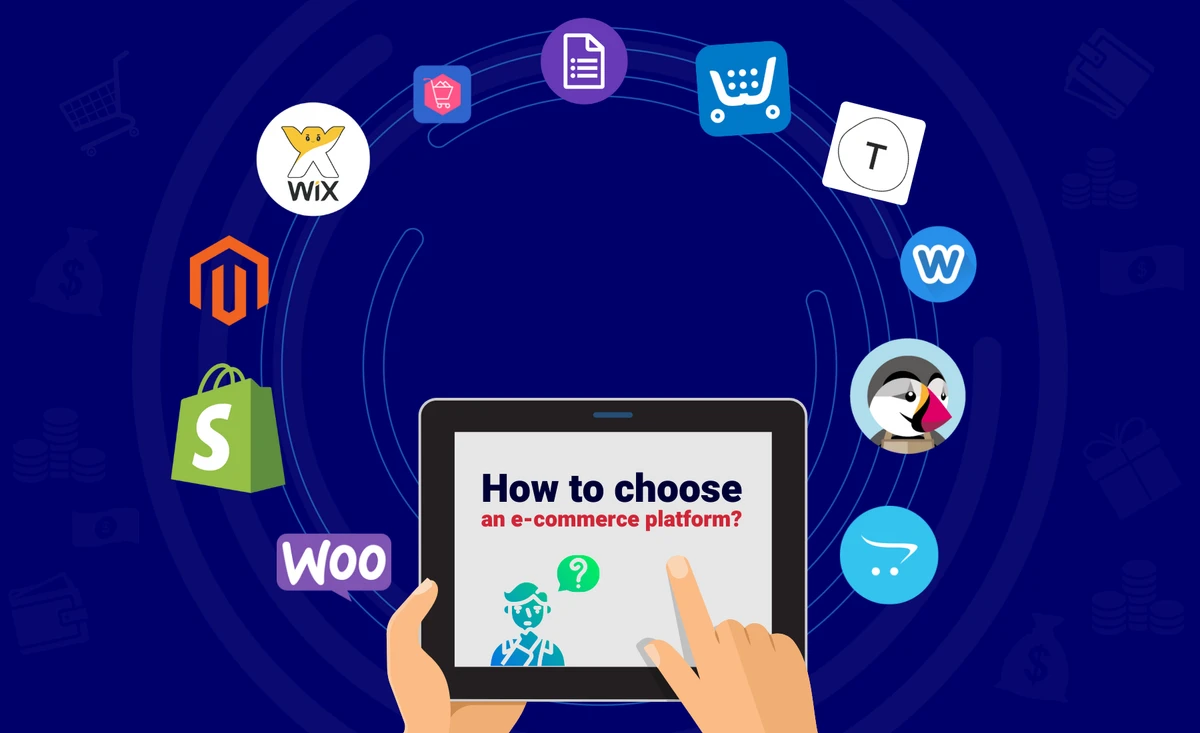
There’s a specific kind of frustration that comes from outgrowing your eCommerce platform. Maybe checkout starts feeling clunky as order volume climbs. Maybe you need a feature your current platform simply doesn’t support, and the workaround involves three different plugins that don’t quite talk to each other properly. Or maybe you started on a free or ultra-cheap platform to get off the ground, and now that the business is actually generating real revenue, the limitations that seemed minor at first are starting to genuinely hold you back.
Choosing an eCommerce platform is one of those decisions that’s deceptively easy to make quickly and surprisingly expensive to unmake later. Migrating an established store with its product catalog, customer accounts, order history, and SEO rankings is a significant undertaking, which is exactly why it’s worth slowing down and thinking through the decision carefully rather than defaulting to whatever platform is trending in a YouTube tutorial.
This guide walks through the practical factors that actually matter when choosing an eCommerce platform for a growing business, along with a look at the major players and where each one tends to fit best.
Start With Where Your Business Actually Is
Before comparing specific platforms, it helps to honestly assess a few things about your current situation and near-term trajectory:
- Current and projected order volume — a platform that handles 50 orders a month comfortably might struggle, or become prohibitively expensive, at 5,000 orders a month
- Product catalog complexity — a handful of simple physical products has very different platform needs than thousands of SKUs with variants, digital products, or subscription offerings
- Technical resources available — whether you have in-house developers, rely on freelancers, or need something manageable without any coding knowledge at all
- Sales channels beyond your own website — whether you need to sync inventory and orders across Amazon, social media shops, or physical retail locations
- International expansion plans — multi-currency, multi-language, and localized tax handling needs vary significantly by platform
Getting honest about these factors upfront prevents two common mistakes: choosing an overly simple platform you’ll quickly outgrow, or choosing an enterprise-grade platform with more complexity and cost than your current business actually needs.
Key Factors to Evaluate in Any Platform
Total Cost of Ownership
The advertised monthly price is rarely the full picture. Total cost typically includes the platform subscription itself, transaction fees (some platforms charge an additional percentage on top of payment processing fees unless you use their proprietary payment system), app or plugin costs for additional functionality, theme or design costs, and development costs for customization beyond what’s available out of the box.
A platform that looks cheaper on paper can end up costing more once you factor in the apps and customizations needed to match functionality that a pricier platform includes natively.
Scalability
Consider not just whether a platform can handle your current volume, but whether it can handle where you expect to be in two or three years without requiring a full migration. This includes server performance during high-traffic periods like major sales events, the ability to add product variants and complexity without hitting platform limits, and whether pricing tiers scale reasonably as your revenue grows rather than jumping dramatically at certain thresholds.
Customization and Flexibility
Platforms generally fall somewhere on a spectrum between highly flexible but requiring more technical investment, and more restrictive but easier to manage without specialized skills. Consider how much design and functional customization you realistically need, whether the platform’s app or plugin ecosystem covers your specific requirements, and whether you have (or plan to hire) the technical resources to take advantage of deeper customization options if needed.
Payment Processing Options
Check which payment gateways a platform supports natively, whether it locks you into a proprietary payment processor with less competitive rates, and whether it supports the specific payment methods your customers actually prefer, including regional payment options if you’re selling internationally.
SEO and Marketing Capabilities
Built-in SEO controls customizable URLs, meta tags, structured data support — vary meaningfully between platforms and directly affect organic traffic potential. Also worth checking: native email marketing integration, abandoned cart recovery tools, and how easily the platform integrates with broader marketing tools like Google Analytics and advertising platforms.
Inventory and Multi-Channel Management
For businesses selling across multiple channels, look closely at how well a platform syncs inventory and orders across your website, marketplaces like Amazon or Etsy, and any physical retail locations, since manually managing inventory across disconnected systems becomes a significant operational burden as order volume grows.
Overview of the Major eCommerce Platforms
Shopify
Shopify remains one of the most popular choices for growing businesses, known for its balance of ease of use and genuine scalability, supporting businesses from a first sale all the way through significant enterprise-level volume via Shopify Plus.
Strengths: Extensive app marketplace, strong built-in features without heavy reliance on plugins, reliable performance during high-traffic events, and a large ecosystem of developers familiar with the platform.
Considerations: Transaction fees apply unless using Shopify Payments, and heavy customization can require developer involvement once you move beyond built-in theme capabilities.
Best for: Growing businesses that want a reliable, scalable platform without needing to manage their own hosting or deep technical infrastructure.
WooCommerce
WooCommerce, a WordPress plugin, offers extensive flexibility for businesses that want full control over their store’s functionality and already have some familiarity with WordPress.
Strengths: Highly customizable, no inherent transaction fees beyond your chosen payment processor, and strong content marketing integration since it’s built on WordPress.
Considerations: Requires more hands-on management, including hosting, security, and updates, compared to fully hosted platforms like Shopify, and scalability depends heavily on hosting quality and technical maintenance.
Best for: Businesses with some technical resources who want maximum flexibility and already have, or plan to build, a strong content-driven WordPress presence.
BigCommerce
BigCommerce positions itself as a strong middle ground between Shopify’s ease of use and the deeper native functionality larger businesses often need without requiring as many additional apps.
Strengths: Strong built-in features for complex product catalogs, no additional transaction fees regardless of payment processor, and solid multi-channel selling support out of the box.
Considerations: Pricing tiers are based partly on annual sales volume, which can create unexpected cost increases as a business grows, and the app ecosystem, while solid, is smaller than Shopify’s.
Best for: Growing to mid-sized businesses with more complex product catalogs who want strong native functionality without excessive reliance on third-party apps.
Magento (Adobe Commerce)
Magento, now part of Adobe Commerce, is built for larger, more complex eCommerce operations that need deep customization and are prepared to invest significantly in development resources.
Strengths: Extremely flexible and customizable, strong for complex B2B and multi-store setups, and capable of handling very high transaction volumes.
Considerations: Requires substantial technical expertise and ongoing development investment, making it a poor fit for businesses without dedicated technical resources.
Best for: Larger, established businesses with complex, highly specific requirements and the technical team to support significant customization.
Wix eCommerce and Squarespace Commerce
Both Wix and Squarespace offer accessible, design-forward eCommerce options originally built around general website building, appealing to smaller businesses prioritizing ease of use and visual design.
Strengths: Very easy to set up and manage without technical expertise, strong design templates, and reasonable pricing for smaller catalogs.
Considerations: More limited scalability and customization compared to dedicated eCommerce platforms, making them less suitable as product catalogs and order volume grow significantly.
Best for: Small businesses or those just starting out that prioritize design and simplicity over deep eCommerce-specific functionality.

Migration Considerations if You’re Switching Platforms
If you’re evaluating a switch from an existing platform rather than starting fresh, a few additional factors deserve careful attention:
- SEO preservation — ensuring URL structures can be properly redirected to avoid losing hard-earned search rankings during migration
- Data migration accuracy — verifying customer accounts, order history, and product data transfer correctly and completely
- Downtime planning — scheduling migration during lower-traffic periods and having a clear rollback plan if issues arise
- Third-party integration continuity — confirming that existing integrations, such as accounting software or marketing tools, have equivalent support on the new platform
Migrations are rarely as simple as they initially appear, and rushing the process tends to create more problems than the perceived cost savings of switching platforms quickly are worth.
Frequently Asked Questions
1. What’s the most important factor in choosing an eCommerce platform? There’s no single universal answer, but scalability and total cost of ownership relative to your specific business trajectory tend to matter more than any individual feature, since a platform that fits your needs today but can’t grow with you often leads to a costly migration down the line.
2. Is Shopify better than WooCommerce for a growing business? Neither is universally better — Shopify tends to suit businesses that want a fully managed, easier-to-use platform, while WooCommerce suits businesses with some technical resources who want deeper customization and control, particularly if they’re already invested in a WordPress-based content strategy.
3. How much does it typically cost to run an eCommerce store? Costs vary widely, from around $30–$300 per month for platform subscriptions alone, plus payment processing fees (typically 2-3% per transaction), additional app costs, and any development or design expenses, which can add up significantly depending on customization needs.
4. Can I switch eCommerce platforms without losing my SEO rankings? It’s possible to largely preserve SEO rankings during a migration with careful planning, particularly proper URL redirects and maintaining consistent content structure, but migrations do carry some inherent risk of temporary ranking fluctuations even when done carefully.
5. Do I need technical or coding skills to run an eCommerce store? It depends on the platform. Options like Shopify, Wix, and Squarespace are designed to be manageable without coding knowledge, while platforms like WooCommerce and especially Magento generally require more technical involvement, either in-house or through hired developers.
6. How do I know when I’ve outgrown my current eCommerce platform? Common signs include hitting product catalog or feature limitations, needing excessive third-party apps to achieve basic functionality, experiencing performance issues during high traffic, or facing unexpectedly high costs relative to the value the platform provides at your current scale.
7. Which platform is best for selling across multiple channels, like Amazon and social media? Shopify and BigCommerce both offer particularly strong native multi-channel selling support, syncing inventory and orders across your website, marketplaces, and social media shops without requiring extensive custom development.
Final Thoughts
Choosing the right eCommerce platform comes down to honestly matching your business’s current needs and realistic growth trajectory against what each platform actually offers, rather than defaulting to whichever option seems most popular or was recommended in a generic list. Shopify and BigCommerce work well for businesses wanting strong native functionality without heavy technical investment, WooCommerce suits those wanting deep customization and control, and Magento fits larger operations with the resources to support significant complexity.
Whichever platform you’re considering, take the time to map out your specific requirements — product complexity, sales channels, technical resources, and growth plans — before committing, since the right fit today should ideally still make sense two or three years down the road, not just for your next product launch.
