
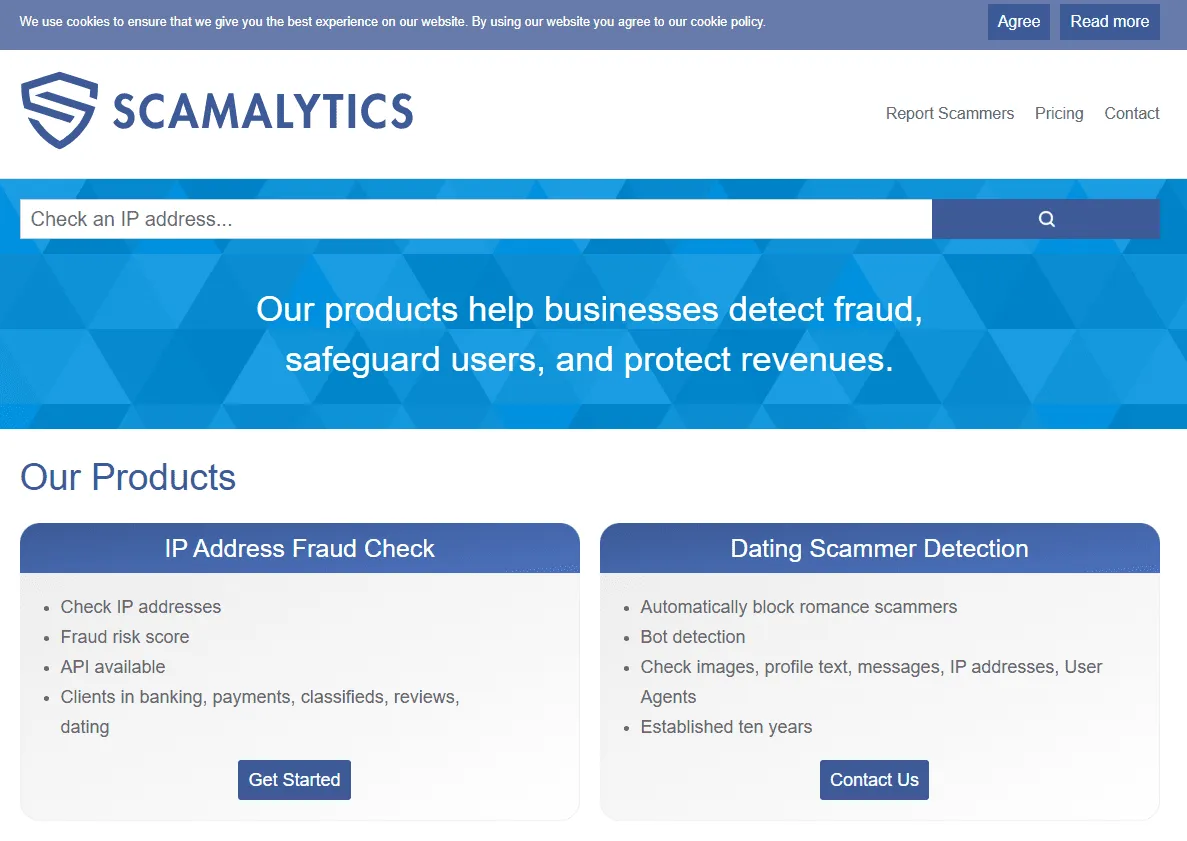
Online fraud has become one of the biggest challenges facing websites, apps, and digital businesses today. From fake dating profiles to fraudulent payments and bot-driven signups, bad actors are constantly looking for ways to exploit online platforms. Scamalytics is one of the tools built specifically to help fight this problem by analyzing IP addresses and assigning them a fraud risk score. This article explains what Scamalytics is, how its fraud scoring system works, who uses it, and what everyday readers should understand about it.
What Is Scamalytics?
Scamalytics is a UK-based fraud intelligence company that analyzes IP addresses and assigns each one a risk score, generally ranging from 0 to 100. This score is meant to reflect how likely it is that traffic coming from a particular IP address is associated with fraudulent or suspicious activity, based on patterns the company has observed across a large network of online platforms.
The company was originally founded in 2011 with a fairly specific purpose: helping online dating platforms identify and remove romance scammers. Romance scams are a particularly damaging type of fraud, where scammers build fake relationships with victims over weeks or months before eventually asking for money or personal information. Dating platforms needed a reliable way to flag suspicious accounts early, before real emotional or financial harm could occur.
Over time, Scamalytics expanded well beyond the dating industry. Today, it serves a much broader range of clients, including banking and financial services, e-commerce platforms, review websites, classified ad sites, and social networks essentially any online business that needs to identify risky or potentially fraudulent traffic.
Understanding IP Addresses and Why They Matter for Fraud Detection
To understand how Scamalytics works, it helps to first understand what an IP address is and why it’s useful for detecting fraud. Every device connected to the internet is assigned an IP address, which acts a bit like a digital location marker. It can reveal general information such as which country or region a connection is coming from, which internet provider is being used, and whether the connection is coming through a normal home network, a business network, a data center, or an anonymizing service like a VPN or proxy.
Fraudsters often rely on tools that hide or disguise their real location and identity, such as VPNs, proxies, or servers rented specifically for running large numbers of fake accounts. By analyzing patterns in how IP addresses behave across many different websites and platforms, a fraud intelligence service like Scamalytics can start to identify which types of connections are more likely to be associated with suspicious activity.
How the Scamalytics Fraud Score Works
At the center of the platform is the Scamalytics Risk Score, a number between 0 and 100 assigned to an IP address. A score of 0 generally indicates no known fraud risk, while higher numbers indicate a greater likelihood that the IP address has been associated with fraudulent behavior in the past.
Where the Data Comes From
The score isn’t based on guesswork. Scamalytics builds its risk intelligence from a global network of partner platforms that report confirmed cases of fraud back to the system. When a business using Scamalytics identifies a genuinely fraudulent user or transaction, that information feeds into the broader system, helping improve the accuracy of future risk scoring for similar IP addresses or network patterns.
This means the score reflects real, observed fraud patterns rather than purely theoretical risk factors, which is part of what makes this kind of shared intelligence network valuable. An IP address that has been linked to fraud on a dating platform, for example, might also raise flags if it later shows up interacting with an e-commerce site or a financial service.
Looking at the Surrounding Network, Not Just One Address
One important detail about how Scamalytics works is that it doesn’t only look at a single IP address in isolation. It also considers the broader network neighborhood that IP address belongs to, including the subnet, the internet service provider, and the hosting block it’s part of. This means that IP addresses located near other addresses with confirmed fraud history can receive elevated risk scores, even if that specific IP hasn’t been individually reported yet.
This approach helps catch new or previously unseen IP addresses that are part of a known risky network, rather than relying solely on a list of individually confirmed bad actors.
Detecting VPNs, Proxies, and Anonymizing Services
A major part of the scoring system involves identifying whether an IP address is associated with a VPN, proxy, Tor exit node, or similar anonymizing service. These tools are widely used by everyday internet users for legitimate reasons, such as protecting personal privacy or accessing content while traveling. However, they are also commonly misused by fraudsters who want to hide their real location or identity.
Because of this overlap, Scamalytics treats VPN and proxy usage as one contributing risk factor among several, rather than automatically labeling every VPN user as fraudulent. A shared VPN server used by thousands of different people, for example, might show a higher score simply because many unrelated individuals pass through the same IP address, some of whom may have engaged in fraudulent behavior in the past.
Machine Learning and Behavioral Patterns
Beyond blacklists and network analysis, Scamalytics also applies machine learning models trained on historical fraud data. These models look for broader behavioral patterns that tend to correlate with fraudulent activity, helping the system adapt over time as fraud tactics evolve, rather than relying only on fixed rules that could quickly become outdated.
How Businesses Access and Use Scamalytics
Scamalytics offers a few different ways for businesses and individuals to check IP fraud scores, depending on their specific needs.
Free Web Lookup Tool
For people who simply want to check a single IP address without any technical integration, Scamalytics provides a free web-based tool where anyone can enter an IP address and see its associated risk score and related details.
API Integration for Real-Time Checks
For businesses that want to automatically screen users as they interact with a website or app, Scamalytics offers an API that can be integrated directly into a company’s systems. This allows fraud checks to happen in real time, often within a fraction of a second, so that businesses can make quick decisions about whether to allow, flag, or block certain traffic.
Bulk Lookup and Database Options
For companies that need to check large volumes of IP addresses at once, such as reviewing historical account data, Scamalytics also offers bulk lookup tools and downloadable database options that can be integrated into existing security systems.
What a High or Low Score Actually Means
Understanding what these scores represent is important, because it’s easy to misinterpret them.
A low score, closer to 0, generally suggests that the IP address hasn’t been associated with confirmed fraud patterns and doesn’t show strong signs of proxy or VPN usage linked to abuse.
A high score, closer to 100, suggests that a significant portion of the traffic observed from that IP address, or its surrounding network, has been linked to confirmed fraudulent activity in the past.
However, it’s critical to understand that this score reflects a connection’s risk level, not a confirmed judgment about a specific person’s intentions. An IP address is a technical identifier, not proof of who is using it or why. Multiple people can share the same IP address, especially in cases involving public Wi-Fi, shared office networks, VPN services, or certain mobile carriers.
Why Businesses Rely on Tools Like Scamalytics
There are several clear reasons why platforms across many different industries choose to use fraud intelligence tools like this.
Preventing Fake Accounts and Romance Scams
Given its origins in the dating industry, Scamalytics remains particularly relevant for platforms trying to prevent fake profiles and romance scams, helping protect users from emotionally and financially damaging schemes.
Reducing Payment Fraud
E-commerce and financial platforms use IP risk scoring as one layer of protection against payment fraud, helping flag transactions that come from high-risk connections before money changes hands.
Fighting Bots and Fake Reviews
Review platforms, classified ad sites, and social networks often deal with large volumes of bot traffic and fake accounts. IP-based fraud scoring helps identify and filter out this kind of automated or inauthentic activity.
Supporting Broader Security Systems
Most businesses don’t rely on a single fraud signal alone. Tools like Scamalytics are typically used alongside other security measures, such as device fingerprinting, email verification, and behavioral analysis, creating a more complete picture of potential risk rather than depending on any one factor in isolation.
Important Limitations to Understand
While tools like Scamalytics offer valuable insight, it’s important to recognize their limitations.
A Score Is a Signal, Not Proof
As mentioned earlier, a high fraud score doesn’t automatically mean a specific person is committing fraud. It simply indicates elevated risk based on patterns associated with that IP address or network. Responsible businesses treat this as one factor to consider, not an automatic reason to block or penalize a user.
Shared Networks Can Create False Signals
Because many legitimate users share IP addresses through VPNs, public networks, or certain internet providers, some genuine users may occasionally see higher risk scores simply due to the network they’re connected through, rather than anything they’ve personally done.
Accuracy Depends on Data Visibility
Like any fraud intelligence system, the accuracy of the score depends on how much relevant data the company has access to. An IP address involved in fraud on platforms outside of Scamalytics’ network might not be reflected accurately if that specific behavior was never reported into the system.

What Everyday Users Should Know
If you’ve come across the term “Scamalytics” while researching an unfamiliar website, checking your own IP address, or reading about online fraud prevention, here are a few practical takeaways:
- A fraud score reflects network-level risk, not a personal accusation against you specifically.
- Using a VPN or shared network connection can sometimes result in a higher score, even without any wrongdoing on your part.
- Businesses generally use these scores as one part of a broader decision-making process, not as an automatic block.
- If you’re researching whether a website or platform is legitimate, IP-based risk tools are just one piece of the puzzle reviews, official records, and general online safety habits also matter.
Final Thoughts
Scamalytics represents a practical response to the ongoing challenge of online fraud, using shared intelligence, network analysis, and machine learning to help businesses identify potentially risky connections before damage occurs. Its fraud score offers a useful signal for platforms trying to protect users from scams, fake accounts, and fraudulent transactions, especially when combined with other layers of security.
At the same time, understanding the limitations of this kind of scoring system is just as important as understanding how it works. A high score reflects risk associated with a connection, not definitive proof of wrongdoing by a specific individual, and responsible use of these tools means treating the score as one useful signal among many, rather than an absolute verdict.
Frequently Asked Questions (FAQs)
1. What is Scamalytics? Scamalytics is a UK-based fraud intelligence company that assigns IP addresses a risk score, generally from 0 to 100, to help businesses identify potentially fraudulent or suspicious online traffic.
2. How does the Scamalytics fraud score work? The score is based on real fraud reports shared across a network of partner platforms, combined with network analysis, VPN and proxy detection, and machine learning models trained on past fraud patterns.
3. What does a high Scamalytics score mean? A high score suggests that the IP address, or its surrounding network, has been associated with confirmed fraudulent activity in the past. It reflects elevated risk, not definitive proof of a specific person’s wrongdoing.
4. Does using a VPN automatically give me a bad fraud score? Not necessarily, but VPN and proxy usage is one factor that can contribute to a higher score, especially if the same VPN server is used by many unrelated people, some of whom may have engaged in fraud.
5. Who uses Scamalytics? Businesses across many industries use it, including dating platforms, e-commerce sites, banks and financial services, review platforms, classified ad sites, and social networks.
6. Was Scamalytics originally built for a specific industry? Yes, it was originally created in 2011 to help online dating platforms detect and prevent romance scams before expanding into broader fraud detection across other industries.
7. Can I check my own IP address on Scamalytics? Yes, Scamalytics offers a free web-based tool that allows anyone to check the risk score and related details for a specific IP address.
8. Does a high fraud score mean I’ve done something wrong? Not necessarily. The score reflects risk associated with an IP address or network, which can sometimes be affected by shared connections, VPN usage, or other technical factors unrelated to your own behavior.
9. How do businesses use the Scamalytics API? Businesses can integrate the API into their websites or apps to automatically check the risk level of incoming traffic in real time, helping them decide whether to allow, flag, or block certain users or transactions.
10. Is a Scamalytics score the only tool businesses use to detect fraud? No. Most businesses combine IP fraud scoring with other security measures, such as device fingerprinting, email verification, and behavioral analysis, to build a more complete picture of potential risk.
