
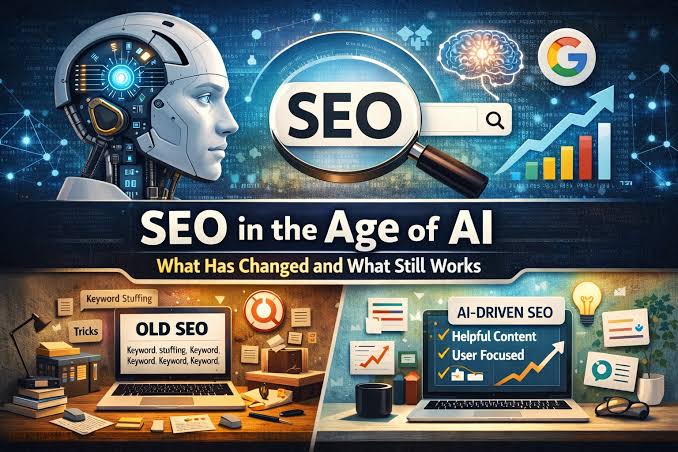
For twenty-odd years, SEO followed a fairly predictable script: research keywords, write content around them, build backlinks, and watch your rankings climb in a list of ten blue links. That script hasn’t disappeared entirely, but it’s no longer the whole story. AI-powered search experiences Google’s AI Overviews, Bing’s Copilot-integrated results, and a growing number of people turning directly to tools like ChatGPT or Perplexity instead of a traditional search engine have fundamentally changed how content gets discovered, summarized, and presented to the person actually looking for an answer.
For businesses and marketers who built their traffic strategy around ranking in the traditional ten-blue-links format, this shift raises a genuinely uncomfortable question: if an AI system can summarize the answer directly on the results page, does anyone still click through to the source? The honest answer is that it depends heavily on the type of query, and understanding that distinction is central to adapting an SEO strategy for 2026 rather than watching traffic quietly decline while wondering what went wrong.
This article breaks down what’s actually changing in search behavior, how AI-driven search results are reshaping visibility, and what a genuinely updated SEO strategy needs to account for going forward.
From “Ten Blue Links” to AI-Generated Answers
The most visible shift has been the rise of AI-generated summaries appearing directly at the top of search results, synthesizing information from multiple sources into a single answer before a user ever needs to click through to a website. Google’s AI Overviews, along with similar features across other search engines, now handle a meaningful share of informational queries the kind of “what is,” “how does,” and “why” questions that used to reliably send traffic to blog posts and explainer articles.
This doesn’t mean traditional organic listings have disappeared; it means their role has shifted. For straightforward factual queries, AI summaries increasingly satisfy user intent without a click. For more complex, nuanced, or comparison-based queries the kind where someone genuinely wants to read multiple perspectives, review detailed pricing, or compare specific products traditional search results and click-throughs remain very much alive, since AI summaries tend to be less useful when a decision genuinely requires deeper research.
The Rise of Answer Engine Optimization (AEO)
A term that’s gained real traction alongside AI search is “Answer Engine Optimization” essentially, optimizing content not just to rank in a traditional results list, but to be the source an AI system pulls from when generating its summarized answer.
This distinction matters because being the source cited or referenced within an AI Overview, even without a direct click, can still carry meaningful brand visibility and trust value, similar to how being quoted in a well-known publication builds credibility even if the reader doesn’t visit your specific page afterward.
Practically, this means structuring content in ways that are easier for AI systems to parse and extract cleanly:
- Direct, clearly stated answers early in the content, rather than burying the actual answer under several paragraphs of introduction
- Well-structured headings and subheadings that map closely to the specific questions a user might ask
- Concise, factually dense paragraphs rather than heavily padded, keyword-stuffed writing that made more sense under older SEO practices
- Clear, accurate data and statistics with proper sourcing, since AI systems tend to favor content that’s easy to verify and cite confidently
E-E-A-T Matters More, Not Less
Google’s emphasis on Experience, Expertise, Authoritativeness, and Trustworthiness (E-E-A-T) has only become more relevant as AI-generated content has flooded the web. With so much low-effort, AI-written content now competing for the same rankings, search engines have leaned harder into signals that distinguish genuinely credible, experience-backed content from generic, templated writing.
Demonstrated first-hand experience has become a more valuable differentiator, since AI can generate plausible-sounding general information, but it can’t fabricate genuine first-hand experience, specific case studies, or original data convincingly at scale at least not without it eventually showing through in a lack of specificity or authentic detail.
Author credibility and transparency matters more too. Clear author bylines, visible credentials, and a demonstrated track record of expertise in a subject area help both search engines and readers distinguish trustworthy content from content generated purely to fill a keyword gap.
Original research and data surveys, case studies, proprietary data, and genuinely new analysis — have become significantly more valuable in an environment where generic, derivative content is easy to produce at scale but doesn’t offer anything a search engine or an AI summarization tool can’t already synthesize from existing sources.
Structured Data Has Become Non-Negotiable
Structured data schema markup that explicitly tells search engines what a piece of content actually represents, whether it’s a product, a recipe, an FAQ, or a how-to guide has moved from a nice-to-have technical optimization to something close to a requirement for visibility in AI-driven search features.
AI systems generating summarized answers rely heavily on structured, clearly labeled data to accurately extract and represent information. Content without proper schema markup is at a real disadvantage, not because it’s necessarily lower quality, but because it’s harder for an AI system to parse confidently and correctly. Implementing FAQ schema, how-to schema, product schema, and article schema where relevant has become a meaningfully important part of a modern technical SEO strategy, not just an incremental improvement.
The Shift Toward Conversational and Long-Tail Queries
As more people interact directly with AI chat interfaces instead of traditional search bars, query patterns themselves have shifted toward more natural, conversational phrasing. Instead of typing a clipped, keyword-style search like “best CRM small business,” users increasingly type or speak full questions: “What’s the best CRM software for a small business with under 20 employees?”
This shift has real implications for keyword strategy:
- Long-tail, natural-language keywords have grown in relative importance compared to short, high-volume head terms
- Content needs to directly answer specific, nuanced questions, rather than broadly covering a topic in a way optimized primarily for a single target keyword
- Voice search and conversational AI assistants reinforce this same pattern, since spoken queries tend to be more naturally phrased than typed ones
Practically, this means content strategies increasingly benefit from covering a wide range of specific, related questions within a single comprehensive piece, rather than creating many thin, narrowly keyword-targeted pages.

Traffic Metrics Need to Be Reconsidered
One of the more uncomfortable adjustments for marketers has been rethinking what “success” actually looks like when a meaningful share of queries get answered without a click. Focusing exclusively on organic click-through traffic as the primary success metric risks missing the broader picture of how AI-driven visibility contributes to brand awareness and trust, even without a direct site visit.
Some businesses have started tracking additional signals alongside traditional traffic:
- Brand mention frequency within AI-generated answers and summaries, even without a corresponding click
- Direct and branded search traffic, which often increases as a downstream effect of AI-driven exposure building brand familiarity
- Conversion quality from AI-referred traffic, since users who do click through from an AI summary are often further along in their research and may convert at a different rate than typical organic visitors
This doesn’t mean traditional click-through traffic no longer matters it clearly still does, particularly for commercial and transactional queries but treating it as the only meaningful metric increasingly provides an incomplete picture of overall search visibility.
Content Quality Over Content Volume
Ironically, even as AI tools have made it easier than ever to produce large volumes of content quickly, the actual SEO value of doing so has diminished. Search engines have continued refining their ability to detect and deprioritize low-effort, formulaic AI-generated content that doesn’t offer genuine value beyond what’s already widely available.
This has pushed a meaningful shift in strategy toward fewer, more thorough, more genuinely useful pieces of content rather than a high volume of thin articles targeting slight keyword variations. A single, comprehensive, well-researched guide that thoroughly answers a topic tends to perform better in 2026’s search environment than five separate, thinner articles covering the same ground from slightly different angles.
What This Means for a Practical SEO Strategy in 2026
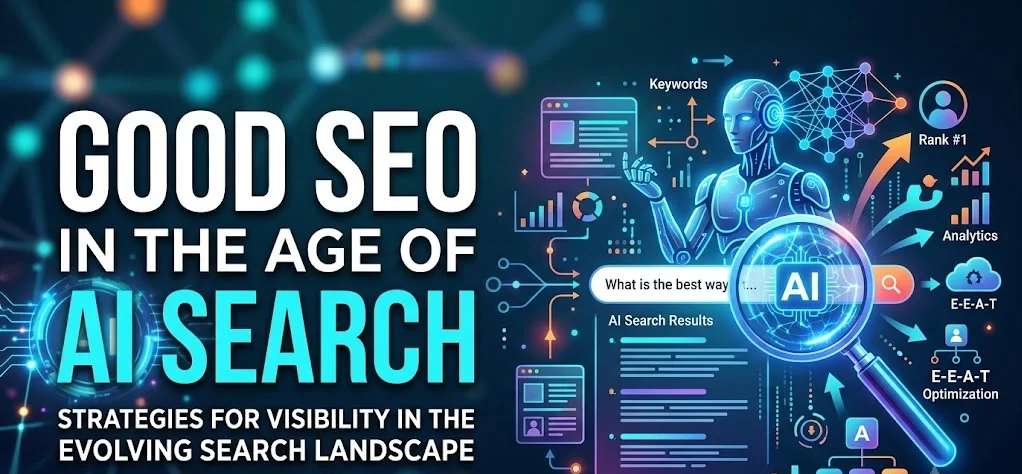
Pulling these threads together, a genuinely updated SEO approach for 2026 tends to prioritize:
- Clear, well-structured, genuinely useful content written to directly answer specific user questions, not just to include target keywords
- Strong E-E-A-T signals, including visible author credibility, original insights, and demonstrated first-hand experience
- Proper structured data implementation, making content easier for AI systems to accurately parse and cite
- A broader view of success metrics, incorporating brand visibility and AI citation alongside traditional click-through traffic
- Fewer, higher-quality pieces of content rather than high-volume, thin content produced primarily to target keyword variations
Frequently Asked Questions
1. Is traditional SEO dead because of AI search? No, traditional SEO principles like content quality, technical optimization, and authoritative backlinks remain relevant, but the strategy needs to adapt to account for AI-generated summaries changing how and whether users click through to source content for certain types of queries.
2. What is Answer Engine Optimization (AEO)? AEO refers to optimizing content specifically to be identified, extracted, and cited accurately by AI systems generating summarized answers, in addition to traditional search engine ranking optimization.
3. Does structured data actually improve visibility in AI search results? Yes, structured data helps AI systems more accurately and confidently parse and extract information from a webpage, which can improve the likelihood of that content being used and cited within an AI-generated summary.
4. How is E-E-A-T different from traditional SEO ranking factors? E-E-A-T (Experience, Expertise, Authoritativeness, Trustworthiness) focuses on qualitative credibility signals rather than purely technical or keyword-based ranking factors, and it has become increasingly important as a way to distinguish genuinely valuable content from generic, mass-produced AI content.
5. Should businesses stop measuring organic click-through traffic as a success metric? No, click-through traffic remains an important metric, particularly for commercial and transactional queries, but it’s increasingly useful to track it alongside other signals, like brand mention frequency in AI summaries and branded search growth, for a more complete picture of overall visibility.
6. Does using AI to write content hurt SEO performance? AI-assisted content isn’t inherently penalized, but low-effort, generic AI-generated content that lacks original insight, first-hand experience, or genuine depth tends to underperform compared to well-researched, expertly reviewed content, regardless of whether AI tools were used in the writing process.
7. How can businesses track whether their content is being cited in AI-generated search summaries? Some SEO platforms and monitoring tools have started offering visibility into AI Overview citations and brand mentions, though this area of tracking is still developing compared to the more established tools available for traditional organic ranking and traffic analysis.
Final Thoughts
SEO hasn’t disappeared in the age of AI search, but the rules of visibility have genuinely shifted. Success increasingly depends on producing content that’s both deeply useful to actual readers and structurally clear enough for AI systems to parse and cite accurately, backed by real expertise and original insight rather than generic, keyword-driven writing. Businesses that adapt their strategy around this reality rather than continuing to optimize purely for the traditional click-through model are the ones best positioned to maintain and grow their visibility as search continues to evolve.
