

The smart home has quietly crossed a tipping point. What used to be a handful of gadgets a smart speaker here, a video doorbell there has turned into full ecosystems that anticipate what you need before you ask for it. Over 57% of US households are expected to have at least one smart home device by 2026, with the average smart home containing 15-20 connected devices, a dramatic jump from just a few years ago. Nearly half of US households are also expected to adopt devices like smart thermostats and security cameras by 2026, fueled by millennials investing in energy-efficient upgrades.
This isn’t just a consumer curiosity anymore it’s a fast-growing market. Industry watchers expect the AI-in-IoT segment alone to grow from $5.1 billion in 2020 to $16.2 billion by 2026, driven by AI integration into smart home devices, and the broader smart home market is projected to keep climbing well beyond that.
So what does the smart home actually look like in 2026? Below, we break down the key trends shaping connected living this year from unified ecosystems and invisible design to AI-driven automation, wellness tech, and the privacy questions that come along with it all.
1. Unified Ecosystems Are Replacing App Chaos
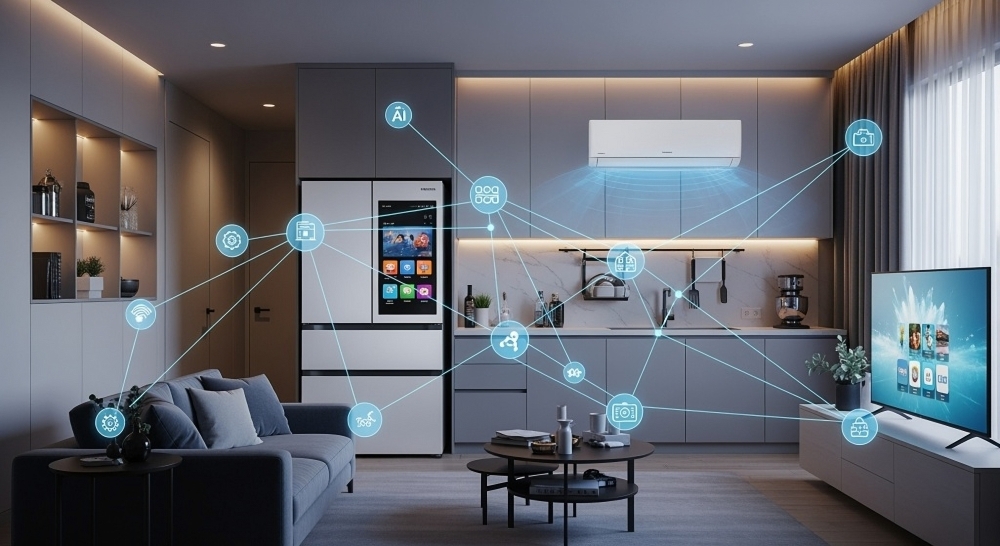
For years, the biggest frustration with smart homes was fragmentation one app for lighting, another for locks, another for the thermostat, none of them talking to each other. That’s changing fast. One of the clearest smart home trends for 2026 is the move toward unified ecosystems, as users no longer want separate apps and disconnected experiences for lighting, shading, climate, gates, security, audio, and energy.
Much of this shift is being driven by the Matter protocol, a universal standard designed to solve the long-standing interoperability problem between devices and platforms. Over 550 technology companies worldwide are now developing Matter-compatible products, ensuring widespread adoption across the smart home ecosystem. In practice, this means a lock from one brand, a light from another, and a thermostat from a third can increasingly work together inside a single app or routine, rather than requiring separate control systems.
2. Invisible, Design-First Technology
Smart home tech is no longer something homeowners want to see. Another defining trend for 2026 is the rise of invisible, design-friendly technology, as homeowners increasingly want products that blend into modern interiors rather than dominate them. Interior designers are echoing the same shift the trend is toward technology that disappears, with clean design where speakers, shades, and controls blend seamlessly into the architecture.
This reflects a broader mindset change: smart home tech is being treated less like a gadget purchase and more like part of the home’s architecture and lifestyle. Performance still matters, but it’s no longer the only thing buyers care about aesthetics now play a much bigger role in purchase decisions than they did even two or three years ago.
3. AI-Powered Assistants That Actually Anticipate Needs
Voice assistants used to just respond to commands. In 2026, they’re expected to anticipate them. The system should anticipate your needs, like heating up the bathroom floor in the morning or lowering shades automatically as the sun sets, rather than waiting for an explicit command every time.
At CES 2026, this shift toward predictive, everyday-life automation was on full display. Advancements in AI-powered assistants now handle everyday routines, from managing groceries to setting lighting moods, alongside robots tackling chores across multiple floors. Voice control itself is also becoming more natural and deeply embedded into the overall smart home experience, rather than feeling like a separate, bolted-on feature.
4. Robots Taking On More Household Chores
Robotic vacuums have been around for years, but 2026’s versions are noticeably more capable. Vacuum and mopping systems based on robotics technology are showing real improvements, now offering options to climb stairs and arms to pick up larger objects left out and in the way tasks that would have been unthinkable for home robots just a couple of years ago.
Combined with AI assistants that manage groceries and routines, the direction is clear: home robotics is shifting from single-purpose gadgets (just vacuuming) toward broader, more general household assistance.
5. Smarter, More Automated Energy Management
With energy costs and climate awareness both on homeowners’ minds, automated energy management has become one of the most practical smart home trends of the year. Today’s systems can monitor energy use and respond with heating, cooling, and EV charging automatically, rather than requiring homeowners to manually track and adjust usage.
This extends to whole-home preparedness as well homes are now optimizing energy use automatically, integrating smart shades, real-time monitoring, and storm-ready routines. On a larger scale, smart homes are increasingly becoming self-sufficient energy ecosystems, integrating renewable energy sources, battery storage, and intelligent energy management systems to reduce dependence on the grid.
6. Health and Wellness Tech Moves Into the Home
Smart home tech is no longer just about convenience and security wellness has become a major category in its own right. One standout example from this year’s CES Innovation Awards is a shower-based skincare system, alongside a smart mirror equipped with near-infrared and spectral sensors that scans the user’s face to assess hydration, oil levels, elasticity, and pigmentation, completely contactless and privacy-safe.
Beyond skincare, home wellness tech is also increasingly designed around circadian rhythms and daily comfort think circadian lighting that supports better sleep, or shading systems that reduce glare while preserving the view outside. The line between “smart home” and “personal wellness device” is quickly blurring.
7. Safety Tech for Aging in Place
One of the more meaningful trends in 2026 isn’t about convenience at all it’s about safety, particularly for older adults. Falling is one of the greatest safety risks for older adults, with the CDC reporting about 3 million ER visits due to falls among older individuals. In response, new products are specifically targeting home safety for aging residents, alongside fire-related risks. Cooktop safety continues to be one of the most overlooked risks in the home, and products like iGuard and the CTS Smart Kitchen Sensor are sensing unsafe conditions and preventing accidents before they become disasters.
This shift reflects a broader trend of smart home technology expanding beyond young, tech-forward early adopters and into tools designed specifically to support independent living for seniors and their families.
8. Faster, More Reliable Connectivity
None of this predictive, always-on automation works without strong connectivity behind it. The rollout of 5G networks is revolutionizing smart home capabilities through ultra-fast, low-latency connectivity that enables real-time device communication and automation. On the hardware side, CES 2026 also highlighted Matter-enabled devices and faster Wi-Fi, making smart home innovations more accessible, sustainable, and ready for real homes.
Edge computing plays a growing role here too by processing data locally rather than routing everything through the cloud, it reduces latency for real-time responses in smart locks and cameras, which matters a lot when a security system or a door lock needs to respond instantly, not after a delay.
9. Privacy and Data Security Become a Selling Point
As smart homes collect more data from voice commands to health metrics from wellness devices — privacy has become a genuine differentiator rather than an afterthought. In 2026, users are not just looking for convenience, they also want reassurance about how their data is managed and how their systems communicate.
This has pushed some manufacturers to build security and privacy directly into their product positioning, combining continuous innovation with dedicated R&D investment in secure system architecture, and even developing native voice assistants designed specifically around protected, closed ecosystems rather than routing everything through third-party cloud services.
10. Bigger, More Modular Displays and Entertainment Tech
Home entertainment is also evolving in ways that fit the broader “smart, modular, and space-conscious” theme of 2026. Beyond simply getting larger, TVs are being built around modular micro-LED panels that make them easier to transport and install, since they weigh less, which also makes them cost less to ship. This modularity mirrors a broader shift across smart home tech generally: devices designed to fit real homes and real installation constraints, not just showroom demos.
Quick Comparison: Smart Home Trends at a Glance
Trend |
What It Solves |
Example |
|---|---|---|
Unified ecosystems |
App fragmentation |
Matter protocol adoption across 550+ brands |
Invisible design |
Tech that looks intrusive |
Toolless architectural speakers, blended shading |
Predictive AI assistants |
Manual routine management |
Auto-heating floors, grocery management |
Home robotics |
Limited single-purpose devices |
Stair-climbing vacuums, chore-handling robots |
Automated energy management |
Manual energy tracking |
Auto EV charging, storm-ready routines |
Wellness tech |
Separate health devices |
Contactless smart skincare mirrors |
Aging-in-place safety |
Fall and fire risks for seniors |
Cooktop sensors, fall-risk monitoring |
Faster connectivity |
Laggy device response |
5G, edge computing, faster Wi-Fi |
Privacy-first design |
Data trust concerns |
Native, closed-ecosystem voice assistants |
Modular entertainment tech |
Bulky, hard-to-install displays |
Modular micro-LED TV panels |
How to Start Building a Smart Home in 2026
If all of this feels overwhelming, the good news is that you don’t need to overhaul your entire home at once. Most smart home upgrades today are retrofit-friendly, meaning they can be added without major renovation. A practical starting point includes:
- Smart light switches – simple to install and immediately noticeable in daily convenience
- Water leak sensors – an easy, affordable way to catch problems before they become expensive disasters
- Smart garage door openers – added convenience and an extra layer of security
- Matter-compatible hubs – future-proofing your setup so devices from different brands can work together
Starting small and building toward a unified, Matter-compatible ecosystem tends to be far more practical and far less expensive than trying to buy into one closed system all at once.
Conclusion
Smart home technology in 2026 has moved well past the novelty phase. It’s no longer about whether a device is “smart” it’s about whether it fits invisibly into your life, anticipates what you need, and works seamlessly with everything else in your home. Unified ecosystems built around the Matter protocol are finally solving the fragmentation problem that’s frustrated smart home users for years. AI assistants and home robots are taking on real daily tasks rather than just responding to commands. Energy management, wellness tech, and aging-in-place safety tools show that the smart home is expanding into categories far beyond simple convenience.
At the same time, this growth comes with real questions around privacy and data trust — and how manufacturers answer those questions is quickly becoming as important to buyers as the features themselves. For anyone looking to build or upgrade a smart home this year, the smartest approach is to start with a few practical, retrofit-friendly upgrades, prioritize Matter-compatible devices for long-term flexibility, and pay close attention to how a given ecosystem handles your data before committing to it. The technology has clearly arrived — the real decision now is choosing a setup that fits how you actually want to live.
FAQs
1. What is the biggest smart home trend in 2026? The move toward unified ecosystems is one of the most significant shifts, with the Matter protocol allowing devices from different brands to work together in a single app rather than requiring separate, disconnected systems.
2. What is the Matter protocol, and why does it matter? Matter is a universal smart home connectivity standard designed to solve interoperability issues between different brands and platforms. With hundreds of companies now developing Matter-compatible products, it’s becoming easier to build a smart home using devices from multiple manufacturers that all work together.
3. Are smart homes becoming more focused on health and wellness? Yes. 2026 has seen a noticeable rise in wellness-focused smart home tech, including contactless smart mirrors that assess skin health and systems designed around circadian rhythms to support better sleep and daily comfort.
4. How is AI changing smart home assistants in 2026? AI assistants are shifting from simply responding to voice commands to proactively anticipating needs — like automatically adjusting shades as the sun sets or managing daily routines such as grocery tracking, without requiring constant manual input.
5. Is smart home technology helpful for elderly family members? Increasingly, yes. A growing number of products in 2026 are specifically designed around aging-in-place safety, including fall-risk monitoring and cooktop sensors that detect unsafe cooking conditions before accidents happen.
6. How does 5G affect smart home technology? 5G enables faster, lower-latency communication between devices, which is essential for real-time automation — like a security camera or smart lock responding instantly rather than with a noticeable delay.
7. Are smart homes more energy-efficient in 2026? Yes. Many systems now automatically manage heating, cooling, and EV charging based on real-time usage patterns, and smart homes are increasingly integrating renewable energy sources and battery storage to reduce reliance on the traditional power grid.
8. Is privacy a real concern with smart home devices? Yes, and it’s becoming a bigger factor in purchasing decisions. Consumers increasingly want reassurance about how their data is collected, stored, and shared, which is pushing some manufacturers to build privacy and secure architecture directly into their product design.
9. Do I need to renovate my home to add smart technology? No. Most smart home upgrades in 2026 are designed to be retrofit-friendly — smart light switches, leak sensors, and garage door openers can typically be added without any major construction or renovation.
10. What’s a good starting point for someone new to smart homes in 2026? Start small with practical, easy-to-install devices like smart light switches, water leak sensors, and Matter-compatible hubs. This approach builds toward a unified, future-proof ecosystem without requiring a large upfront investment in a single closed system.
