
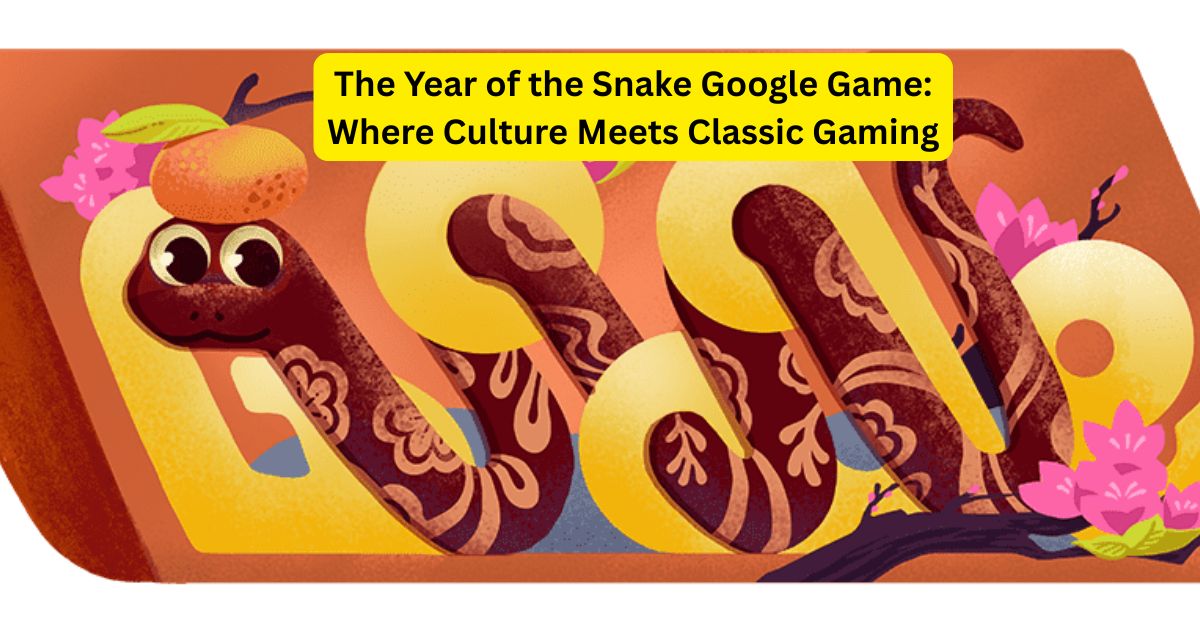
In the digital age, few things evoke nostalgia quite like a simple, pixelated game. Among the pantheon of classic gaming experiences, Google Doodles have carved out a unique niche, celebrating global events, icons, and culture with interactive flair. One such timeless gem is “The Year of the Snake” Google Doodle game, released in 2013 to mark the Lunar New Year and the arrival of the Year of the Snake in the Chinese zodiac.
Simple in concept yet addictive in execution, this mini-game was more than just a casual distraction. It blended cultural celebration with gameplay rooted in retro gaming history, paying homage to the legendary Snake game from early mobile phones. A fusion of past and present, “The Year of the Snake” Google game stands as a perfect example of how technology, tradition, and play can intersect. This article takes you on a nostalgic journey through the game, exploring its origins, design, cultural context, and enduring appeal.
The Birth of a Google Doodle Game
Google Doodles have become iconic. What started as simple logo modifications has evolved into interactive experiences that often go viral. From the Halloween cat adventures to Beethoven’s musical puzzle, these games are educational, fun, and often rooted in meaningful stories.
In February 2013, Google released a special Doodle in celebration of Chinese New Year, a holiday observed by millions around the world. That year marked the Year of the Snake, the sixth sign of the 12-year Chinese zodiac cycle. Google chose to honor it with a charming, interactive game that resembled the retro Snake game but added its own colorful and festive twist.
Gameplay Mechanics: Simplicity Meets Fun
The game used the arrow keys to guide a friendly cartoon snake through a celebratory landscape. Your goal? Collect red envelopes, a traditional Chinese New Year symbol of good fortune, while avoiding obstacles and not running into yourself.
The design borrowed heavily from the classic Snake format:
-
The Snake grows longer each time it consumes an item.
-
The game ends if the snake crashes into itself or a wall.
-
Difficulty increases as the snake grows and the environment becomes more complex.
But there were modern upgrades too:
-
Colorful graphics featuring lanterns, fireworks, and dragons.
-
Smooth animations and playful sound effects.
-
Playful character design that gave the snake a cheerful personality.
It was straightforward, nostalgic, and utterly addictive.
Cultural Significance: More Than Just a Game
What makes this Doodle particularly memorable is how it wove cultural significance into gameplay.
Red Envelopes (Hongbao)
The game’s core collectible, the red envelope, is a major part of Chinese New Year. Known as “hongbao”, these envelopes are traditionally filled with money and given to children or unmarried adults as a symbol of luck and prosperity. In the game, collecting these envelopes becomes a metaphor for receiving blessings and joy.
The Snake Zodiac
In Chinese astrology, people born in the Year of the Snake are considered wise, enigmatic, and intelligent. While the snake is sometimes viewed with suspicion in Western symbolism, in Chinese culture it’s a respected creature. The game doesn’t just celebrate the year, it reclaims the image of the snake as something to be embraced.
Visual Symbolism
The game’s vibrant colors, lanterns, and celebratory background music capture the spirit of Lunar New Year festivals seen across China and other parts of Asia. By integrating these into the game, Google offered users a fun, respectful look into the traditions associated with the holiday.
Homage to Classic Gaming
Anyone who owned an early Nokia phone remembers the original Snake game. It was simple—move a pixelated snake to eat dots and grow. That’s it. But it was addictive, challenging, and satisfying.
Google’s 2013 game was a loving tribute to that classic:
-
Same core mechanics.
-
Same gradually increasing difficulty.
-
Same appeal to casual gamers and die-hards alike.
But by combining it with cultural imagery and a holiday celebration, Google created something new: a hybrid that felt both fresh and familiar.
The Legacy of Snake Games
Before delving deeper into the Google version, it’s worth exploring why the Snake genre holds such nostalgic power.
A Brief History
-
1976: The first Snake-like game appeared as “Blockade,” developed by Gremlin.
-
1982–1986: Snake clones spread to home computers and arcade cabinets.
-
1997: Snake was preloaded on Nokia phones, and it became an international hit.
-
2000s–Present: Snake lives on through countless mobile versions, browser games, and remakes.
The beauty of Snake lies in its minimalism. It’s a game you can understand in seconds but master only after much practice. It’s the kind of challenge that keeps players coming back for “just one more try.”
The Google Doodle Experience: Bringing Joy to Browsers
The beauty of a Doodle game is its accessibility. No installation. No sign-up. No microtransactions. Just open your browser and start playing.
This is especially powerful for:
-
Busy professionals seeking a five-minute break.
-
Students killing time between classes.
-
Parents and kids playing together during a holiday.
And with millions of people visiting Google every day, the exposure is unmatched. The Year of the Snake game reached a global audience and introduced many to the customs of Chinese New Year who may not have otherwise engaged with them.
Design Philosophy: Playful Yet Purposeful
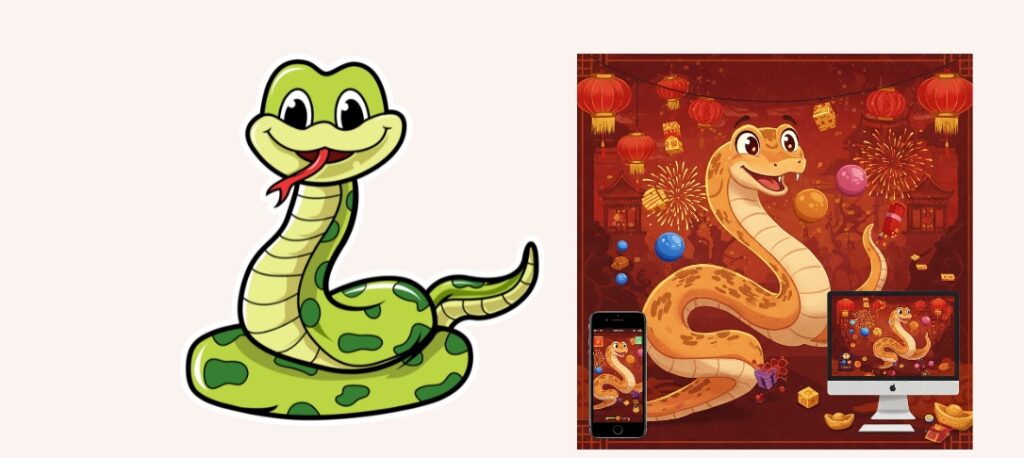
Google’s design team has always emphasized playful minimalism in Doodles, and the Year of the Snake game is no exception. Its visuals are cartoonish and approachable, perfect for all age groups. Yet every element is thoughtful:
-
Color choices reflect the festive reds and golds of Lunar New Year.
-
Sound effects mirror the joyful tones of celebration and family gathering.
-
The snake’s animations add personality, it wiggles, smiles, and reacts as it grows.
User Reception and Global Impact
The game was widely praised upon release. Social media lit up with posts like:
-
“Google’s Snake game is better than anything in my app store!”
-
“Can’t stop playing, this is the best Doodle ever.”
-
“Who knew a snake could be so cute?”
In China, Southeast Asia, and diasporic communities around the world, the game was shared among family and friends as part of the holiday fun. It sparked conversations about tradition, childhood memories, and digital culture.
Educational Value and Cultural Exposure
One of the overlooked benefits of Google’s Doodles is their educational potential. For younger players, the game introduced:
-
The concept of the Chinese zodiac.
-
The significance of Lunar New Year traditions.
-
The joy of cultural celebration through games.
Even for adults, it was a chance to learn or revisit traditions, perhaps even inspiring further exploration into Chinese history, art, and astrology.
The Doodle Archive: Preserving a Digital Memory
Unfortunately, Doodle games are usually temporary. After a day or two, they vanish from the homepage. But thanks to the Google Doodle Archive, fans can revisit and replay past creations. The Year of the Snake game is still available online in the archive. It lives on as a playable time capsule, offering not just entertainment, but a reminder of the joy found in simple things.
A Broader Trend: Google’s Doodle Games Through the Years
The Year of the Snake is just one of many memorable Doodle games. Others include:
-
Halloween 2016: A magical cat named Momo battles ghosts.
-
Pac-Man 30th Anniversary: A full recreation of the arcade classic.
-
Cricket Champions Trophy 2017: Play as cricket-loving insects.
Each Doodle builds on the same principles: fun, simplicity, and celebration of culture or history.
Why We Keep Coming Back
In a world of high-definition games with complex mechanics, why does a simple snake game still resonate?
Because it reminds us of a time when games were about:
-
Quick joy.
-
Challenge through simplicity.
-
Universal appeal, regardless of age, nationality, or skill.
The Year of the Snake game captured lightning in a bottle by wrapping these timeless truths in a festive, culturally rich package.
Conclusion
“The Year of the Snake” Google game is more than a mini-browser experience. It’s a love letter to retro gaming, a celebration of cultural tradition, and a reminder of the joy found in small moments. In under a minute, players around the world could laugh, learn, and connect, with both technology and culture.
In the years since its release, it has remained a favorite in the Doodle archive, a nostalgic noodle through time that invites us to slow down, smile, and remember how delightful simple things can be. As we continue to move forward in the digital age, may we never forget the charm of pixelated snakes, red envelopes, and browser games that make us feel like kids again.
