

Most companies feel pretty good about their security once they’ve turned on two-factor authentication. An employee enters a password, gets a text message with a six-digit code, types it in, and gets access. It feels like a solid extra layer of protection and for a long time, it was treated as one of the easiest wins in corporate security.
But in 2026, security researchers, regulators, and even federal agencies are sending a consistent message: SMS-based mobile verification has quietly become one of the weakest points in corporate network security, not one of the strongest. Attackers have gotten very good at working around it, and the very thing that made it popular its simplicity is exactly what makes it fragile.
This article breaks down why mobile verification has become such a soft target, how attackers are actually exploiting it, and what companies are shifting toward instead.
Why Mobile Verification Became So Popular in the First Place
To understand why this is such a big problem now, it helps to understand why SMS-based verification became the default in the first place. It was cheap to deploy, didn’t require special hardware or apps, and almost everyone already knew how to use it enter a password, receive a text, type in the code. For companies rolling out two-factor authentication across large workforces, that simplicity was a huge advantage.
For years, this was seen as a genuine improvement over relying on passwords alone. And it was — up to a point. The problem is that SMS wasn’t originally designed with cryptographic security in mind. The underlying telecom systems it runs on were built decades ago for basic communication, not for protecting access to sensitive corporate systems. That mismatch is exactly what attackers have learned to exploit.
The Core Problem: SIM Swapping
The single most well-known weakness in mobile verification is something called SIM swapping. In simple terms, an attacker convinces (or bribes, or socially engineers) a mobile carrier into transferring a victim’s phone number to a SIM card the attacker controls. Once that happens, any verification code sent to that number goes straight to the attacker instead of the real employee.
This isn’t a rare, sophisticated attack anymore it’s become a standard technique because it works so reliably. And once an attacker controls someone’s phone number, they don’t just get access to one account. They effectively get the keys to every account tied to that number for verification, which for a corporate employee could include email, cloud storage, financial systems, and remote access tools all at once.
Interception, Malware, and the Illusion of “Something You Have”
Two-factor authentication is built on the idea of combining “something you know” (a password) with “something you have” (a device). The problem is that mobile verification assumes physical possession of a phone number automatically proves someone’s identity but that assumption doesn’t hold up as well as it used to.
Beyond SIM swapping, SMS messages can also be intercepted through vulnerabilities in telecom signaling networks, or captured directly on a compromised device through malware designed specifically to read incoming verification codes. In both cases, the attacker never needs to touch the victim’s actual phone — they just need to exploit weaknesses in the systems the message travels through.
This is a big part of why cybersecurity agencies have moved from cautious warnings to direct recommendations against relying on SMS for sensitive authentication. Regulatory and law enforcement bodies have issued explicit warnings following real large-scale telecom attacks, specifically flagging SMS-based authentication as a serious risk.
Smishing: The Human Layer of the Problem
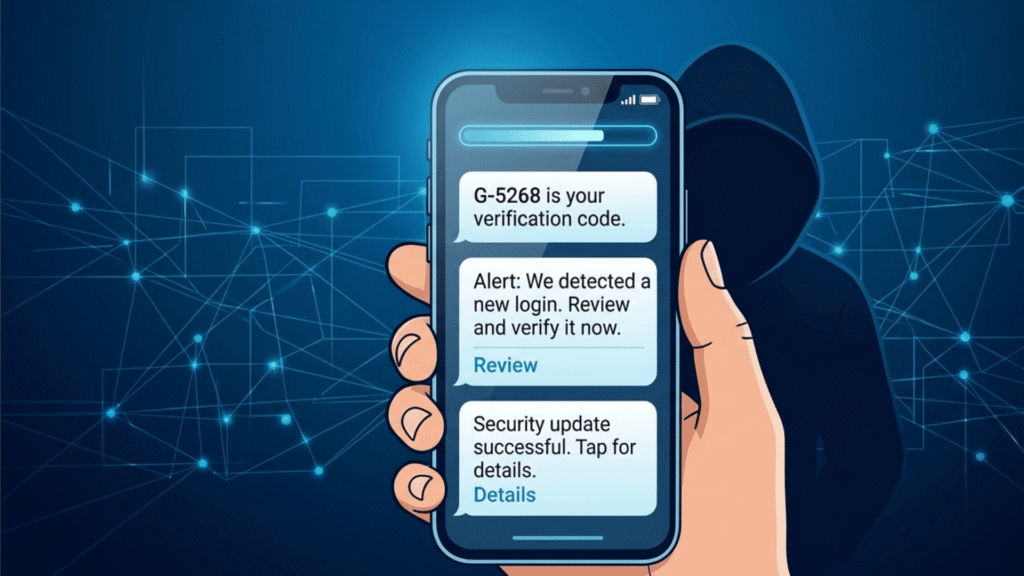
Technical interception is only part of the story. A huge share of mobile verification failures come down to plain social engineering delivered through text messages often called “smishing,” a mobile version of phishing.
Here’s why this matters so much for corporate security: employees have been trained for years to be suspicious of phishing emails, but text messages don’t get the same level of scrutiny. A message that looks like it’s from IT support, asking someone to “verify” their login by forwarding a code, or a fake executive message asking for an urgent action, tends to get far less skepticism than the same scam delivered by email. Attackers know this, and they’ve adapted their tactics accordingly building out realistic smishing campaigns that specifically target corporate employees with fake help-desk messages, executive impersonation attempts, and urgent “account verification” requests.
Security teams that only run phishing-awareness training focused on email are increasingly missing the channel where employees are actually most vulnerable.
Why This Isn’t Just a Personal Inconvenience It’s a Systemic Risk
It’s easy to think of a hijacked phone number as an individual’s problem. But when that number is tied to a corporate account, the consequences scale up fast. A compromised mobile verification method tied to a corporate email or remote access account can lead directly to unauthorized financial transactions, data theft, and serious damage to customer trust — not just a single person’s inconvenience.
This is exactly why security researchers increasingly describe SMS-based authentication as a systemic vulnerability rather than a minor technical flaw. It’s not just about one employee’s account getting compromised — it’s about how much access that one compromised account can unlock across an entire corporate network.
Regulators Are Already Moving Away From SMS
This isn’t just a theoretical security debate anymore it’s becoming law in multiple places. Financial regulators in several countries have started actively phasing out or restricting SMS-based one-time codes for sensitive transactions, specifically because of how easily they can be intercepted or socially engineered. Some regulatory frameworks now require at least one authentication method that’s dynamic and transaction-specific, rather than relying on a static SMS code as the sole layer of protection.
In the United States, some federal agencies have already discontinued SMS-based authentication entirely for their own systems, and cybersecurity guidance from national frameworks now explicitly recommends against using SMS one-time passwords for anything sensitive. The overall direction is clear: what used to be treated as an acceptable baseline is increasingly being treated as the minimum acceptable risk companies should be actively moving away from.
What Companies Are Shifting Toward Instead
The good news is that better alternatives already exist and are becoming much easier to deploy at scale.
Authenticator apps generate time-based codes directly on a device without relying on the telecom network at all, removing the SIM-swapping and interception risks tied to SMS.
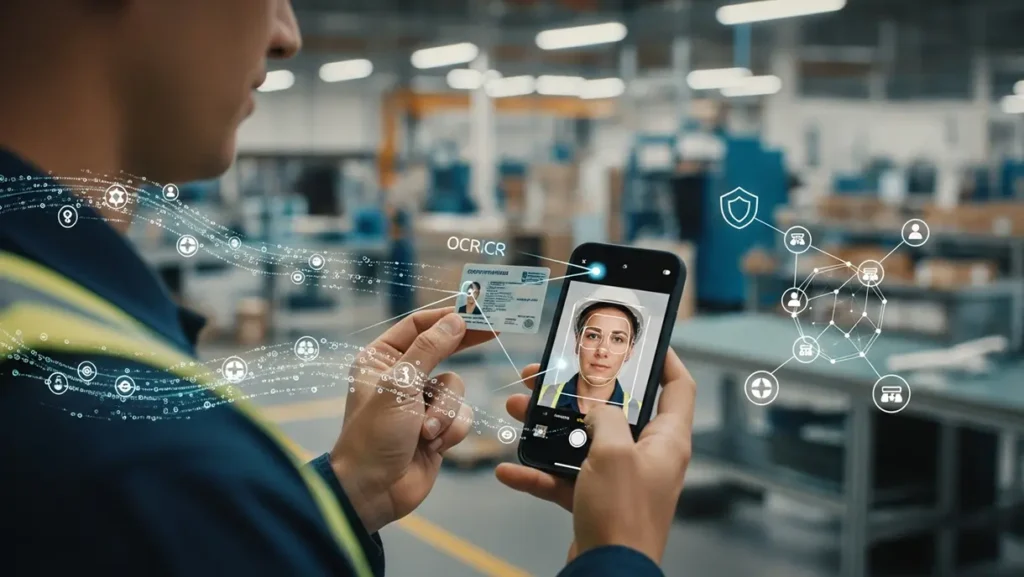
Passkeys, built on modern cryptographic standards, are quickly becoming a mainstream option. Instead of sending a code that could be intercepted, passkeys use a device’s built-in biometric authentication — like a fingerprint or face scan — paired with cryptographic keys that never get transmitted in a way that could be stolen in transit. Major platforms now widely support this approach, making it realistic for large-scale corporate deployment rather than something only cutting-edge companies can implement.
Hardware security keys remain the strongest option available for the most sensitive environments — corporate IT administration, financial systems, and infrastructure with the highest stakes. These physical devices enforce strict proof of possession and are extremely resistant to remote phishing or interception attempts, since the authentication happens through direct physical interaction with the key itself.
Behavioral and continuous authentication is also gaining traction, where systems continuously analyze patterns like typing behavior, navigation habits, and access timing to verify identity in the background, rather than relying on a single one-time check at login. This approach can catch a compromised account even when an attacker has valid login credentials, since their behavior patterns won’t match the real user’s.
Zero Trust and Layered Defense
Beyond swapping SMS for a stronger single method, the broader shift happening in corporate security is toward Zero Trust principles the idea that no single authentication event should be automatically trusted, no matter how it happened. Instead of “log in once, trust for the whole session,” Zero Trust environments continuously verify identity and context throughout a user’s activity, layering multiple checks together rather than relying on one method to carry all the weight.
This matters specifically for mobile verification because it changes the stakes of a single weak link. Even if one authentication factor gets compromised, a properly layered Zero Trust environment reduces how much damage that single failure can cause, rather than granting broad access based on one successful code entry.
The Bottom Line
Mobile verification earned its popularity by being simple and familiar, but that same simplicity is exactly what’s made it such an attractive target for attackers in 2026. SIM swapping, interception, and smishing have turned what used to feel like a solid security layer into one of the most commonly exploited weak points in corporate networks. Regulators and security agencies have already started treating this as a serious, systemic risk rather than a minor inconvenience and the direction for companies going forward is clear: move toward passkeys, authenticator apps, hardware keys, and layered Zero Trust verification, rather than continuing to rely on a method that was never built to withstand the level of attack it faces today.
FAQs
Q1: Isn’t SMS two-factor authentication still better than just using a password alone? Yes, generally — SMS-based verification does add meaningful protection compared to a password by itself. The concern isn’t that it’s useless, but that it’s significantly weaker than modern alternatives like passkeys or hardware security keys, especially for protecting sensitive corporate systems where the stakes of a compromise are high.
Q2: What exactly is SIM swapping, and how does it work? SIM swapping is when an attacker tricks or manipulates a mobile carrier into transferring a victim’s phone number to a SIM card the attacker controls. Once that’s done, any verification codes sent to that number go directly to the attacker, giving them a path into any account relying on that number for authentication.
Q3: Why do text-based scams (smishing) work so well on employees? Employees are generally trained to be cautious with suspicious emails, but text messages don’t get the same scrutiny. Attackers exploit this gap by sending convincing fake messages — like fake IT help-desk requests or executive impersonation attempts — that get less skepticism than an equivalent email would.
Q4: What should companies switch to instead of SMS verification? Common stronger alternatives include authenticator apps, passkeys built on modern cryptographic standards, and hardware security keys for the most sensitive systems. Many companies are also adding behavioral authentication, which continuously verifies identity based on how a person actually interacts with their device.
Q5: Is this only a concern for large enterprises, or should smaller businesses worry too? It’s relevant for businesses of any size. In fact, smaller businesses can be more vulnerable, since they often have fewer resources dedicated to security monitoring and may be slower to move away from SMS-based systems that feel “good enough” simply because they haven’t experienced a serious incident yet.
