
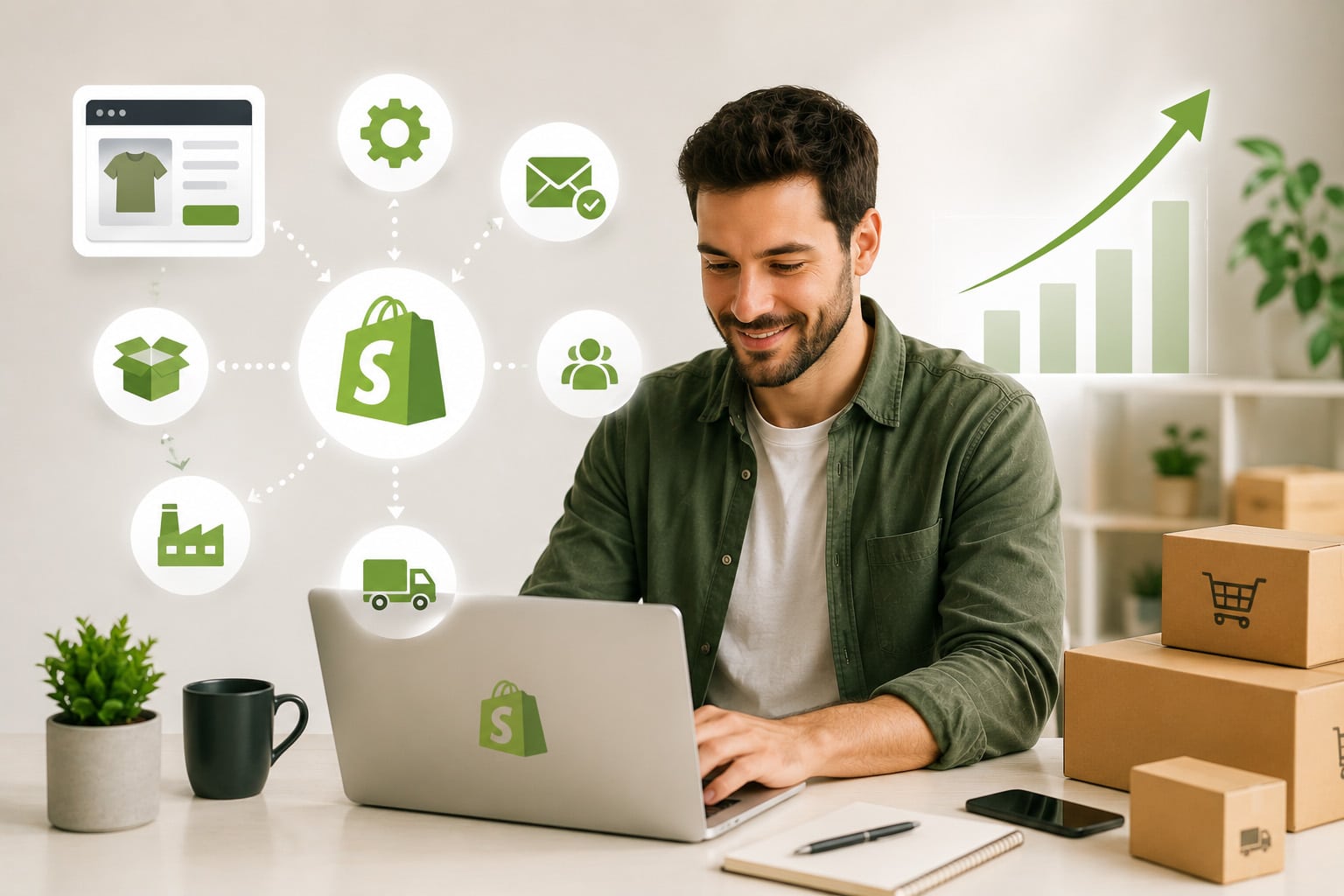
Dropshipping remains one of the most popular ways to start an online business without needing a warehouse full of inventory or a huge upfront investment. It’s appealing precisely because you don’t have to buy products until someone actually orders them from you. But while it’s beginner-friendly compared to traditional retail, it’s not a “get rich overnight” scheme either. This guide walks through exactly how dropshipping works, the step-by-step process to launch your own store, and what to realistically expect in 2026, all explained in simple, easy words.
What Is Dropshipping?
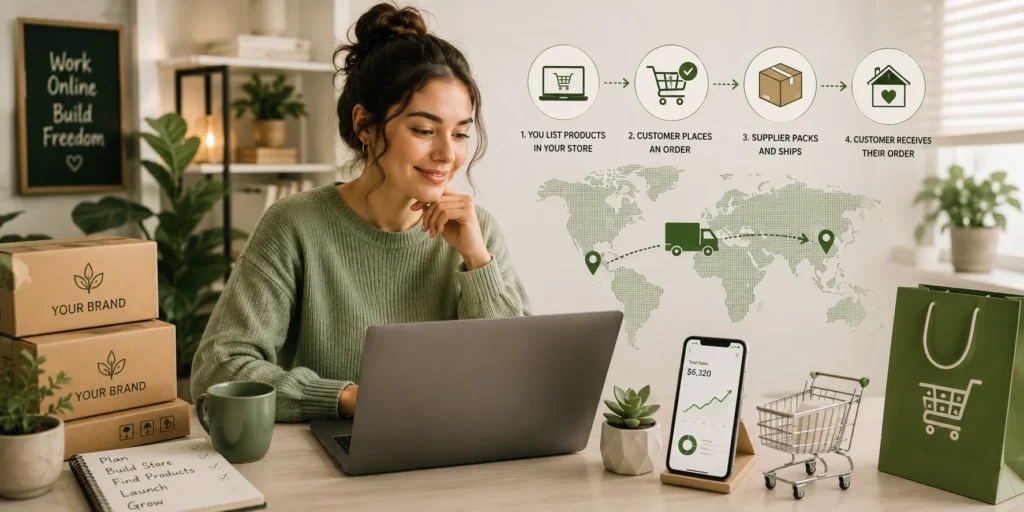
Dropshipping is a business model where you sell products online without physically holding any inventory yourself. Here’s how it works in simple terms: a customer orders a product from your online store, you forward that order to a supplier or manufacturer, and the supplier ships the product directly to the customer. You never touch or store the product yourself.
Your role as the store owner is essentially handling marketing, customer service, and running the storefront, while the supplier handles manufacturing, storage, and shipping. Your profit comes from the difference between what you charge the customer and what the supplier charges you.
Why Dropshipping Is Still Popular in 2026
Despite being around for years, dropshipping continues to attract new entrepreneurs for a few solid reasons:
- Low startup cost – You don’t need to buy inventory upfront, which significantly reduces the financial risk compared to traditional retail.
- No warehouse needed – You can run the entire business from a laptop, without renting storage space.
- Wide product selection – You can test multiple products without committing to large inventory purchases.
- Location flexibility – Since everything happens online, you can run a dropshipping business from virtually anywhere.
That said, competition has grown significantly over the years, which means success now depends more on smart marketing, niche selection, and customer experience than it did when dropshipping was newer.
Step-by-Step Guide to Starting a Dropshipping Business
Step 1: Choose Your Niche
Your niche is the specific category of products you’ll focus on. Rather than trying to sell “everything,” successful dropshipping stores usually focus on a specific audience or product category. This makes marketing more targeted and helps build a recognizable brand rather than looking like a generic, unfocused store.
When choosing a niche, consider:
- Personal interest or knowledge – Having some familiarity with the niche makes content creation and marketing easier.
- Demand and search trends – Look for products people are actively searching for and buying.
- Profit margins – Some niches naturally allow for higher markups than others.
- Shipping practicality – Avoid niches with extremely fragile, oversized, or heavily regulated products, since these complicate shipping and returns.
Popular niche categories in recent years include home fitness gear, pet accessories, eco-friendly products, phone and tech accessories, and specific fashion or beauty subcategories.
Step 2: Validate Product Demand
Before committing to a niche, it’s worth checking whether there’s actual demand for the products you’re considering. A few simple ways to do this:
- Search trending product tools or marketplaces to see what’s currently popular.
- Check social media platforms to see if similar products are getting engagement.
- Look at existing competitor stores to see which products they’re actively promoting.
- Search relevant keywords to gauge search volume and buyer intent.
Validating demand early helps avoid building a store around products nobody actually wants to buy.
Step 3: Choose a Business Structure and Register Your Business
Once you’ve settled on a niche, it’s time to handle the legal basics. Many beginners start as a sole proprietor, since it’s the simplest and cheapest option, though forming an LLC can offer legal protection by separating your personal assets from business liabilities as you grow.
Depending on your state, you may also need:
- A business license
- A sales tax permit, since most states require you to collect sales tax on taxable goods
- An Employer Identification Number (EIN) from the IRS, which is free to obtain directly
Step 4: Find Reliable Suppliers
Your supplier relationship is one of the most important parts of a dropshipping business, since they directly affect product quality, shipping times, and customer satisfaction. Common ways to find suppliers include:
- Supplier directories and marketplaces – Platforms that connect store owners with verified suppliers offering dropshipping arrangements.
- Print-on-demand services – Useful if you’re selling custom-designed products like apparel or accessories, since items are printed only after an order is placed.
- Direct manufacturer outreach – Contacting manufacturers directly, especially for niche or specialized products, can sometimes lead to better pricing and more reliable service.
When evaluating suppliers, pay close attention to:
- Average shipping times, especially if products ship internationally
- Product quality and return policies
- Communication responsiveness
- Pricing structure and minimum order requirements, if any
It’s often smart to order product samples yourself before listing them, so you know exactly what your customers will receive.
Step 5: Build Your Online Store
Once you have a niche and supplier lined up, it’s time to build the actual storefront. Most beginners use e-commerce platforms designed specifically for building online stores quickly, without needing coding knowledge.
Key elements to focus on when building your store:
- Clean, professional design – A cluttered or unprofessional-looking store can hurt trust and conversions.
- Clear product descriptions – Written in a way that highlights benefits, not just features.
- High-quality product images – Since customers can’t physically touch the product, good visuals matter a lot.
- Easy navigation – Customers should be able to find what they’re looking for without confusion.
- Trust signals – Elements like clear return policies, contact information, and customer reviews help build credibility.
Step 6: Set Up Payment Processing
You’ll need a way to accept customer payments securely. Most e-commerce platforms integrate directly with payment processors, allowing customers to pay via credit card, debit card, or digital wallets. Make sure whatever payment system you choose is secure, widely trusted, and compatible with your specific platform.
Step 7: Price Your Products Strategically
Pricing in dropshipping needs to account for more than just the supplier’s cost. You’ll also need to factor in:
- Platform transaction fees
- Payment processing fees
- Marketing and advertising costs
- Shipping costs, if not fully covered by the customer
- Your desired profit margin
A common approach is to use a markup formula based on your total costs, then adjust based on competitor pricing and perceived value, rather than picking numbers arbitrarily.
Step 8: Set Up Marketing Channels
Since dropshipping stores don’t have built-in foot traffic like a physical store, marketing is critical to actually generating sales. Common marketing approaches include:
- Social media marketing – Particularly effective for visually appealing products, using both organic content and paid ads.
- Influencer partnerships – Collaborating with niche-relevant influencers to promote products to their audience.
- Search engine optimization (SEO) – Optimizing product pages and content to rank in search results over time.
- Email marketing – Building an email list to encourage repeat purchases and reduce dependency on paid ads alone.
- Paid advertising – Running targeted ads on social platforms or search engines to drive traffic quickly, though this requires careful budget management.
Most successful dropshipping stores use a mix of these channels rather than relying on just one.
Step 9: Provide Strong Customer Service
Since you don’t control the shipping process directly, customer service becomes even more important in dropshipping. Common customer concerns include shipping delays, product quality issues, and return requests. Having clear policies, responsive communication, and a straightforward returns process helps build trust and encourages repeat business.
Step 10: Analyze, Optimize, and Scale
Once your store is live and generating some sales, ongoing optimization becomes key. This includes:
- Reviewing which products are performing well versus underperforming
- Testing different marketing messages and ad creatives
- Improving site speed and checkout experience to reduce abandoned carts
- Gradually expanding your product range based on what’s working
- Reinvesting profits into marketing or improved supplier relationships as revenue grows

Common Mistakes Beginners Make
Understanding common pitfalls can help you avoid them early on:
- Choosing an oversaturated niche without differentiation – Selling the exact same generic products as hundreds of other stores, without a unique angle, makes it hard to stand out.
- Ignoring shipping times – Extremely long shipping windows can frustrate customers and hurt reviews, especially if not clearly communicated upfront.
- Underestimating marketing costs – Some beginners assume building a store is enough, without budgeting properly for ongoing advertising.
- Poor supplier vetting – Working with unreliable suppliers can lead to quality issues that damage your store’s reputation.
- Neglecting customer service – Slow or unclear responses to customer issues can lead to negative reviews and lost repeat business.
Is Dropshipping Still Profitable in 2026?
Dropshipping can still be profitable, but expectations need to be realistic. The market has matured significantly, meaning success today generally depends more on strong branding, niche focus, and marketing skill than simply listing trending products and waiting for sales. Profit margins in dropshipping also tend to be thinner than some other business models, since you’re not benefiting from bulk purchasing discounts the way traditional retailers might.
That said, for beginners looking for a lower-risk way to learn e-commerce fundamentals, test business ideas, and build marketing skills without a massive upfront investment, dropshipping remains a reasonable starting point, as long as it’s approached with realistic expectations and consistent effort.
Final Thoughts
Starting a dropshipping business in 2026 is more achievable for beginners than many other business models, mainly because of its low upfront investment and flexible structure. However, that accessibility also means competition is high, so success tends to come down to smart niche selection, reliable suppliers, strong marketing, and genuinely good customer service, rather than just setting up a store and hoping for sales. Approach it as a real business that requires ongoing effort, not a shortcut to quick riches, and it can be a solid entry point into the world of online entrepreneurship.
FAQs (Frequently Asked Questions)
1. How much money do I need to start a dropshipping business? Since you don’t need to buy inventory upfront, dropshipping can often be started for a few hundred to a couple thousand dollars, mainly covering store setup, a platform subscription, and initial marketing.
2. Do I need to register a business to start dropshipping? It’s recommended, especially as your sales grow. Many beginners start as a sole proprietor, though forming an LLC can offer added legal protection. Requirements like sales tax permits vary by state.
3. How do I find reliable suppliers for dropshipping? Common approaches include using supplier directories or marketplaces, print-on-demand services, or reaching out to manufacturers directly. Always vet suppliers carefully and consider ordering samples first.
4. Is dropshipping still profitable in 2026? Yes, but profit margins tend to be thinner than in the past due to increased competition. Success now relies more heavily on strong marketing, niche focus, and good customer experience.
5. How long does it take to become profitable with dropshipping? This varies widely depending on your niche, marketing budget, and effort. Some stores see early sales within weeks, while building a consistently profitable business often takes several months of testing and optimization.
6. What’s the biggest challenge in dropshipping? Standing out in a competitive market is one of the biggest challenges, along with managing shipping expectations and maintaining strong supplier relationships to ensure product quality.
7. Can I do dropshipping as a side business while working full-time? Yes, many people start dropshipping as a side business since it doesn’t require managing physical inventory, though it still requires consistent time for marketing and customer service.
8. Do I need technical or coding skills to start a dropshipping store? No, most modern e-commerce platforms are designed for beginners and don’t require coding knowledge to build a functional online store.
