
A plumber in Ohio once told me he’d spent months trying to fix his website’s SEO better keywords, faster loading, fresh blog posts while his actual Google Business Profile sat there with an outdated phone number, three-year-old photos, and eleven unanswered reviews. He was optimizing the wrong thing entirely. Once he actually cleaned up and started actively managing his Google Business Profile, his Local Pack ranking improved more in six weeks than his website changes had managed in six months.
That story captures something important about local SEO in 2026: it’s not really the same discipline as regular organic SEO, even though the two overlap. Google evaluates local search results the map pack, the “near me” results, the businesses that show up when someone searches for a service in their area through a different lens than it evaluates general organic rankings. Understanding that lens, and building a checklist around what actually moves the needle, matters a lot more than generic SEO advice that wasn’t built with local search specifically in mind.
This guide walks through what genuinely drives local search visibility right now, organized as a practical checklist a business owner can actually work through.
Understanding the Three Pillars Google Actually Uses
Before diving into specific tasks, it helps to understand the underlying framework Google uses to decide who shows up in local results, since almost every checklist item below maps back to one of these three pillars.
Relevance measures how well a business matches what someone is actually searching for. This is shaped heavily by how a business’s Google Business Profile is categorized, how its services are described, and how well its website content reflects the specific services being searched for.
Distance measures how close a business is to the location implied by the search, whether that’s the searcher’s actual location or a location mentioned in the search itself. For businesses with a physical storefront, this is fairly straightforward. For service-area businesses without a public-facing address, this works more like a filter — falling within the defined service area makes a business eligible to show up, after which relevance and prominence determine actual ranking position rather than proximity itself.
Prominence measures how well-known and well-regarded a business is, both online and in the real world. This draws on review signals, how often the business is mentioned or linked to elsewhere online, and general indicators of legitimacy and popularity.
Every checklist item below feeds into one or more of these three pillars, and understanding which pillar a given task supports helps prioritize effort where it actually matters most for a specific business’s situation.
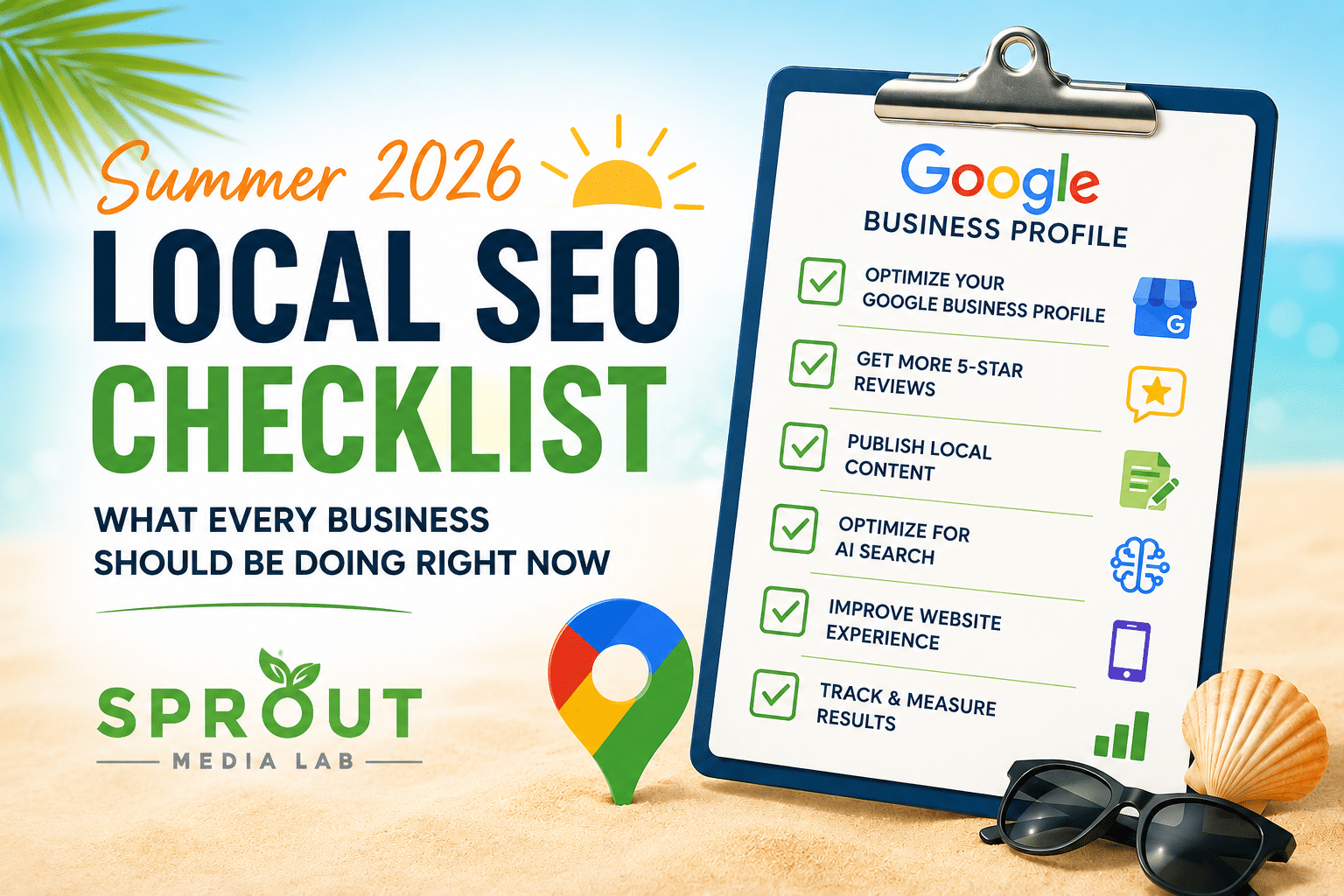
Step 1: Fully Complete and Actively Manage the Google Business Profile
The Google Business Profile remains the single most influential asset in local search, and a large share of ranking difference between competing businesses comes down to how complete and actively managed this profile actually is.
Choose the most accurate primary category available, since this has an outsized effect on which searches a business becomes eligible to rank for at all. A landscaping company that lists itself under a generic “home services” category rather than a more specific landscaping-related category is working against itself before anything else even comes into play.
Fill in every available field, not just the basics business description, service list, attributes (wheelchair accessible, appointment-only, and so on), hours including holiday hours, and any applicable secondary categories. An incomplete profile signals lower quality to Google’s evaluation and gives searchers less reason to choose that business over a more thoroughly filled-out competitor.
Keep photos current and add new ones regularly. Stale, outdated, or sparse photo galleries are a common and easily fixed weakness. Regularly adding new photos of the business, staff, completed work, or products — signals an active, legitimate business rather than a listing that was set up once and forgotten.
Use Google Posts and updates actively. Regularly posting updates, offers, or announcements through the Business Profile keeps the listing active and gives Google additional fresh, relevant content to associate with the business.
Respond to questions asked directly on the profile through the Q&A feature, since unanswered questions sitting publicly on a listing look neglected to anyone browsing, and can leave inaccurate assumptions unaddressed.
Step 2: Build a Steady, Genuine Flow of Reviews
Reviews carry substantial weight in how Google evaluates local prominence, and the emphasis has shifted somewhat from pure star rating toward the fuller picture: quantity, consistency over time, recency, and how a business responds.
Actively request reviews from real customers as a normal part of business operations, rather than treating review generation as an occasional afterthought. A steady trickle of new reviews over time tends to perform better for ranking purposes than a large batch collected all at once and then nothing for months afterward.
Respond to every review, positive and negative. A thoughtful response to a negative review, addressing the concern professionally, often does more for prospective customer trust than the negative review itself does damage, and it signals an actively managed, responsive business to anyone evaluating the listing.
Never buy or fabricate reviews. Beyond being against Google’s policies and carrying real risk of profile suspension, fake reviews are increasingly detectable through pattern analysis, and getting caught can do far more damage to a listing’s standing than having fewer, genuine reviews would have.
Encourage reviews that naturally include relevant details, without scripting exact wording, since reviews that organically mention specific services or the local area tend to reinforce relevance signals alongside the general trust signal reviews provide.
Step 3: Get NAP Consistency Right Everywhere
NAP name, address, phone number consistency across every place a business appears online remains a foundational trust signal, even though its relative importance has declined somewhat compared to a decade ago as other signals have grown.
Audit every online listing the website itself, the Google Business Profile, social media profiles, industry directories, and any citation sources for exact consistency in business name, address formatting, and phone number. Small inconsistencies (a suite number included in one place and omitted in another, an old phone number lingering on a directory site) can create confusion for both users and search engines trying to verify a business’s legitimacy.
Correct outdated citations on major directory and data aggregator sites, since incorrect information can persist for a surprisingly long time if not actively corrected, especially on sites that periodically resync data across multiple sources.
Step 4: Build Location-Relevant On-Page Content
The business’s own website still matters significantly for local search, particularly through how clearly and specifically it addresses the services and locations the business actually serves.
Create dedicated local landing pages for each distinct service area, especially for service-area businesses covering multiple cities or regions, rather than relying on a single generic page trying to cover everywhere at once. A business serving five different cities generally performs better in each of those markets with a dedicated page for each, addressing local specifics, than with one page vaguely mentioning all five.
Add structured data (schema markup), specifically LocalBusiness schema, to help search engines parse and verify business details directly from the website’s code rather than relying solely on other signals.
Write genuinely specific service descriptions rather than generic, could-apply-to-any-business copy. Content that clearly reflects the actual services offered, using the language real customers search with, supports relevance far more than vague, keyword-stuffed alternatives.
Keep mobile performance solid. A large share of local searches happen on mobile devices, often from someone actively looking for a business right now, and a slow-loading or poorly formatted mobile site creates real friction exactly when a potential customer is closest to taking action.
Step 5: Build Genuine Local Links and Mentions
Backlinks still matter for local SEO, though the type of link matters considerably more than raw volume, and generic directory submissions have lost much of the impact they once carried.
Prioritize links from genuinely local, relevant sources a mention in a regional news outlet, a link from a local Chamber of Commerce, sponsorship of a local event or organization, or a link from a community group’s website. These carry meaningfully more weight than generic, non-local directory listings, since they reinforce both topical relevance and genuine geographic legitimacy at once.
Participate authentically in the local community, since sponsoring a youth sports team, participating in a local charity event, or getting involved with community organizations tends to naturally generate exactly this kind of high-value local link and mention over time, alongside the genuine community goodwill it builds regardless of any SEO benefit.
Step 6: Pay Attention to Behavioral Signals
Google increasingly factors in how people actually interact with a business listing once they find it click-through rate to the website, calls placed directly from the listing, requests for directions, and how long someone engages with the listing before taking an action.
Make it easy to take the next step directly from the listing a clickable phone number, a clear website link, accurate directions — since friction at this stage doesn’t just lose the individual customer, it also represents a weaker behavioral signal to Google over time if it happens repeatedly across many searchers.
Keep hours and availability information accurate, since a mismatch between listed hours and actual availability creates a bad experience that shows up in behavioral signals like people leaving quickly after arriving at a listing without taking action.
Step 7: Account for AI-Driven Local Search
Local search has genuinely expanded beyond the traditional Google Maps pack. AI-powered search experiences and assistants increasingly surface local business recommendations directly, and platforms beyond Google — Apple Maps and Apple Business Connect among them have grown in relevance as more users search across a wider range of tools rather than defaulting to a single platform.
Keep business information accurate and consistent across all relevant platforms, not just Google, since fragmented or conflicting information across different search and map platforms undermines the same trust and legitimacy signals everywhere it appears, not just on the primary platform a business happens to focus on.
Build genuinely helpful, well-structured content, since AI-driven search tools tend to favor content that answers questions clearly and directly, similar to how they evaluate general web content, rather than content built primarily around keyword density.
Common Mistakes That Hold Businesses Back
A few recurring mistakes show up across businesses struggling with local visibility. Letting the Google Business Profile go stale — outdated photos, an old phone number, no recent posts after an initial setup is one of the most common and easily fixed problems. Using an overly broad service area for a service-area business, rather than a realistic, focused area the business can genuinely serve well, tends to dilute relevance rather than expanding reach. Publishing a home address for a service-area business that shouldn’t be showing a public address at all is a policy violation that can lead to profile suspension. And treating local SEO as a one-time setup task, rather than an ongoing practice of managing reviews, updating information, and building genuine local engagement, is probably the single most common reason a business’s local visibility plateaus or slowly declines over time.
The Bottom Line
Ranking well in local search in 2026 comes down to consistently doing the fundamentals well across several areas at once, rather than finding one clever trick. A complete, actively managed Google Business Profile, a steady flow of genuine reviews, accurate and consistent business information everywhere it appears, genuinely local website content, real local links and community engagement, and attention to how people actually behave once they find the listing — together, these build the kind of relevance, prominence, and trust that Google’s local algorithm is fundamentally trying to identify. No single checklist item guarantees a top spot, but consistent, ongoing attention across all of them is what reliably separates the businesses that dominate local search results from the ones that quietly wonder why they never show up.
FAQs
What’s the single most important thing for local SEO in 2026? A complete, accurate, and actively managed Google Business Profile remains the most influential single factor, carrying more weight in most local ranking evaluations than any other individual signal. That said, no single factor works in isolation — reviews, website content, and consistent business information all reinforce each other.
How many reviews do I need to rank well locally? There’s no fixed magic number, but a steady, ongoing flow of genuine reviews over time tends to perform better than a large batch collected once and then nothing afterward. Consistency and recency matter alongside overall quantity and rating.
Does my website still matter if I have a strong Google Business Profile? Yes — while the Business Profile carries significant weight, the business’s own website still contributes meaningfully through local landing pages, structured data, and content that clearly reflects the specific services and areas served. A strong profile paired with a weak or generic website leaves real ranking potential on the table.
How is local SEO different for a service-area business without a storefront? For service-area businesses, proximity functions more like an eligibility filter than a direct ranking factor — falling within the defined service area makes the business eligible to appear, after which relevance and prominence determine actual position. It’s also important for service-area businesses to keep their service area realistic and to avoid showing a public address unless customers actually visit that location, since misrepresenting this can lead to a suspended listing.
Should I be worried about search happening outside of Google Maps now, like through AI assistants? It’s worth paying attention to, since local search has genuinely expanded beyond a single platform. Keeping business information accurate and consistent across other relevant platforms, and building genuinely clear, helpful website content, supports visibility across these newer search surfaces as well as traditional Google Maps results.
How long does it take to see results from local SEO efforts? This varies by competitiveness of the local market and how much work the profile and website need, but meaningful movement often becomes visible within a few weeks to a couple of months of consistent effort, particularly around profile completeness and review activity, with more competitive markets typically taking longer to show significant ranking change.
Can I do local SEO myself, or do I need to hire someone? Many of the fundamentals — completing the Google Business Profile, requesting and responding to reviews, keeping information consistent — are genuinely manageable without specialized expertise. More technical elements, like structured data implementation or building out multiple local landing pages, may benefit from outside help, particularly for businesses without existing web development resources, but the core ongoing management doesn’t require deep technical expertise to execute well.
