

Every business, regardless of industry, relies on physical assets to operate tools, equipment, inventory, vehicles, IT hardware, or specialized machinery. And every business that has grown past a certain size has run into the same frustrating problem: nobody quite knows where everything is. A tool goes missing on a job site. A piece of equipment sits unused in a warehouse corner while a different location pays to rent the same thing. A laptop assigned to a former employee never gets returned. None of these problems are dramatic on their own, but added together, they represent a steady, often invisible drain on a company’s resources.
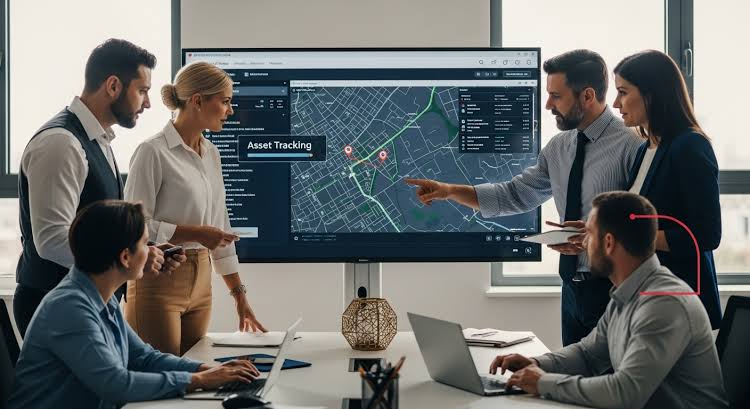
Asset tracking exists to close that visibility gap. By attaching a tracking tag, whether GPS-based, RFID, Bluetooth, or barcode, to physical assets and centralizing that data in a single system, businesses gain a real-time or near-real-time picture of what they own, where it is, and how it’s being used. This article walks through how businesses actually use asset tracking in practice, where the real efficiency gains and cost savings come from, and what to consider if you’re evaluating a system for your own operation.
What Counts as an Asset Worth Tracking
Before getting into the specifics, it’s worth clarifying what “asset tracking” actually covers, since it spans a wider range of use cases than people sometimes assume:
- Tools and equipment power tools, diagnostic equipment, specialized machinery used across job sites or departments
- Vehicles and heavy equipment trucks, forklifts, trailers, and construction equipment
- IT hardware laptops, tablets, monitors, and other equipment assigned to employees
- Inventory and stock pallets, containers, or high-value goods moving through a supply chain
- Medical and lab equipment infusion pumps, diagnostic devices, and other equipment in healthcare settings
- Rental or leased equipment assets whose location and usage need to be tracked for billing or return purposes
The right tracking method varies significantly depending on which category an asset falls into, which is one of the first decisions a business needs to make before implementing a system.
The Main Types of Asset Tracking Technology
GPS tracking works best for larger, higher-value mobile assets like vehicles, trailers, and heavy equipment that move across wide areas and justify the cost of a dedicated GPS tracker with an ongoing data plan.
RFID (Radio Frequency Identification) is common in inventory and supply chain settings, using tags that can be scanned in bulk without needing a direct line of sight, making it efficient for tracking large volumes of items moving through warehouses or distribution centers.
Bluetooth Low Energy (BLE) tracking is well suited for indoor asset tracking, such as tracking equipment within a hospital, warehouse, or office building, since it doesn’t rely on GPS signals that struggle indoors, and BLE tags are typically smaller and cheaper than GPS trackers.
Barcode and QR code tracking remains a simple, low-cost option for businesses that don’t need real-time location data, relying instead on manual or handheld scans at key checkpoints, such as when an item is checked out, moved, or returned.
Many businesses end up using a combination of these methods, applying GPS tracking to vehicles and high-value mobile equipment, while using RFID or barcode systems for higher-volume, lower-cost inventory items.
Reducing Losses from Missing or Misplaced Assets
One of the most immediate, tangible benefits businesses see from asset tracking is a sharp reduction in lost or misplaced equipment. Without a tracking system, businesses often only discover an asset is missing when someone actually needs it and can’t find it, by which point it may have been missing for weeks or months.
Real-time location visibility means employees and managers can check a dashboard or app to find an asset’s last known location rather than searching physically or asking around. This alone often eliminates a significant amount of wasted time spent hunting for equipment.
Accountability through check-in/check-out logs — many asset tracking systems log who last checked out a piece of equipment and when, creating a clear chain of custody that discourages careless handling and makes it easier to follow up if an item goes missing.
Reduced unnecessary replacement purchases — a common, often underappreciated cost is businesses repurchasing equipment they already own but can’t locate, simply because tracking down the original item would take more time than ordering a replacement. Asset tracking directly addresses this by making existing inventory visible and searchable.
Improving Utilization Rates Across Locations
For businesses operating multiple sites, whether that’s construction job sites, warehouses, or retail locations, asset tracking often reveals a surprising amount of inefficiency in how equipment is distributed and used.
Identifying underutilized assets: It’s common for one location to have idle equipment sitting unused while another location rents or purchases the same type of equipment because nobody realized it was already available elsewhere in the company. Centralized asset tracking data makes this kind of overlap visible, allowing businesses to redistribute existing equipment instead of buying or renting more.
Better equipment scheduling: With visibility into where every asset currently is and how frequently it’s being used, businesses can plan equipment allocation more efficiently across projects or shifts, reducing both idle time and last-minute scrambling to locate available equipment.
Data-driven purchasing decisions: Usage data collected over time helps businesses make smarter decisions about future equipment purchases, showing clearly whether existing equipment is being fully utilized or whether additional units are genuinely justified by demand.
Extending Equipment Lifespan Through Maintenance Tracking
Asset tracking systems increasingly go beyond pure location data, incorporating maintenance scheduling and usage-based service alerts that help extend the working life of expensive equipment.
Usage-based maintenance triggers: Rather than relying on fixed calendar-based maintenance schedules, which can result in either premature servicing or overdue maintenance depending on actual usage, tracking systems can trigger maintenance alerts based on actual hours of use or mileage, more accurately reflecting when service is genuinely needed.
Preventing costly breakdowns: Catching wear and maintenance needs early, before they escalate into equipment failure, avoids the more expensive combination of emergency repairs and the operational disruption caused by unexpected downtime.
Maintenance history for resale value: For businesses that eventually sell or trade in equipment, a documented maintenance history, automatically logged through the tracking system, can support a stronger resale value by demonstrating the equipment was properly maintained throughout its working life.
Improving Compliance and Audit Readiness
In industries with strict regulatory requirements, particularly healthcare, construction, and any business handling hazardous materials or safety-critical equipment, asset tracking plays a significant role in demonstrating compliance.
Automated compliance records: Tracking systems can automatically log inspection dates, certification renewals, and usage history for equipment subject to regulatory requirements, reducing the administrative burden of maintaining these records manually.
Faster, less disruptive audits: When regulators or internal auditors need to verify equipment location, maintenance history, or usage records, having that data centralized and searchable significantly reduces the time and disruption involved compared to manually compiling records from paper logs or scattered spreadsheets.
Reduced liability risk: For safety-critical equipment, maintaining clear, timestamped maintenance and inspection records can also reduce liability exposure in the event of an incident, by demonstrating the equipment was properly maintained and inspected according to schedule.
Supporting Better Financial and Insurance Decisions
Asset tracking data also feeds directly into broader financial planning and risk management decisions that businesses might not immediately associate with tracking technology.
More accurate depreciation and asset accounting: Knowing exactly what assets a business owns, where they are, and their usage history supports more accurate financial reporting and depreciation calculations, rather than relying on estimates or outdated inventory records.
Insurance claims support: In the event of theft, loss, or damage, detailed tracking history, including last known location and usage logs, can support faster, more straightforward insurance claims processing compared to relying solely on purchase records and verbal accounts.
Theft deterrence: For high-value or frequently targeted equipment, visible tracking capability alone can act as a deterrent, and in the event of theft, GPS-tracked assets significantly improve the odds of recovery compared to untracked equipment.
Frequently Asked Questions
1. What’s the difference between asset tracking and inventory management? Asset tracking typically focuses on individual, often higher-value or reusable items like equipment, tools, and vehicles, tracking their location and usage over time. Inventory management more broadly covers stock levels and movement of goods, often at a higher volume with less emphasis on tracking each individual unit’s specific history.
2. Do all tracked assets need GPS trackers? No, GPS tracking is generally reserved for higher-value, mobile assets like vehicles and heavy equipment. Smaller or indoor assets are often more cost-effectively tracked using RFID, Bluetooth, or barcode systems instead.
3. How much does asset tracking typically cost to implement? Costs vary significantly based on the technology used and the number of assets being tracked, ranging from a few dollars per barcode or RFID tag to $20–$50 or more per GPS tracker, plus any ongoing software subscription or cellular data costs for GPS-based systems.
4. Can asset tracking help with insurance claims? Yes, detailed location and usage history, along with maintenance records, can support faster and more accurate insurance claims in cases of theft, loss, or damage, compared to relying solely on purchase receipts and manual records.
5. How long does it take to see a return on investment from asset tracking? Many businesses see measurable reductions in lost equipment and unnecessary replacement purchases within the first few months, though efficiency gains from improved utilization and maintenance planning tend to become more apparent over six months to a year.
6. Is asset tracking only useful for large companies with lots of equipment? No, even small businesses with a modest amount of valuable equipment can benefit, since the core problems asset tracking solves — lost items, underutilized equipment, missed maintenance — occur regardless of company size, just at a smaller scale.
7. Can asset tracking data integrate with accounting or ERP systems? Many asset tracking platforms offer integrations with accounting and ERP systems, allowing asset location, usage, and maintenance data to feed directly into broader financial reporting and depreciation calculations without manual data entry.
Final Thoughts
Asset tracking addresses a problem that’s easy to underestimate until you actually measure it: how much time, money, and operational friction gets lost simply because a business doesn’t have clear visibility into what it owns and where everything actually is. Whether it’s reducing lost equipment, improving utilization across multiple locations, extending equipment lifespan through better maintenance planning, or simplifying regulatory compliance, the efficiency gains tend to compound over time as more of a business’s physical assets become visible and searchable in a single system.
For businesses still relying on spreadsheets, sign-out sheets, or institutional memory to track equipment, the shift to a dedicated tracking system usually reveals just how much unnecessary cost and lost time was hiding in plain sight all along.
