
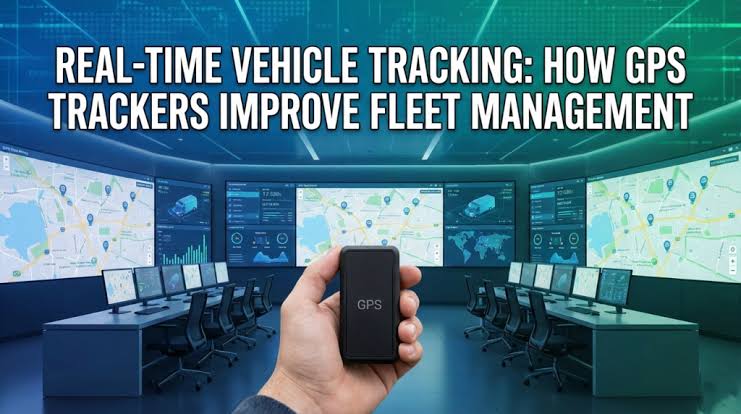
Ask any fleet manager what kept them up at night before GPS tracking became standard, and you’ll likely hear some version of the same story: not knowing where a vehicle actually was, guessing at arrival times, and finding out about a maintenance issue only after it turned into a breakdown on the side of the highway. Managing a fleet without real-time visibility meant making decisions based on incomplete information and hoping things worked out.
Real-time GPS tracking changed that equation fundamentally. Instead of relying on driver check-in calls and rough estimates, fleet managers now have a live, constantly updating picture of where every vehicle is, how it’s being driven, and whether anything needs attention before it becomes a costly problem. For businesses running anything from a handful of delivery vans to hundreds of long-haul trucks, that visibility translates directly into measurable efficiency gains and cost savings.
This article breaks down exactly how real-time GPS tracking improves fleet operations, where the actual cost savings come from, and what to realistically expect if you’re considering implementing or upgrading a fleet tracking system.
What “Real-Time” Actually Means in Fleet Tracking
It’s worth clarifying what sets real-time tracking apart from older, less immediate tracking methods. Older fleet tracking systems often reported vehicle location in batches updating every 15 or 30 minutes, or only when the vehicle stopped moving. Real-time tracking, by contrast, updates location continuously, often every few seconds while a vehicle is in motion, giving dispatchers and managers a live view rather than a slightly outdated snapshot.
This difference matters more than it might initially seem. A dispatcher trying to reroute a driver around unexpected traffic needs current information, not data that’s already 20 minutes stale. A fleet manager investigating a customer complaint about a late delivery needs to see exactly where the vehicle was at the reported time, not an approximation. Real-time data is what makes proactive fleet management possible, rather than purely reactive troubleshooting after something has already gone wrong.

Reducing Fuel Costs Through Route Optimization
Fuel is consistently one of the largest operating expenses for any fleet, and it’s also one of the areas where real-time GPS tracking delivers some of the most immediate, measurable savings.
How it works: Real-time tracking, combined with route optimization software, allows dispatchers to identify the most efficient route for each delivery or job in real time, accounting for current traffic conditions rather than relying on a fixed, pre-planned route. When traffic conditions change mid-route, dispatchers can reroute drivers immediately rather than letting them sit in traffic on a route that was optimal when it was planned that morning but no longer reflects current conditions.
Reducing unnecessary idling: Real-time tracking also flags excessive idling, which burns fuel without accomplishing any actual driving. Fleet managers can see exactly which vehicles are idling longer than expected and address the pattern, whether it’s a driver habit, an inefficient loading process, or a scheduling issue causing vehicles to wait unnecessarily.
Eliminating unauthorized vehicle use: Real-time location data also makes it far more difficult for a vehicle to be used for unauthorized personal trips during work hours, which, beyond the fuel cost itself, represents wasted time that could otherwise be spent on paying jobs.
Improving Driver Safety and Reducing Accident-Related Costs
Beyond fuel, vehicle accidents represent one of the most expensive risks a fleet faces, both in direct costs (repairs, insurance claims, potential liability) and indirect costs (vehicle downtime, driver injury, reputational damage).
Driver behavior monitoring: Real-time GPS tracking systems typically capture data beyond just location, including speed, harsh braking, rapid acceleration, and sharp cornering. This data gives fleet managers concrete, objective information to identify drivers who may need additional coaching before a risky driving pattern leads to an actual accident, rather than only addressing safety after an incident has already occurred.
Speed compliance: Real-time alerts for speeding, particularly in areas with lower posted limits like school zones or residential streets, allow fleet managers to address the issue immediately rather than discovering a pattern of speeding only after receiving a citation or, worse, after an accident.
Reduced insurance premiums: Many fleet insurance providers now offer reduced premiums for companies using GPS tracking with driver behavior monitoring, since the data demonstrates a proactive approach to risk management, and in some cases provides objective evidence in the event of a disputed claim.
Cutting Maintenance Costs Through Predictive Data
Vehicle breakdowns are expensive in ways that go well beyond the repair bill itself a broken-down delivery van means missed deliveries, a disrupted schedule for other drivers picking up the slack, and in commercial trucking, potential penalties for missed delivery windows.
Diagnostic integration: Many real-time GPS tracking systems integrate with a vehicle’s onboard diagnostics, flagging engine fault codes or maintenance needs before they escalate into a full breakdown. Catching a warning sign early, when a repair might cost a few hundred dollars, is significantly cheaper than dealing with the same issue after it causes a roadside failure.
Mileage-based maintenance scheduling: Real-time tracking accurately logs mileage for every vehicle, automating maintenance scheduling based on actual usage rather than estimated intervals, which helps prevent both premature maintenance (wasting money on unnecessary service) and overdue maintenance (increasing breakdown risk).
Extending vehicle lifespan: Reduced harsh driving behavior, caught and corrected through driver behavior monitoring, also reduces wear and tear on brakes, tires, and the engine over time, extending the useful life of each vehicle and delaying the capital expense of fleet replacement.
Improving Dispatch Efficiency and Customer Service
Real-time location data doesn’t just help fleet managers it directly improves the experience for customers waiting on a delivery or service appointment.
Accurate ETAs: Instead of giving customers a broad delivery window based on rough estimates, dispatchers can provide significantly more accurate arrival times based on a vehicle’s actual current location and real-time traffic conditions.
Faster response to last-minute changes: If a customer needs to reschedule or add an urgent request, dispatchers with real-time visibility can identify which nearby vehicle is best positioned to handle it, rather than guessing based on outdated location assumptions.
Proof of service: Real-time tracking combined with geofencing creates an automatic, timestamped record of when a vehicle arrived at and left a job site, which is useful both for resolving customer disputes about missed or late service, and for verifying completed work for billing purposes.
Reducing Administrative Overhead
Beyond the more visible savings in fuel, safety, and maintenance, real-time GPS tracking also reduces a significant amount of administrative work that would otherwise fall on dispatchers and fleet managers.
Automated mileage and time logs: Rather than manually logging mileage and hours for payroll, tax deductions, or regulatory compliance (such as Hours of Service reporting for commercial trucking), real-time tracking systems automatically generate accurate records, reducing both administrative time and the risk of reporting errors.
Reduced check-in calls: Dispatchers no longer need to call drivers periodically just to confirm their location or progress, freeing up time for more valuable dispatch and coordination work, while also reducing driver distraction from unnecessary phone calls while on the road.
Simplified reporting for compliance and audits: Detailed, automatically logged trip history makes it significantly easier to respond to audits, customer disputes, or regulatory reporting requirements, since the data already exists in an organized, searchable format rather than needing to be reconstructed after the fact.
Measuring the Actual Return on Investment
Fleet managers evaluating whether real-time GPS tracking is worth the investment typically look at a combination of the following factors:
- Fuel savings from route optimization and reduced idling, often cited as one of the fastest and most measurable returns
- Reduced accident frequency and severity, lowering both direct repair costs and insurance premiums over time
- Lower maintenance costs from catching issues early and scheduling service based on actual usage
- Reduced unauthorized vehicle use, recovering both fuel costs and productive work hours
- Administrative time saved on manual mileage logging, compliance reporting, and driver check-ins
While the exact return varies significantly based on fleet size, industry, and how thoroughly a company acts on the data the system provides, most fleet operators who actively use the reporting and alerts not just the basic location map tend to see meaningful cost reductions within the first several months of implementation.
Frequently Asked Questions
1. How is real-time GPS tracking different from basic vehicle tracking? Basic tracking systems often update location periodically or only when a vehicle stops, while real-time tracking provides continuous, live location updates, typically every few seconds, giving dispatchers current information rather than a slightly delayed snapshot.
2. Does GPS tracking actually reduce fuel costs, or is that mostly marketing? Yes, the fuel savings are generally measurable and come from a combination of route optimization, reduced idling time, and eliminating unauthorized personal use of fleet vehicles, all of which real-time data makes visible and actionable in a way that wasn’t practical before.
3. Can real-time GPS tracking help lower fleet insurance premiums? Many insurance providers offer discounts for fleets using GPS tracking with driver behavior monitoring, since the data demonstrates proactive risk management and can provide objective evidence in the event of a claim dispute.
4. Do drivers typically resist GPS tracking in company vehicles? Some initial resistance is common, but it’s usually reduced significantly when companies are transparent about why the tracking is being implemented and frame it around safety and efficiency rather than pure surveillance, along with clear policies about what data is collected and how it’s used.
5. How quickly can a company expect to see cost savings after implementing GPS tracking? Many fleets see measurable fuel and efficiency improvements within the first few months, though savings related to reduced accidents, lower insurance premiums, and extended vehicle lifespan tend to become more apparent over a longer period, often six months to a year.
6. Is real-time GPS tracking only useful for large fleets? No, even small fleets with just a handful of vehicles benefit from real-time visibility, since the same issues wasted fuel, unauthorized use, missed maintenance occur regardless of fleet size, and the relative cost savings are often just as meaningful for smaller operations.
7. What data do fleet managers typically monitor beyond just vehicle location? Beyond location, common data points include speed, harsh braking and acceleration events, idle time, route history, fuel consumption, and vehicle diagnostic alerts, all of which feed into a broader picture of both driver behavior and vehicle health.
Final Thoughts
Real-time GPS tracking has moved fleet management from a largely reactive process dealing with problems after they happen to a proactive one, where inefficiencies, safety risks, and maintenance issues can be identified and addressed before they turn into significant costs. The savings show up across multiple areas simultaneously: less wasted fuel, fewer accidents, lower maintenance bills, and less administrative time spent on manual tracking and reporting.
For fleet operators still relying on periodic check-ins and rough estimates, the shift to real-time tracking tends to pay for itself fairly quickly, not through any single dramatic change, but through the steady accumulation of smaller, previously invisible inefficiencies finally becoming visible and fixable.
